
Abatement Technologies Air Duct Cleaning in Stapleton: A Homeowner’s Guide
Most homeowners judge a duct cleaning company by its reviews and its price, not by whether its vacuum system can actually hold negative pressure on a 2,400-square-foot home. That’s backwards. The vacuum is the entire job. If the machine can’t pull the whole duct system into negative pressure while the brush loosens debris, that debris has to go somewhere – and “somewhere” is usually back into the living room. This guide explains, in plain language, what Abatement Technologies equipment is, why it changes the outcome, and how to tell on-site whether it’s being used correctly.
If you’d rather have this done by people who own the right machines than rent one from a hardware store, call (877) 536-7311 for a free estimate.
What Is Abatement Technologies Equipment, and Why Does It Matter in Stapleton?
Abatement Technologies builds HEPA-rated negative air machines – powerful vacuums with multi-stage filtration that were originally designed for mold and asbestos abatement work, where the whole point is capturing contaminants before they escape into the air. Duct cleaning crews adopted the same equipment because a duct system has the same problem: once you disturb what’s inside, it has to be captured in a sealed container, not stirred into the room. In Stapleton, where a lot of the housing stock runs on forced-air heat and the heat comes on hard in October, that equipment tier matters more than most homeowners realize.
The filtration is the part people miss. A basic shop vacuum pulls air through one filter and vents the rest – including fine particulate – back into the room. An Abatement-grade unit typically runs air through a pre-filter, a secondary filter, and a HEPA final stage, and the machine is rated for the volume of air a real duct system moves, not a garage floor’s worth of sawdust.
- Filtration stages: entry-tier vacuums have one; abatement-grade units run staged filtration down to HEPA.
- Containment: the machine connects to the system through a sealed negative-pressure setup, not a loose hose taped to a register.
- Air volume (CFM): abatement equipment moves enough air to keep an entire residential system under vacuum while brushing happens at the far end.
- Purpose: built to contain contaminants, not just to collect visible dust.
How Negative Air Pressure Works Inside Your Ducts
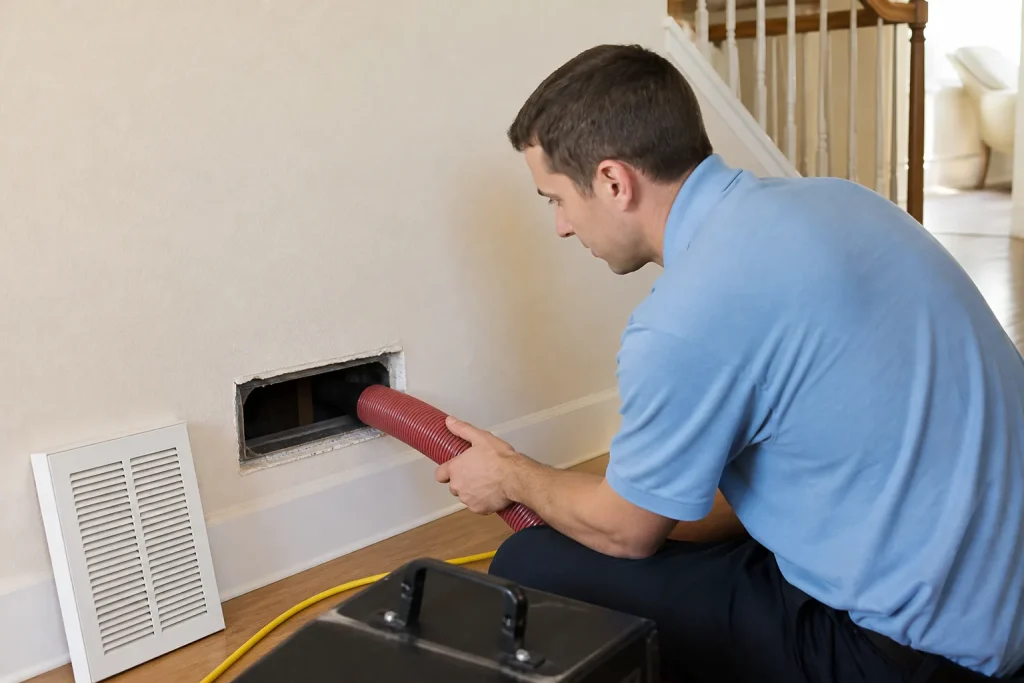
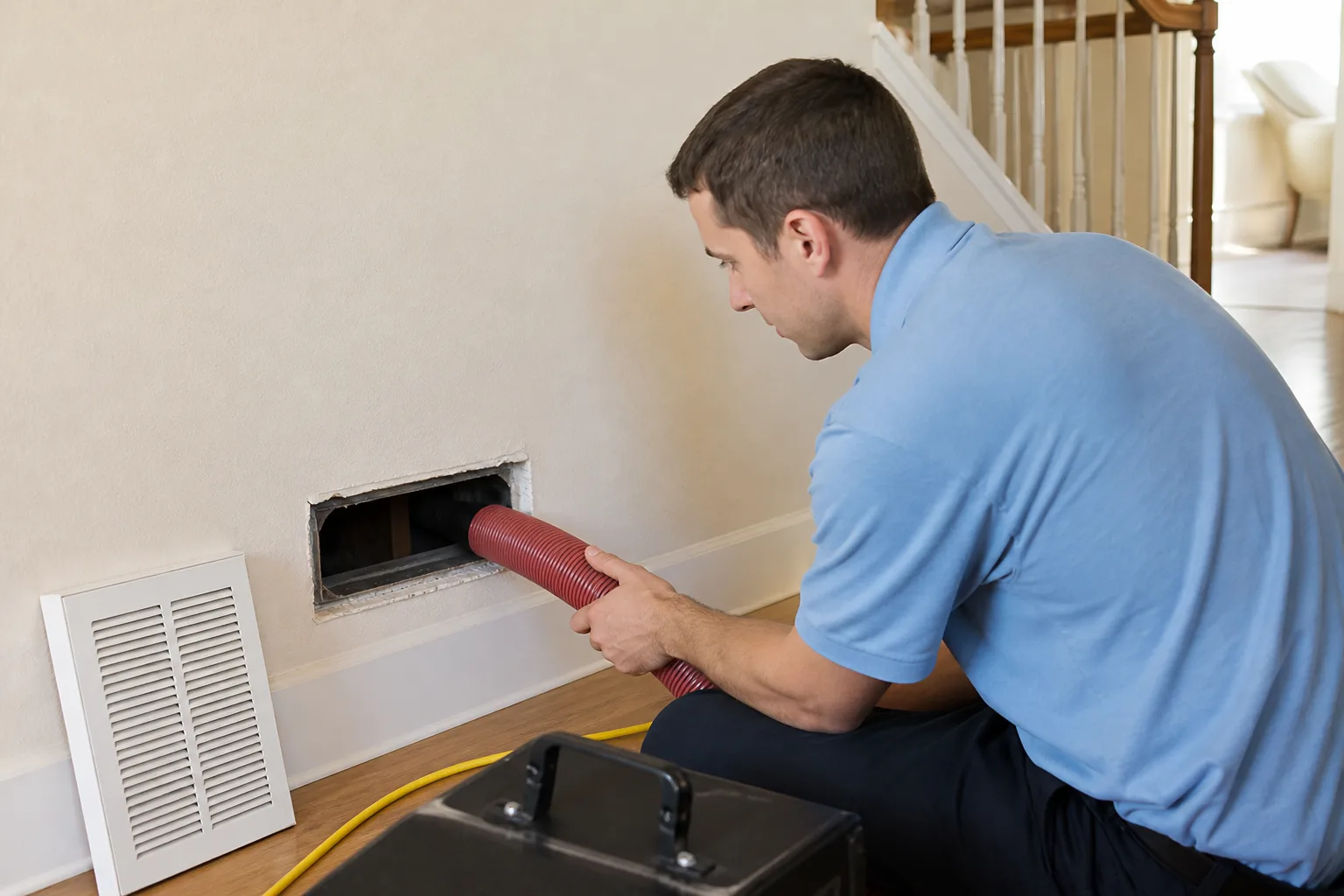
Negative air pressure means the pressure inside your ducts is lower than the pressure in the room, so any air movement at a gap, register, or open joint pulls inward. That direction is the whole game. A technician connects the vacuum to one end of the system, seals it, runs the machine, and then works a rotary brush or air whip through the duct runs. Debris gets loosened, the airflow carries it toward the vacuum, and it lands in the collection bag or HEPA drum instead of your hall carpet.
Without negative pressure – the entry-level van setup – the brush still knocks material loose, but nothing reliable directs where it goes. Some of it gets collected. Some of it drifts into the return plenum, some settles in a branch line the brush didn’t reach, and some gets pushed out the nearest supply register into the room. Homeowners don’t always see this happen. What they notice weeks later is dust on the furniture again, or a musty smell that never quite went away in the first place.
This is also why air duct cleaning done well often involves more than one pass. The technician works the main trunk, then the branch runs, checking register by register that the airflow is pulling rather than pushing. A properly set up job feels methodical on purpose.
Abatement-Grade Equipment vs. Consumer Vacuums: What Actually Differs
The gap between a consumer vacuum and an Abatement Technologies negative air machine is not marketing – it’s the size of the machine, the airflow it moves, and whether it’s built to contain what it collects. A home shop vacuum might manage 150 to 200 cubic feet per minute on a good day, through a single filter, venting to the room. An abatement-grade HEPA unit is built for hundreds of CFM while holding multi-stage containment, and it’s designed to run for hours on a whole system without overheating or losing filtration.
The practical translation for a Stapleton homeowner:
- Airflow capacity. A larger home with a long trunk line needs a machine that can keep the whole system under suction – which is what we check before we start a job.
- Filtration depth. Multi-stage filtration catches fine particulate that a single-filter vacuum recirculates.
- Containment integrity. Sealed connections and a closed collection container keep debris inside the machine.
- Durability under load. Abatement units are engineered for sustained whole-system work.
Our HVAC cleaning work relies on the same equipment, because the air handler, coils, and blower are downstream of the same duct system and see the same dust load.
When Abatement-Grade Cleaning Becomes Essential in Stapleton
Some jobs really do call for the heavier equipment tier, and it’s worth asking specifically what machine will be in your home before you book. Four situations in Stapleton push a job past routine cleaning. A house that just finished a renovation is one – drywall dust and construction debris carry deeper into the system than ordinary household dust, and a vacuum that can’t hold containment just spreads it around. A system that hasn’t been serviced in ten years or more is another, because the debris layer is thick enough to matter and heavy enough to be a containment problem once it’s disturbed.
The third case is any home where there’s been moisture in the ducts, a musty smell from a register, or suspicion of microbial growth. That’s where Abatement Technologies’ origin in abatement work is directly relevant – the equipment is built to contain what it pulls out. The fourth is a household with someone immunocompromised, an allergy sufferer, or an infant, where airborne fine particulate matters more than the visible debris does.
In all four cases, containment is the point. Cleaning without containment is a lot of activity producing a small, temporary difference in air quality.
What an Abatement-Equipment Job Looks Like On-Site
Knowing the sequence is useful because it lets you confirm the right equipment is actually being used correctly, rather than just parked in the driveway. A typical job with abatement-grade equipment follows a recognizable pattern. First, the technician inspects the system, explains what was found, and agrees on a flat price per system before any work starts. Then the vacuum connects and the system goes under negative pressure. Floor protection goes down. Register covers come off, the supply and return sides are worked separately, and the technician brushes and air-whips the trunk and branch runs while the HEPA unit has continuous suction on the system.
After cleaning, the technician often shows before-and-after photos of your own ductwork so you can see what was in there and what’s gone. Then we sanitize if needed, put the system back together, and check for anything that was making the ducts dirty in the first place – loose joints, disconnected runs, gaps that pull attic or crawlspace air into the house. Our duct repair and sealing work exists exactly for that second part. We clean the system, then we fix what made it dirty. Our technicians have up to 12 years of experience with this equipment and can walk you through what they found in your ductwork at the end of every job.
We also install and service Honeywell and Aprilaire filtration and IAQ products when a homeowner wants to cut how much debris enters the system in the first place. And for the exhaust side of the house, dryer vent cleaning is a separate job that’s worth doing on the same visit – lint buildup behind a dryer is a fire risk, and it’s easy to overlook.
When to Call a Pro
If you can see dust streaming from a supply register, smell something musty when the heat kicks on, or you’re noticing dust buildup on furniture within days of cleaning, that’s a sign the system itself needs a professional look. Cleaning without fixing the source – a disconnected flex run, an unsealed plenum joint, a filter that’s the wrong spec – just puts you back in the same spot a few months later. If you’re in the middle of a renovation or you’re worried about what’s accumulated in the ductwork after years of no service, that’s the moment to get an inspection rather than a surface cleaning.
Related Services in Stapleton
Duct cleaning works best as part of a full-system approach. Our Air Duct Cleaning Stapleton team handles cleaning, sanitizing, duct repair and sealing, and HVAC cleaning together, so the diagnosis and the fix come from the same company rather than getting handed off between contractors. Ask about the specific equipment when you call – a straight answer to “what machine will be in my home?” tells you a lot about the job you’re buying.
What happens when you call
- 1
A real person answersNo phone trees – you reach a local pro.
- 2
You get an upfront price rangeHonest numbers before anyone is dispatched.
- 3
A background-checked tech heads outLicensed & insured, dispatched right away.
- 4
You approve before work beginsNothing starts until you say go.
The Bottom Line
The machine matters more than the price tag. Abatement Technologies negative air equipment gives a Stapleton homeowner three things a shop vacuum can’t: real negative pressure across the whole duct system, HEPA-rated containment for what gets pulled out, and the airflow to keep a 2,400-square-foot home’s system under suction while the technician works every run. Cleaning without that equipment still knocks dust loose – but it doesn’t reliably get it out of the house. A flat price per system, agreed before work starts, plus before-and-after photos of your own ducts, is the right shape of a job. If you’re in Stapleton and need help, Air Duct Cleaning Stapleton offers free estimates – call (877) 536-7311. We answer 24/7. Fast dispatch from 7am to 7pm, Sunday through Friday. Estimates are free, and the estimate sets the final price.
Frequently Asked Questions
Yes – it’s the single most important factor in whether the debris ends up in a collection container or in the air the rest of the house is breathing. Abatement Technologies negative air machines run HEPA filtration and enough airflow to hold a whole residential system under negative pressure. A consumer-grade shop vacuum can’t do either. Ask the company what machine they’ll use before you book.
Most whole-system residential duct cleanings fall in a few-hundred-dollar range depending on square footage, number of registers, and whether sanitizing or repairs are included. A company using Abatement-grade equipment typically costs more than a van with a shop vacuum, and the higher price reflects the machines, filtration, and containment. Call (877) 536-7311 for a free estimate – the written estimate sets the final price.
Entry-level vacuum setups and per-vent pricing are usually the reason. A low teaser figure that turns into a larger invoice once the technician is on site is the classic trap in this trade. The fair approach is one flat price per system agreed before work starts – no per-vent pricing, no surprise add-ons. If a quote comes in dramatically lower than everyone else, ask what machine will be in the house and whether filtration is HEPA-rated.
Ask for before-and-after photos of your own ductwork – not stock images. Abatement equipment jobs also leave obvious physical evidence: floor protection, sealed negative-pressure connections, register covers off, and a collection container that needs emptying. A technician who can explain what was found in each run and then show you photos of it is the standard to hold a Stapleton company to. Call (877) 536-7311 to book a free estimate.
Written by the team at Air Duct Cleaning Stapleton.
Need Air Duct Cleaning Help?
Call Air Duct Cleaning Stapleton - the local pro we connect you with is licensed and insured, here with fast help in Stapleton.
(877) 536-7311