
Last updated November 24, 2026
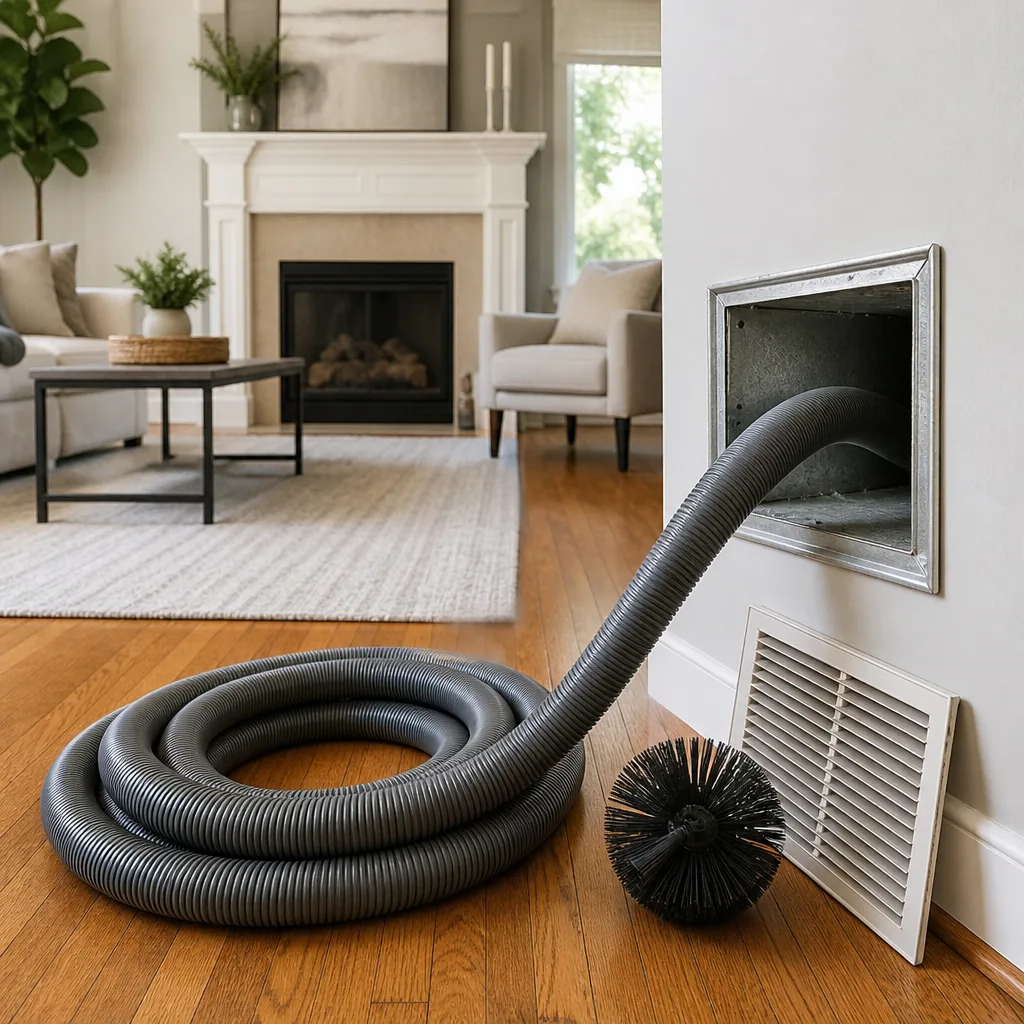 Whole-home duct cleaning
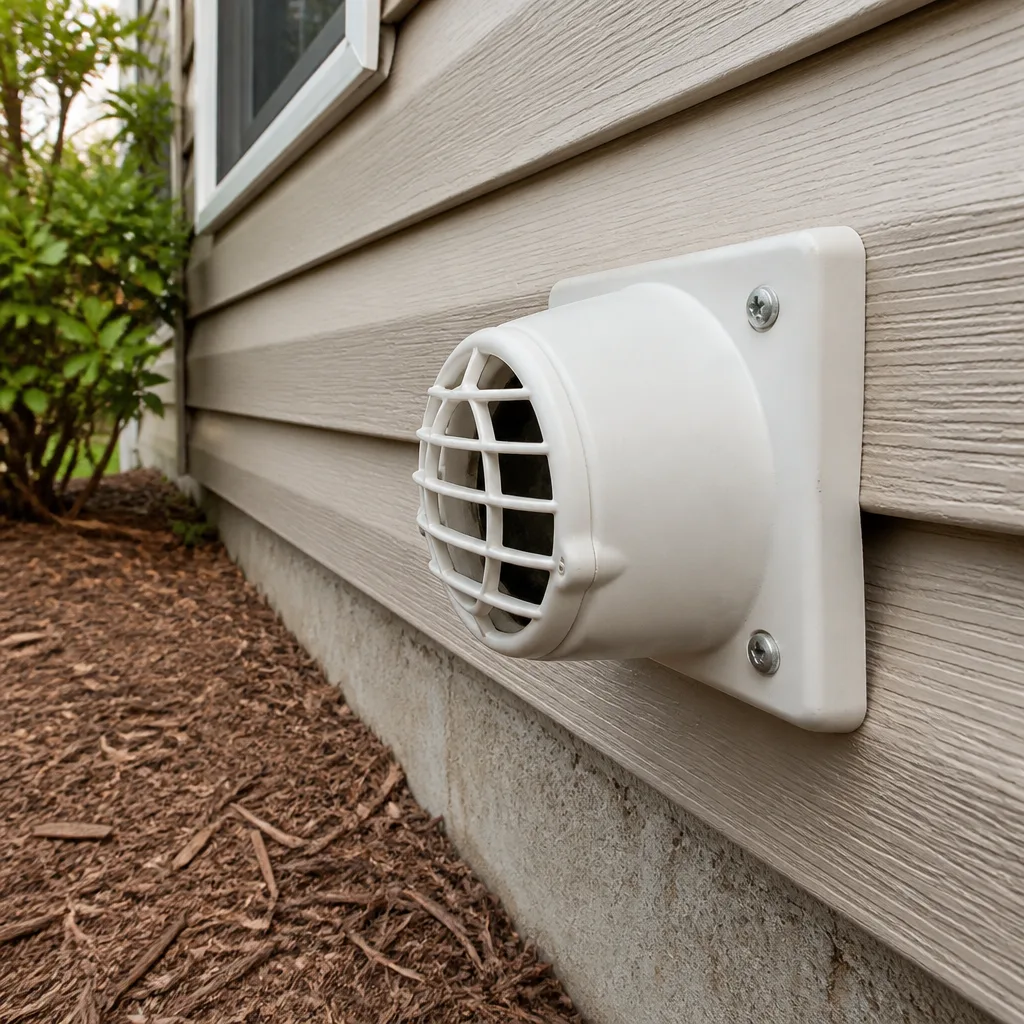 Dryer vent cleaning
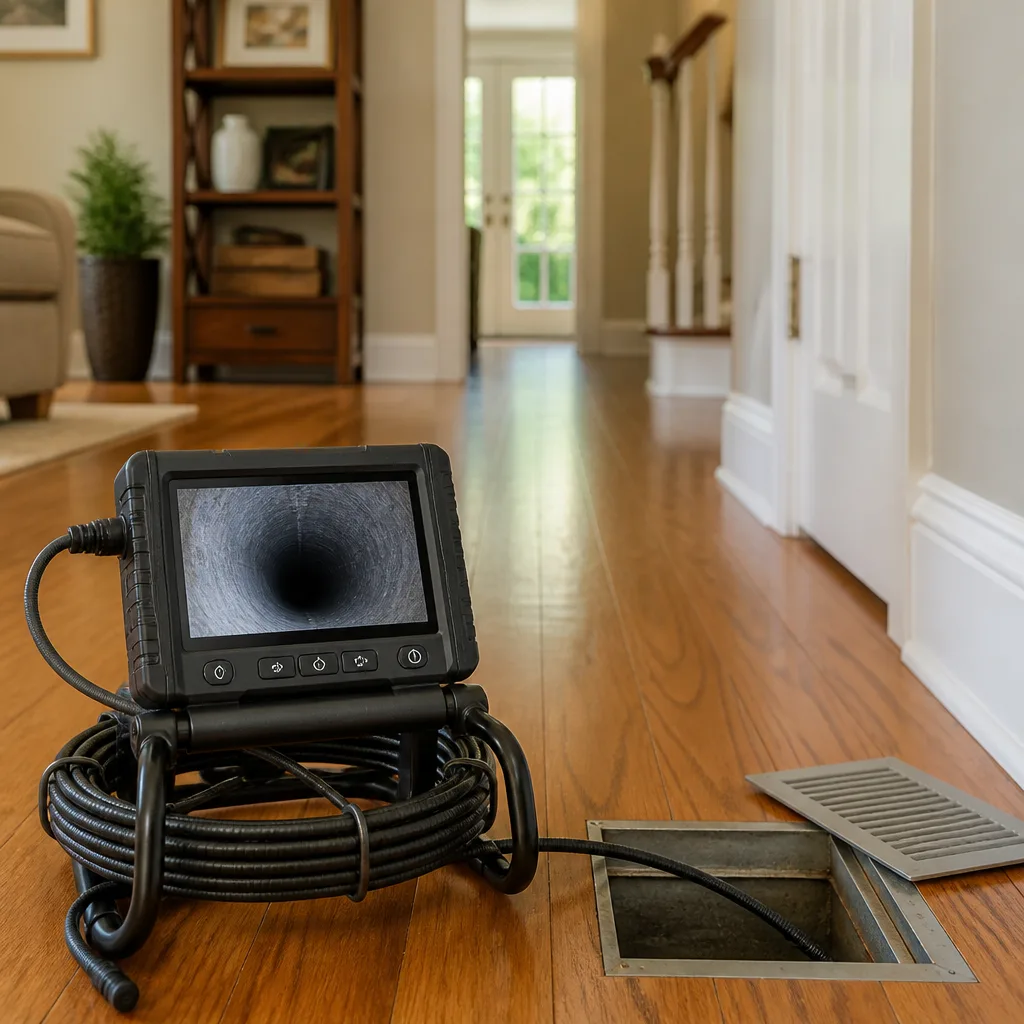 Camera inspection
 Sanitizing & deodorizing
Whole-system duct and dryer vent check with before-and-after photos - you see exactly what came out of your vents
That "$99 whole-house special" is a bait ad - the real number appears once they are in your hallway, or the "clean" is a shop-vac at the register. We photograph the inside of your ducts before and after instead.
How to Hire an Air Duct Cleaning Contractor in Stapleton: A Step-by-Step Guide
Nobody in Stapleton expects to be impressed by a hose. But it’s the hose that tells you the most. Duct cleaning has one of the widest gaps in the home service trades between what a company advertises and what it actually brings through your door, and a homeowner can’t close that gap by reading reviews alone. What closes it is knowing what to ask before the appointment gets booked. This guide walks through the five questions that separate an equipment-serious professional from a van and a vacuum, what a real scope of work should say in writing, how NADCA membership works and what it doesn’t promise, and how to compare quotes written in completely different languages. You’ll leave with a checklist you can use on the phone today.
Quick Answer
To hire a duct cleaning contractor in Stapleton, ask five questions before you book: what negative pressure equipment they use, whether they clean the air handler as part of the quoted price, whether the quote is a flat whole-system price or per vent, what their written scope of work includes, and whether they can show before-and-after photos of your own ducts. Anyone who can’t answer all five clearly is not the right hire, no matter how attractive the price sounds. The written estimate should set the final price before work starts.
Styles & brands we work with
- Whole-home duct cleaning
- Dryer vent cleaning
- Camera inspection
- Sanitizing & deodorizing
Table of Contents
- Why You Should Be Able to Hear the Truck Before You See the Technician
- The Equipment Questions to Ask Before You Book
- What NADCA Membership Actually Obligates a Contractor to Do
- Red Flags of a Low-Cost Bait Operation
- What a Written Scope of Work Should Include
- How to Compare Quotes Written in Different Languages
- What Makes Duct Cleaning in Stapleton Different
- Common Mistakes to Avoid
- When to Call a Professional
- Frequently Asked Questions
Why You Should Be Able to Hear the Truck Before You See the Technician
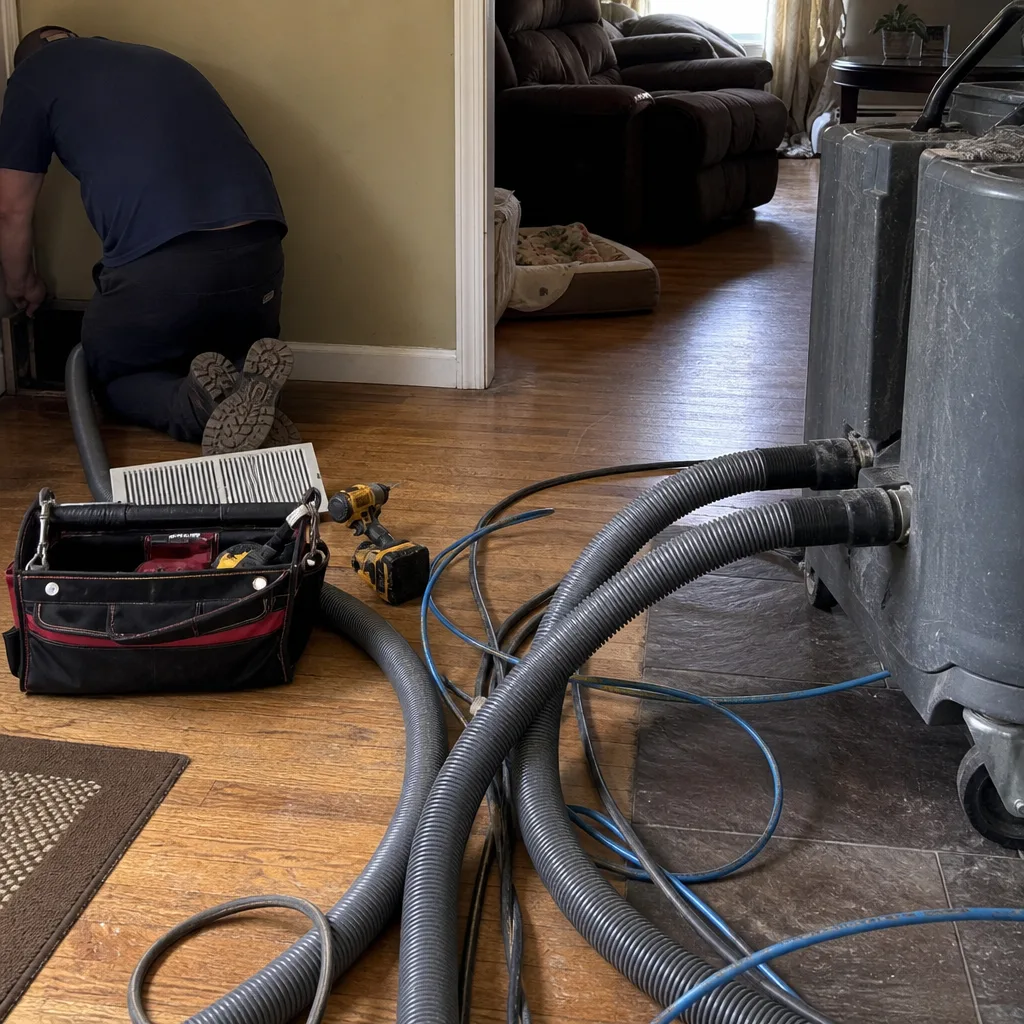
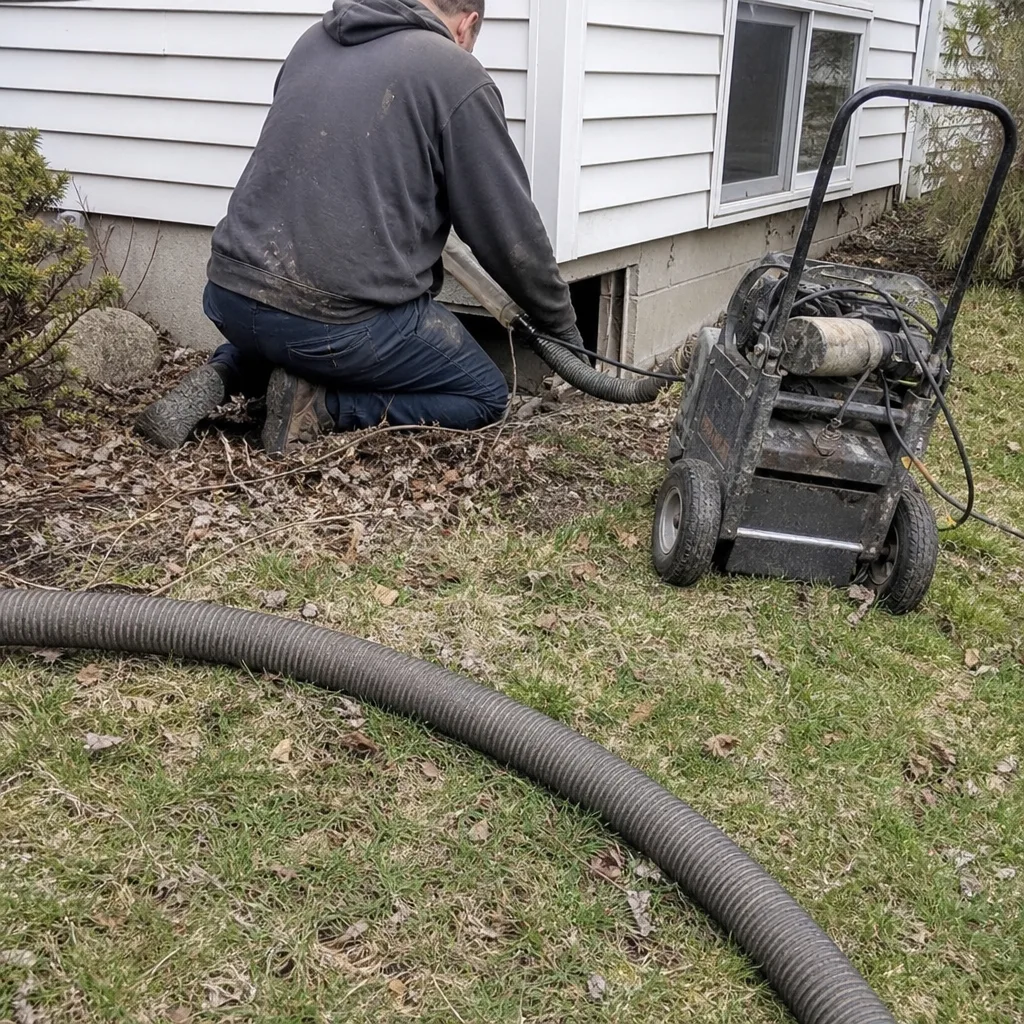
A legitimate air duct cleaning setup is not quiet. Professional negative pressure equipment and the larger brush systems generate real, audible noise, and in our experience you can usually hear the work happening from the curb. That’s not a marketing line, it’s a physical fact about what the equipment does. It has to move enough air and enough torque to loosen and carry away years of accumulated debris inside a sealed system. If a technician arrives with a shop-vac and a rotating brush kit that fits in a duffel bag, the job is compromised before the first register comes off.
The equipment a contractor brings determines what gets cleaned. Consumer and quasi-professional vacuums pull nowhere near the volume needed for a whole house, and a small brush kit can’t reach the far stretches of the trunk and branch lines. A proper setup uses a high-volume negative pressure unit connected to the main trunk, which pulls air through the whole system in one direction so loosened debris has somewhere to go. The cleaning tools then work inside the duct while the vacuum is holding the system under negative pressure.
Here’s the sequence a real whole-system cleaning follows:
- The negative pressure unit is connected to a main trunk line and sealed so the system is under continuous vacuum.
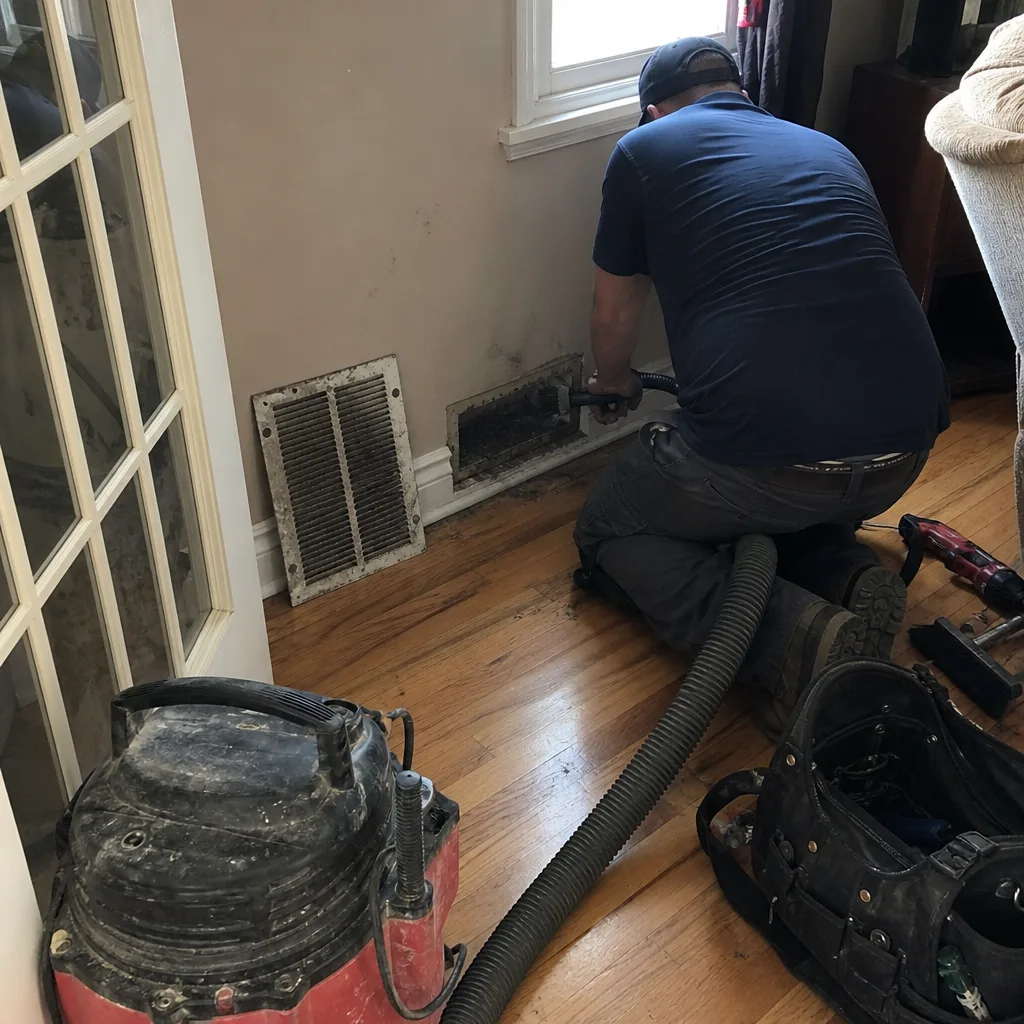
- Every supply and return register is removed and cleaned individually.
- Contact vacuuming is used at the register openings, then the brush system works through the supply and return runs.
- The air handler, blower compartment, and evaporator coil are cleaned separately from the ductwork itself.
- Filters are checked or replaced and the system is inspected with before-and-after photos taken inside the ducts.
If any of those five steps is missing from what a contractor describes, that’s the conversation you needed to have. We use Rotobrush and Nikro systems on every job because both are built for this work and both leave a paper trail you can see.
The Equipment Questions to Ask Before You Book
Ask three equipment questions on the phone, before anyone comes out. The answers tell you as much about the company as the equipment does. A company that’s genuinely equipped will answer instantly, because these are the tools they work with every day. A company that isn’t will deflect, or won’t understand the questions.
Question 1: What negative pressure unit do you use, and what’s its CFM rating?
CFM is cubic feet per minute, and it’s the measure of how much air the vacuum system moves while it’s connected to your ductwork. Higher CFM means the system can pull loosened debris through long runs of duct and out of the house. A short answer like “we use a HEPA vacuum” isn’t sufficient on its own. A HEPA filter is a filtration capability, not a pressure rating. Ask what the CFM of the negative pressure unit is and how it’s connected to the trunk. In our experience a real commercial-grade negative pressure unit operates in a completely different class from a shop-vac.
Question 2: What brush diameter range do you carry?
Ductwork in Stapleton homes ranges from narrow branch runs to full-size main trunks, and one brush size can’t clean them all. A professional setup carries a range of brush diameters sized to the duct being cleaned, so the brush is making contact without scraping into the flex or damaging duct seams. If a technician carries one brush, they’ve sized the job to the tool rather than the other way around. Ask what the smallest and largest brush diameters are and whether the brush system reaches the farthest supply run in the house.
Question 3: Do you use a contact vacuum or a remote vacuum setup for register cleaning?
Both approaches exist and both can be legitimate, but they imply different levels of attention to the register openings. A contact vacuum means the technician brings the vacuum directly to each register opening for local cleaning. A remote setup relies on the main negative pressure unit pulling from the trunk while registers are opened and cleaned individually. Ask which they use and how they make sure the last register on the run is as clean as the first. In our experience the best hire is often a company that uses both, depending on the register and the duct layout.
What NADCA Membership Actually Obligates a Contractor to Do
NADCA is the National Air Duct Cleaners Association, and membership signals something specific: that a contractor has agreed to follow a published standard of care for the trade. It’s a real signal and worth asking about. It is not a license, and it doesn’t guarantee a particular result. That distinction matters, because some low-cost operations name-drop NADCA without understanding what membership actually commits them to.
What NADCA membership obligates
- Following the industry assessment, cleaning, and restoration standard that defines how a whole-system cleaning should be performed.
- Cleaning the entire system, not just the accessible registers, when the job is described as a full-system cleaning.
- Using equipment capable of cleaning the system it’s connected to, not a consumer or light-duty tool.
- Documenting the condition of the system before and after the work.
What NADCA membership does not cover
- It is not a government license, and it doesn’t replace state or local licensing requirements where those apply.
- It does not set prices, and it does not obligate a member to quote a particular scope.
- It does not replace the written estimate you receive from the contractor, which is the document that actually governs your job.
- It doesn’t mean every technician on the crew has been individually certified under a separate credentialing body.
Ask the contractor to confirm membership status directly and ask what their written scope of work includes. A member who can answer both questions clearly is far more useful to you than a name alone. If you want a deeper look at what a proper whole-system cleaning involves, our guide to air duct cleaning walks through the full process.
Red Flags of a Low-Cost Bait Operation
The bait operation is not a rumor, it’s a business model, and it has recognizable shapes. The mechanics are consistent: pull homeowners in with a low headline number, then convert the visit into a much larger invoice through add-ons presented as necessary. Knowing the shapes in advance is how you avoid the conversation entirely.
Per-vent pricing that excludes the air handler
A per-vent price means you’re paying for the registers and nothing else. The air handler, coil, blower compartment, and main trunk are where most of the contamination actually sits, and a per-vent quote almost never touches them. Ask directly whether the air handler is included in the quoted price. If the answer is “that’s extra,” you haven’t been quoted a whole-system cleaning, you’ve been quoted a surface job.
Antimicrobial upsells offered before inspection
Offering an antimicrobial treatment before anyone has looked inside the ducts is a tell. You can’t know whether a system needs treatment until you’ve inspected it. If a technician pitches a treatment at the door, before pulling a register, the pitch is the product and the cleaning is the pretext. We offer sanitizing and Guardsman-backed surface protection as genuine options, but only after the system has been inspected and the reason for treatment is clear.
No before-and-after photos
Every professional job leaves a visual record. If a contractor can’t or won’t show you photos of your own ducts before and after cleaning, “the work was done” becomes a claim rather than a fact. Ask for the photos as part of the quote, not after.
Vague or verbal-only quotes
A quote that can’t be handed to you in writing, line by line, is not a quote. It’s a starting number. Ask for a written estimate before any work begins and confirm that the price on the paper is the price you’ll be invoiced.
What a Written Scope of Work Should Include
A written scope of work is the document that decides whether your job is a whole-system cleaning or a partial one. It should name each component being cleaned, describe the equipment being used, and list what’s excluded. If a scope of work is thin on any of those points, the omission is telling you what the job will actually be.
Here’s what a complete scope of work includes for a full-system cleaning:
- Supply lines: every supply register and the branch runs feeding each one, cleaned with register removal and contact vacuuming.
- Return lines: the return registers and return trunk, cleaned under negative pressure with the return grilles removed.
- Air handler coil: the evaporator coil cleaned, with a note on whether it’s a wet or dry cleaning method.
- Blower compartment: the blower motor and housing cleaned separately, since this is a common debris trap.
- Drip pan: checked and cleaned, with the drain line cleared of standing water or buildup.
- Main trunk line: the central trunk connected to the negative pressure unit and cleaned through the full run.
Omissions tell you almost as much as inclusions. A scope that doesn’t mention the air handler isn’t a whole-system cleaning. A scope that doesn’t name a drip pan probably hasn’t included it. A scope that doesn’t describe the equipment is a scope that can’t be verified.
We integrate Honeywell and Aprilaire filtration and IAQ products into our scopes, not because every job needs them, but because cleaning alone doesn’t fix a filtration problem and filtration alone doesn’t unclog a coil. The written scope should reflect what your specific system needs.
If your dryer is in the same closet as your furnace, a separate dryer vent cleaning belongs on the same visit. Lint accumulation is a documented fire concern, and it’s a job that pairs naturally with whole-system work.
How to Compare Quotes Written in Different Languages
Two quotes for the “same” cleaning can describe completely different jobs. Comparing the numbers alone tells you almost nothing useful. The only way to compare is to translate each quote into the same set of line items, then see what’s actually being delivered for the price.
The three phrases that cause the most confusion:
- “Full system clean”: can mean the ducts only, or ducts plus air handler plus coil plus blower plus drip pan. Treat it as unverified until the quote lists components explicitly.
- “Deep clean”: has no standard definition. Ask what makes it deeper, and whether the returns are included.
- “Sanitizing included”: usually means a spray applied at the registers only. Ask whether it includes an actual cleaning of the system, or only the post-clean treatment.
To compare two quotes fairly, build a translation table on one page:
- Write down each component: supply registers, return registers, main trunk, air handler coil, blower compartment, drip pan.
- Mark which quote includes each component in writing.
- Ask each contractor to quote the missing items separately.
- Re-add both quotes once they cover the same scope.
- Compare the equipment named in each quote, not just the price.
In our experience the cheap quote becomes the expensive one once you add the air handler, and the whole-system quote turns out to be the cheaper end of the range. Take our HVAC cleaning service as an example: the air handler and coil are the point, not a footnote.
What Makes Duct Cleaning in Stapleton Different
Stapleton is a neighborhood that grew up fast, and the housing stock reflects that. Rows of new-build houses went up in a short window, and the ductwork in those homes runs through tight mechanical chases and short branch runs. Newer construction still collects dust, construction debris, and drywall dust that never fully clears from a system, and the compact duct layouts mean the far ends of the run are harder to reach with a brush. That’s one more reason the brush diameter range matters in Stapleton more than it might in a neighborhood built with generous mechanical rooms.
Staten Island’s climate runs humid through the summer and sees real swings in winter, and that pattern produces two specific duct problems. First, moist air entering the return side of a system in summer drives condensation on the coil and drip pan, which is why the drip pan line item matters here. Second, humidity in the house plus a poorly sealed duct system pulls attic or crawlspace air into the return, and that unfiltered air carries dust and moisture with it. Sealing the system addresses the source rather than the symptom, which is why duct repair and sealing are part of what a proper Stapleton cleaning visit should consider.
If you’ve noticed musty smells in the Stapleton house, don’t assume it’s a mold problem in the ducts themselves. It’s often the coil, the drip pan, or a return that’s drawing in humid air. Getting it diagnosed properly before a treatment is sold to you is the whole point.
Some local neighborhoods and older housing stock near Stapleton see original ductwork with flexible connections and older seam tape that’s begun to fail. That’s a duct sealing conversation, not a cleaning one. We can address it on the same visit because we offer repair and sealing alongside cleaning.
The Stapleton market has no shortage of low-cost duct cleaning offers, which is exactly why the equipment and scope questions matter here. The neighborhood is dense, the housing is relatively recent, and the marketing is aggressive. Homeowners who ask the five questions almost always end up with a better outcome than the ones who don’t.
Common Mistakes to Avoid
- Booking on the headline price alone. A per-vent price doesn’t include the air handler, and that’s where most contamination lives. If the quote doesn’t mention the air handler in writing, assume it’s excluded.
- Accepting an antimicrobial treatment pitched at the door. Treatment decisions belong after inspection, not before it. Anyone selling it before opening a register is selling a service you may not need.
- Assuming a HEPA vacuum is the same as a negative pressure unit. A HEPA filter and a CFM rating are different capabilities. Ask for the pressure unit rating and how it’s connected to the trunk.
- Trusting a NADCA logo without asking what it obligates. Membership is a real signal only if the contractor can explain the standard behind it and can back it up with a written scope.
- Skipping the drip pan and blower compartment in the quote. In Stapleton’s humid summers, these are the parts that collect the most buildup. A quote that ignores them isn’t a whole-system cleaning.
- Not asking for before-and-after photos of your own ducts. Photos are the one artifact that proves the work, and every professional job leaves them. Ask for them before booking, not after paying.
- Treating a cleaning as a repair. If a duct has separated seams or a failing connection, cleaning the dust won’t fix the ingress. The cleaning and the sealing are different jobs, and a professional will tell you both are needed.
When to Call a Professional
Some situations call for a professional assessment rather than a DIY attempt. If you’ve recently renovated and drywall dust or construction debris has been pulled through the returns, call. If anyone in the house has persistent allergy or asthma symptoms that spike when the HVAC runs, call. If you’ve noticed a musty or stale smell in the house after the system has been running, particularly on the return side, call. If a dryer vent is slow to dry clothes or the exterior vent flap doesn’t flip open freely, that’s a dryer vent cleaning job worth scheduling. If you’ve never had the system cleaned and the house is older than about a decade, an assessment is worthwhile. If the system has visible moisture near the drip pan or the coil looks heavily soiled, call before running the system in summer.
We inspect first, quote in writing, and clean the system according to what the inspection finds. It’s one flat price per system agreed before work starts, no per-vent pricing, and before-and-after photos of your own ducts as part of the job.
Frequently Asked Questions
We price each job individually because system size and condition vary so much between homes in Stapleton. What we can tell you is how the price is set: it’s a flat whole-system price agreed before work starts, based on the written scope, not a per-vent number with an air handler add-on. Call (877) 536-7311 for an exact quote. The estimate is free.
Because they’re quoting a different, smaller job. A per-vent price that excludes the air handler, coil, blower compartment, and drip pan is not the same service as a whole-system cleaning. Add the missing line items to the cheap quote and the gap usually narrows quickly. Call (877) 536-7311 and we’ll walk you through what a full scope costs for your system.
Ask for before-and-after photos taken inside your own ducts, and ask for the written scope of work with the completed checklist. Every professional job leaves both. We show our work as a standard part of the service, not an extra. Call (877) 536-7311 to schedule an assessment.
The industry rule of thumb is every three to five years for a typical household, sooner if you’ve had a renovation, if pets shed heavily, or if anyone in the house has allergies or asthma that flare up when the system runs. Humid summer conditions in Stapleton mean the coil and drip pan merit a look at the same interval. Call (877) 536-7311 for a free estimate based on your system.
Only if the quote says so. Whole-system cleaning includes the air handler, evaporator coil, blower compartment, and drip pan alongside the supply and return ducts. A per-vent quote almost never does. Call (877) 536-7311 and ask us to quote the full scope in writing, including the air handler.
We don’t recommend it, and we won’t quote it that way. Sanitizing treats the surfaces after the cleaning has removed the debris those surfaces held. Treating a soiled system is the wrong order and doesn’t accomplish what the treatment is meant to do. Call (877) 536-7311 and we’ll inspect first, then decide whether treatment is warranted.
The Bottom Line
The hire that matters is the one that will turn up with equipment capable of cleaning your actual system, quote a whole-system scope in writing before work starts, and leave before-and-after photos of your own ducts behind. NADCA membership is worth asking about, but only as a starting signal, not a substitute for the scope questions. The five questions in this guide separate the professionals from the van operations, and they work on any company in Stapleton. Ask them before you book. If you want a crew that can answer every one of them without hesitation, we’d be glad to help.
Air Duct Cleaning Stapleton connects Stapleton homeowners with independent local professionals who perform duct cleaning, dryer vent cleaning, HVAC cleaning, duct repair and sealing, and air quality sanitizing. Our technicians have up to 12 years of experience and use professional-grade Rotobrush and Nikro equipment, with Abatement Technologies contaminant control capability and Honeywell and Aprilaire filtration and IAQ products. The local pro is licensed and insured as their state requires. We also handle the second half of the problem, because cleaning alone doesn’t fix what made the ducts dirty in the first place.
Call (877) 536-7311 for a free estimate. We answer 24/7. Fast dispatch from 7am to 7pm, Sunday through Friday. We’re closed on Saturday. If your call lands outside dispatch hours it’s booked into the next opening, Sunday through Friday. Start with the questions. We’ll answer every one.
Written by the team at Air Duct Cleaning Stapleton.
See the difference
 Before
 After
 Before
 After
 Before
 After