
Last updated November 24, 2026
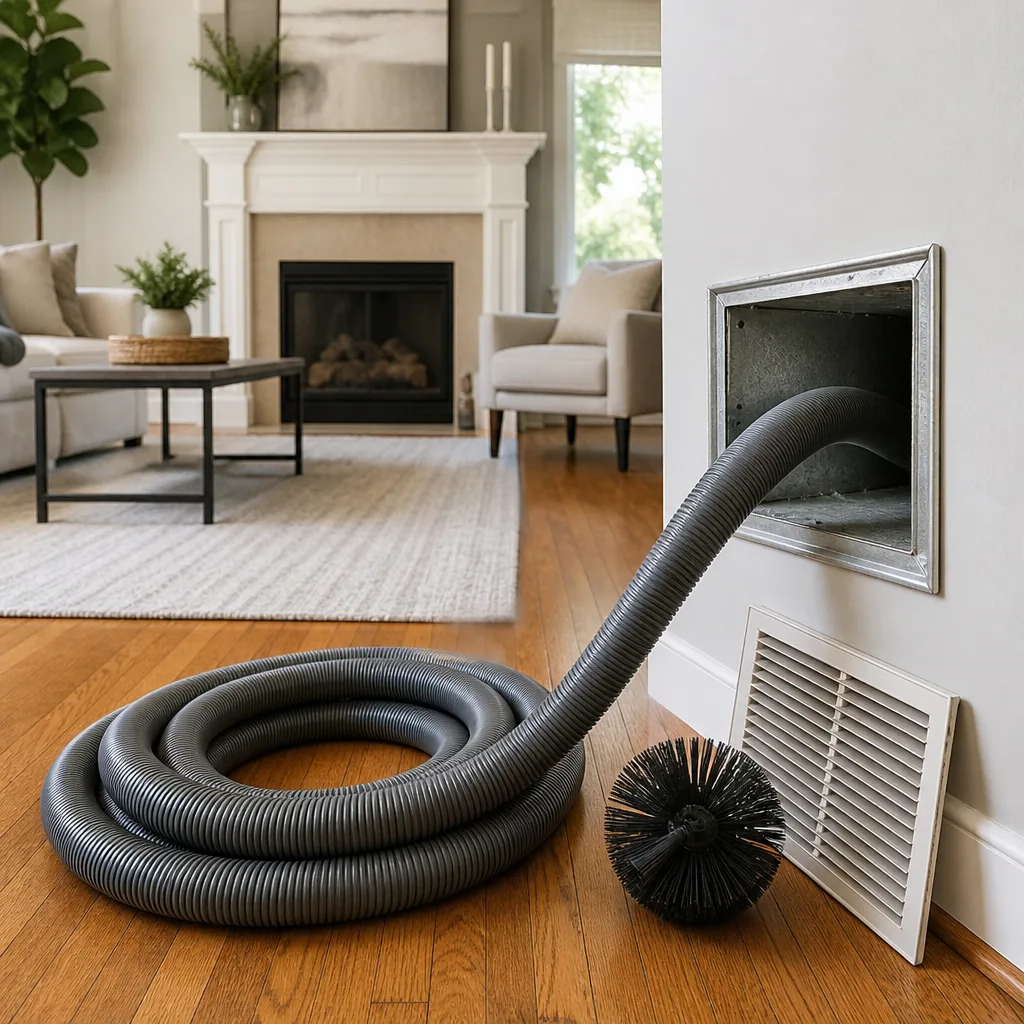 Whole-home duct cleaning
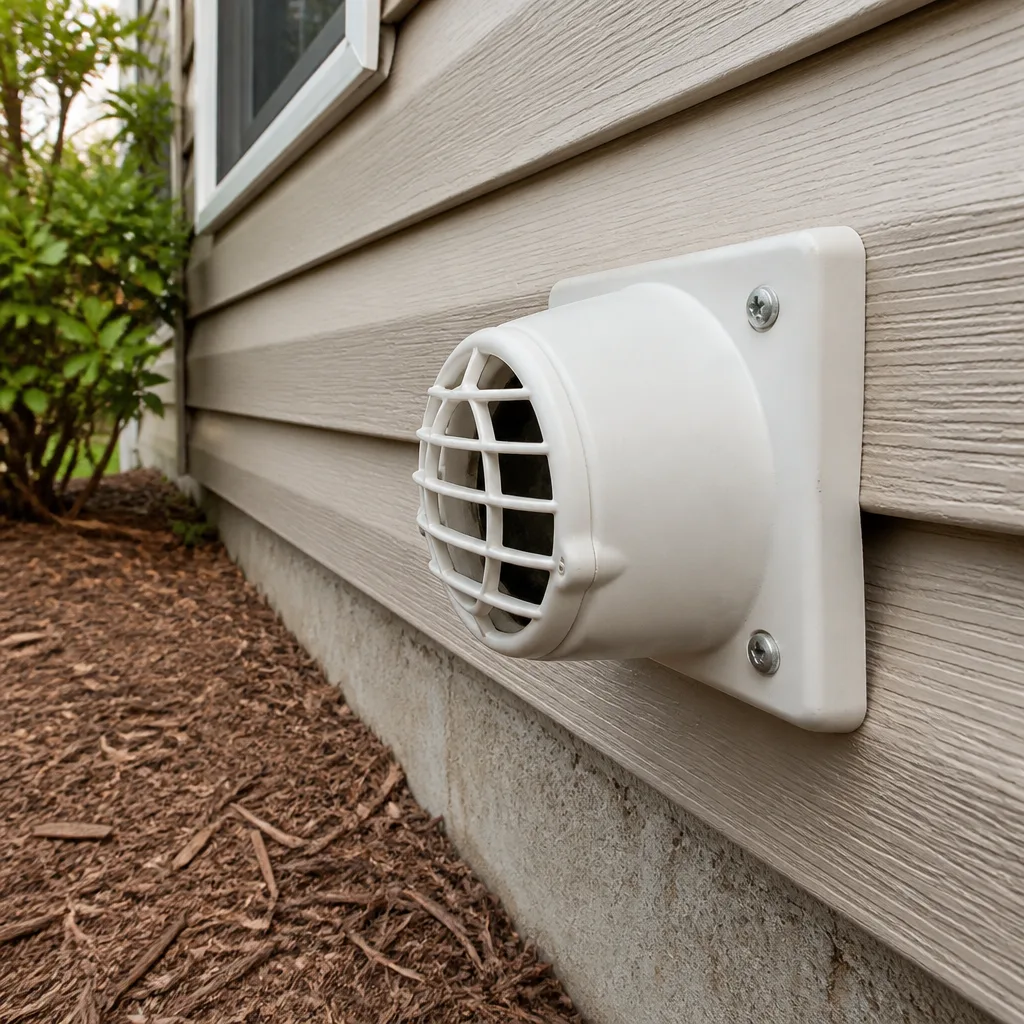 Dryer vent cleaning
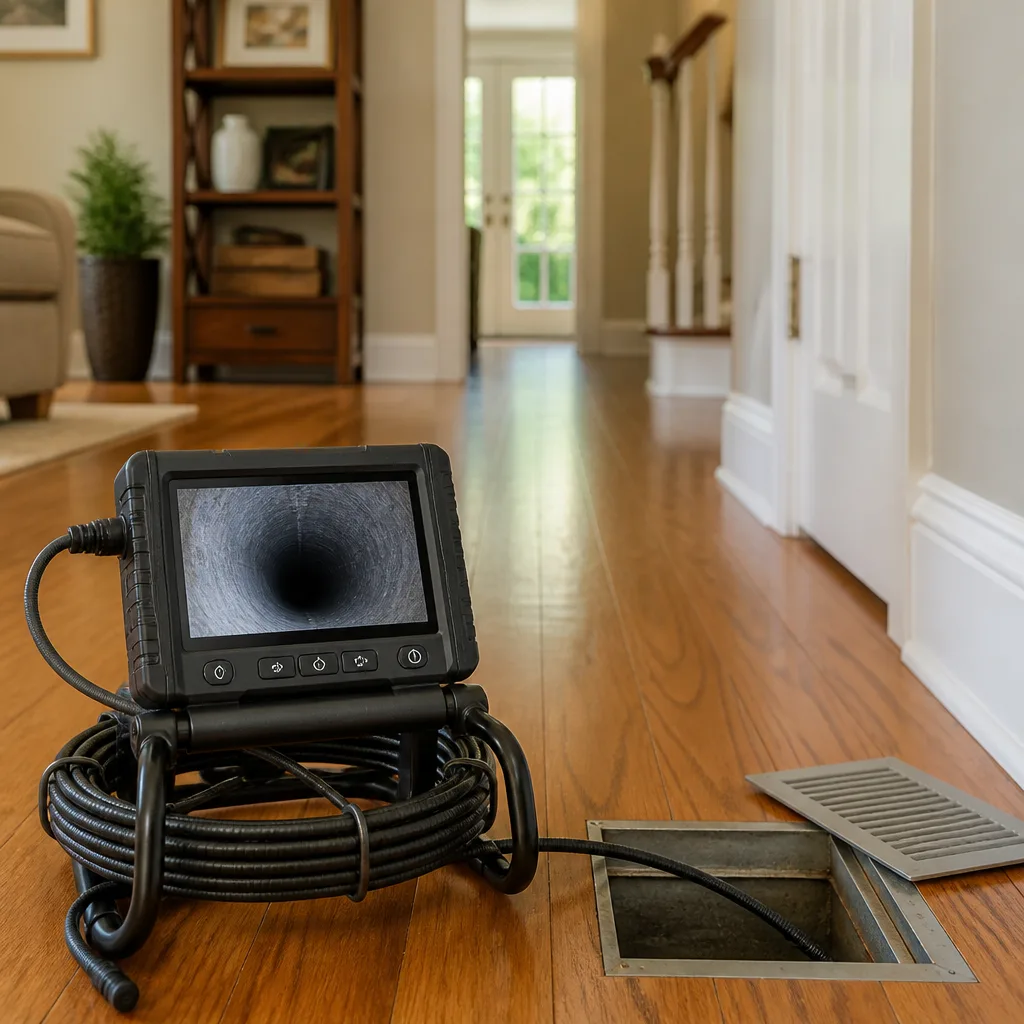 Camera inspection
 Sanitizing & deodorizing
Whole-system duct and dryer vent check with before-and-after photos - you see exactly what came out of your vents
That "$99 whole-house special" is a bait ad - the real number appears once they are in your hallway, or the "clean" is a shop-vac at the register. We photograph the inside of your ducts before and after instead.
Seasonal Air Duct Cleaning Care for Stapleton: Year-Round Homeowner’s Guide
Most homeowners think at the wrong resolution. They picture duct care as one annual chore, triggered by dusty registers or a musty smell, then forgotten. But in Stapleton, the inside of your ductwork doesn’t see one uniform year. It sees four distinct environments, each applying a different kind of stress to the same system. Spring leaves residue the furnace season deposited. Summer pushes humidity into every flex liner. Fall exposes whatever the cooling months quietly did. Winter puts the whole system under pressure and finds every loose joint. This guide walks through each season, tells you what to actually look for in Stapleton homes, and shows you how to time a professional cleaning so it delivers the most for what you spend.
Quick Answer
Duct contamination in Stapleton follows the seasons rather than a single annual clock. The highest-value window for a professional cleaning in this climate zone is late spring, right after the heating season ends and before the cooling season begins, because that’s when you can inspect, clean, seal and sanitize in one pass without removing a system you still depend on. Summer is the highest-risk window for mold colonization inside flex duct liner, so pay closest attention to musty odors and humidity control from June into September.
Styles & brands we work with
- Whole-home duct cleaning
- Dryer vent cleaning
- Camera inspection
- Sanitizing & deodorizing
Table of Contents
- Why Duct Care in Stapleton Isn’t a Once-a-Year Task
- Spring: The Post-Heating-Season Inspection Window
- Summer: Humidity and the Highest-Risk Window for Duct Mold
- Fall: The Pre-Heating Prep Checklist
- Winter: Negative Pressure and the Leaks It Exposes
- When to Schedule Professional Cleaning in Stapleton
- What a Professional Seasonal Visit Actually Involves
- What You Can Check Yourself (and What You Shouldn’t Touch)
Why Duct Care in Stapleton Isn’t a Once-a-Year Task
Ductwork is a passive system that reacts to whatever air moves through it and whatever environment surrounds it. In Stapleton, those two conditions change dramatically through the year. A home here runs its furnace through a long, dry heating season, then switches to a cooling season where the same ductwork that just dried out starts handling cold, humid air, often right at the dew point. Those are two very different loads on the same duct liner, the same insulation, the same seals.
That’s why we treat seasonal care as four separate questions rather than one. The condition you’re looking for in March is not the condition you’re looking for in July. The cleaning that makes sense in November is not the same cleaning that makes sense in May. Understanding which stress condition is currently active is what lets you look in the right place at the right time, whether you’re doing a visual check or deciding when to book a pro.
Stapleton adds its own character to that picture. This is a Staten Island community with a mix of housing stock, some of it older with original duct runs, some newer with tight, well-insulated flex systems. Older homes tend to leak and to carry decades of settled dust in low spots. Newer flex systems tend to trap moisture against a liner when humidity isn’t managed. Neither is bad. They just fail in different ways, and the season tells you which failure mode to watch for.
We’ve spent enough time in Stapleton homes to know the register in the hallway rarely tells the whole story. The real condition lives in the plenum, in the boot connections, in the liner, and in the joints you can’t see. A seasonal approach keeps you pointed at the parts of the system most likely to be under stress at that moment. That’s the honest reason to think in seasons instead of once a year.
Spring: The Post-Heating-Season Inspection Window
Spring is quiet. The furnace is still running on cool nights, the AC hasn’t fully taken over, and that brief overlap is the most useful inspection window you get all year. The heating season has just finished depositing whatever it was depositing. The cooling season hasn’t started moving humid air into the same ductwork. You can see the system in something close to a neutral state.
What spring inspection should prioritize
- Combustion byproduct residue near heat exchanger interfaces. If your system has a heat exchanger with accessible duct interfaces, that area can carry light residue accumulated over the heating season. A technician can inspect and confirm whether it’s normal surface dust or something that warrants cleaning.
- Humidifier scale buildup in the supply plenum. Homes with a whole-house humidifier on the system often find mineral scale right where the humidifier injects into the supply plenum. Spring is the right time to look because the humidifier is usually off and the surface is visible.
- Filter housing condition. After a long heating season, the filter slot and the housing around it collect dust that bypasses the filter itself. That dust is upstream of everything downstream, so it matters.
- Visible dust at supply registers. Streaking or dark film at the register face often points to a dirty boot or an unsealed connection behind the grille.
Why spring is the season for the fix, not just the inspection
Here’s the practical advantage: in spring, we can clean, sanitize, and seal the system in a single visit without pulling the home off a season it depends on. Cooling hasn’t begun in earnest, heating is winding down, and the house tolerates the work far better than it does in July or January. If you’re going to open the system and take a look inside, spring is when the look has the highest return.
That’s the case for pairing a proper air duct cleaning with a repair and sealing assessment in the same visit. Cleaning removes what accumulated. Sealing fixes what let it in. Doing both in spring means the rest of the year starts from a clean baseline instead of a patched one.
Summer: Humidity and the Highest-Risk Window for Duct Mold
Summer is when Stapleton ductwork faces its highest microbial risk. The mechanism is simple: a cooling coil produces cold air, cold air meets humid duct surfaces, and wherever the surface drops below the dew point, condensation forms. Inside a flex duct liner, that moisture has nowhere to go. It sits against the porous inner surface, which is exactly the environment mold needs.
This isn’t a Stapleton-only problem, but it’s a real one here because summers combine meaningful humidity with homes that often run their cooling systems hard. The season turns a duct system that was dry and benign in April into a wet, warm-lined environment by August. That’s the window where colonization happens.
How to manage summer risk
- Control indoor humidity intentionally. Target a reasonable indoor relative humidity and give the cooling system enough runtime to actually dehumidify. Short-cycling the AC keeps a room cool without removing the moisture that matters.
- Watch for musty odor at any register. A musty smell coming from one register is a strong signal that liner or insulation near that run is holding moisture.
- Inspect flex liner at accessible sections. Where ducts are exposed in a basement, crawlspace, or attic, a technician can check for damp spots or visible growth on the liner surface.
- Don’t mask it with fragrance. Air fresheners and plug-ins near returns hide the problem without changing anything inside the system.
- Consider sanitizing if growth is confirmed. Treatment options like Guardsman-backed sanitizing address surfaces after cleaning, not a substitute for cleaning.
In our experience, the homes in Stapleton that get through summer cleanly are the ones that manage humidity as a system property, not a room-by-room preference. The ductwork is the last place the moisture goes. Fix it there after you understand where it’s coming from. And if you’ve already noticed a smell, that’s the point to bring in an inspection rather than wait for fall. Better filtration helps too, and brands like Honeywell and Aprilaire give the system a way to do more of that work on an ongoing basis.
Fall: The Pre-Heating Prep Checklist
Fall is the season most homeowners skip and then wish they hadn’t. Heating season is about to start, and whatever the cooling months left behind in the duct system is about to get pushed through the house again, this time warm and dry. A short prep pass in fall prevents most winter surprises.
Pre-heating prep checklist
- Verify register dampers actually move. Open and close each adjustable register at least once. Dampers that haven’t moved since spring sometimes stick or bind, and a closed damper you thought was open creates a pressure imbalance that shows up later.
- Check for condensate wicking into duct insulation. During summer, a clogged or poorly sloped condensate line can let water travel along insulation near the air handler. Look for staining or softness in the insulation around the plenum and the first few feet of supply duct.
- Confirm the filter is fresh and correctly seated. A filter that’s too small for its slot lets air bypass around the edges, which is worse than no filter at all in some setups.
- Look at the return connections. A return plenum that has pulled loose at a joint will be a source of winter draft and dust. This is a high-yield check that takes a minute.
- Check that the basement or crawlspace hasn’t gone damp. A damp surrounding space means the duct system will absorb that moisture into its insulation through the heating season.
If any of those checks turns up a leak or a moisture issue, fall is the right time to fix it, before the heating season loads it further. That’s the season to call for HVAC cleaning if it hasn’t been done, or to book a sealing assessment if you’re seeing signs of a leak. The whole point of pre-heating prep is that the fix is cheaper and easier done quiet than done mid-winter.
Winter: Negative Pressure and the Leaks It Exposes
Here’s the counterintuitive piece. Winter doesn’t create new duct leaks. It reveals the ones that were already there. When a furnace runs through a long heating season, the return side of the system pulls a slight negative pressure relative to the rooms around it. Small leaks that sat dormant in warmer months start drawing air, and that air comes from wherever the leak is, which is often an attic or a wall cavity rather than the conditioned room you thought it was pulling from.
That’s why winter is when homeowners in Stapleton call us about new dust, new cold spots, or a return that seems to be pulling more than it should. Nothing actually changed. The pressure just went up and exposed the leak that was always there.
What winter negative pressure looks like in practice
- Dust on a register you cleaned recently. A register that gets dusty in weeks instead of months is usually upstream of an unsealed joint.
- A room that feels drafty even with the heat on. An unsealed return connection in a wall cavity pulls cold exterior air into the system.
- Higher energy use for the same comfort. The system is working harder because it’s conditioning air that came from outside the envelope.
- Whistling or hissing at a boot or joint. Air moving through a small gap makes noise. Winter is when that noise is loudest.
Winter is also when we look closely at flex duct connections and boot-to-floor interfaces, because those are the two places negative pressure shows up first. Repairing and sealing there changes what the system pulls for the rest of the season. It’s not a repair you can do from a register grille. It has to happen where the leak actually is.
When to Schedule Professional Cleaning in Stapleton
If we had to name one window, we’d pick late spring for most Stapleton homes. It’s after the heating season has stopped depositing residue and before the cooling season starts pulling humid air through the system. That single window lets a professional clean, sanitize, and seal the system without taking the house off a season it depends on. In this climate zone, late spring is the highest-return cleaning window of the year.
That said, “late spring for everyone” isn’t the whole answer. Different homes have different triggers.
Schedule a professional cleaning if any of these apply
- You’ve never had the system cleaned. Whether the home is old or new to you, an initial full-system cleaning establishes a baseline you can measure later.
- You’re moving into a Stapleton home. Cleaning before you move in means you’re not breathing what the prior household left behind, and it lets you spot issues while the house is empty.
- You’ve just finished a renovation. Drywall dust and construction debris settle everywhere, including far down the supply runs. Clean after the work is done, before you live in the space again fully.
- You’ve had water damage or a known moisture event. Any moisture inside the system warrants inspection and, if needed, sanitizing treatment after cleaning.
- A pet household has noticed new shedding patterns. Pet hair compacts into the return side and accumulates faster than most people expect.
- You’ve noticed musty odor, visible dust streaks, or an unexplained jump in energy use. Any of those three is a signal worth an inspection.
If you’re not sure which of those fits, that’s fine. The honest answer is that the schedule follows the home, not the calendar, once you’re past the first full cleaning. For a home that’s been done recently and is well-maintained, the seasonal checks above are enough. For a home that hasn’t, one proper cleaning in late spring and then seasonal observation after that is the sensible order.
What a Professional Seasonal Visit Actually Involves
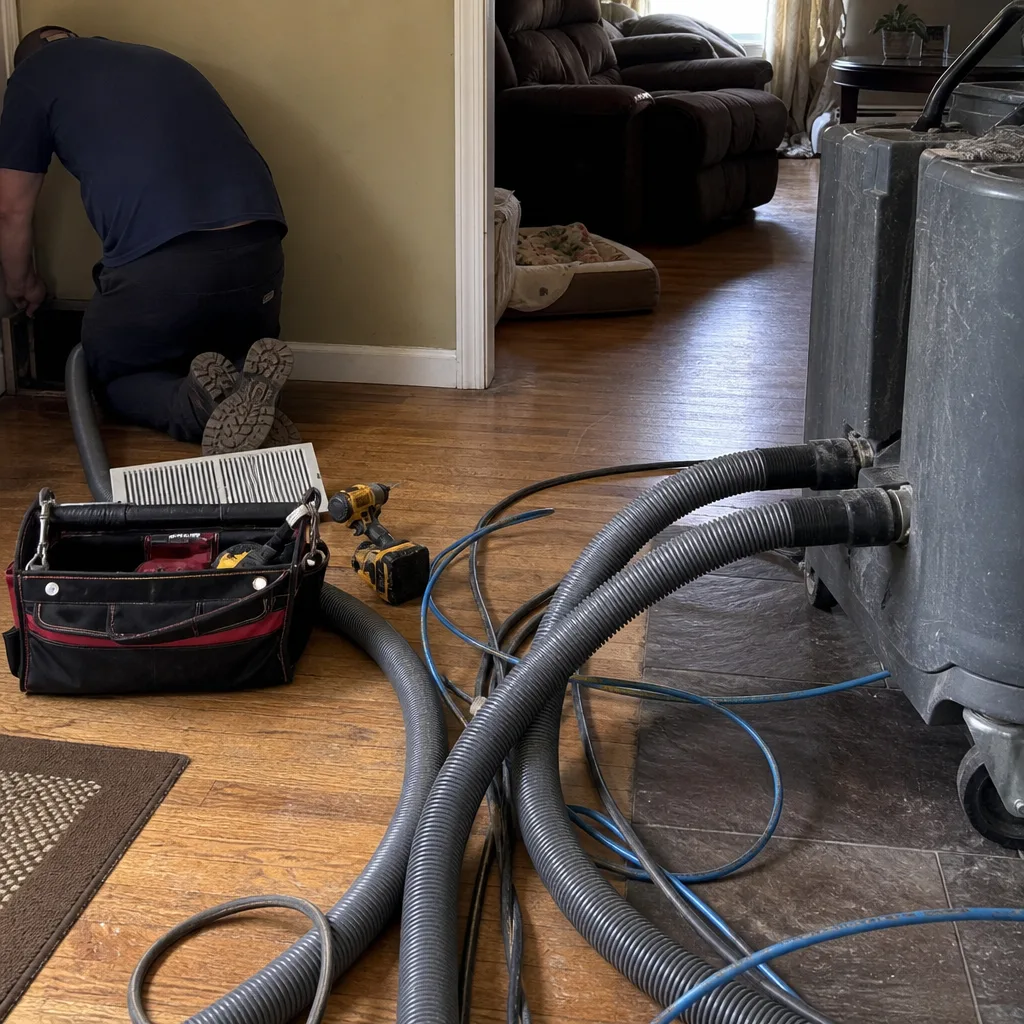
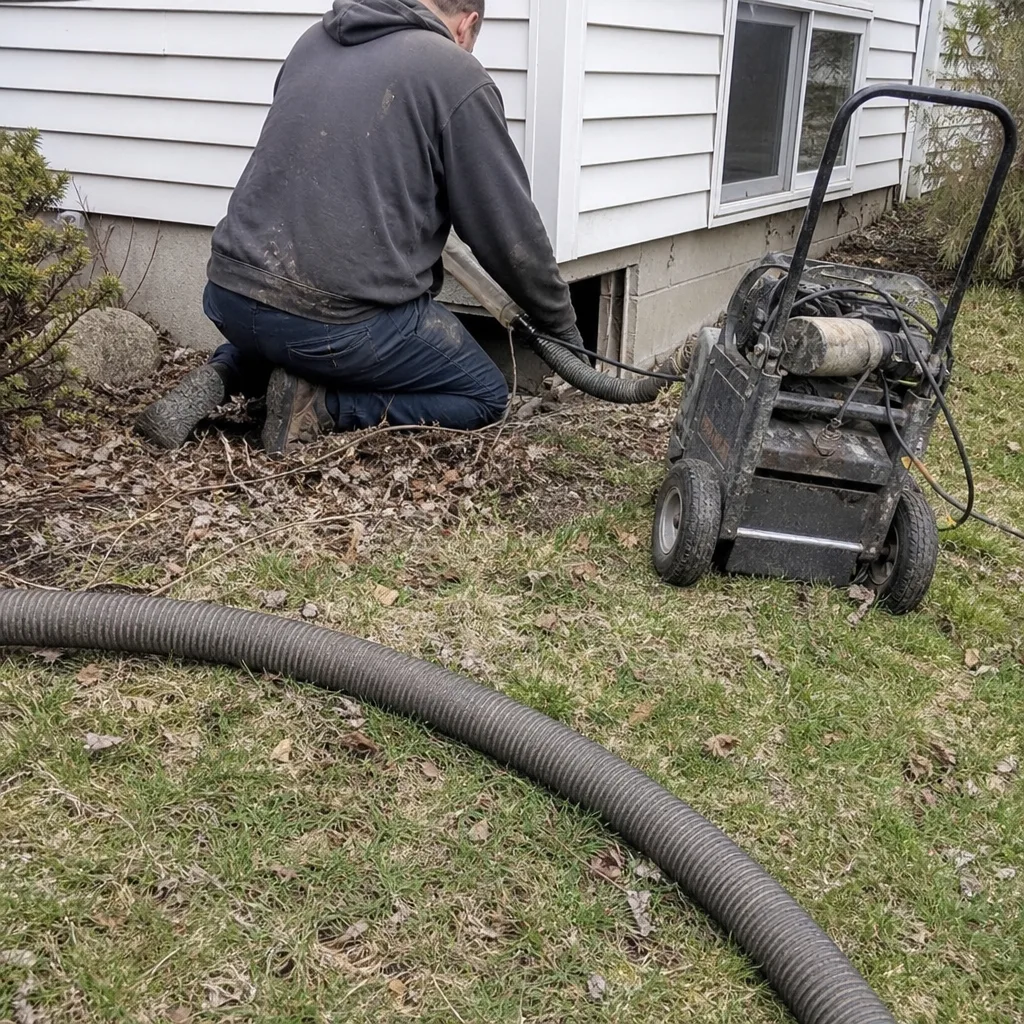
“Duct cleaning” can mean very different things depending on what equipment shows up. A shop vacuum and a wand is not a professional cleaning. A purpose-built duct cleaning machine with a rotating brush and negative-pressure containment is. The difference matters because it decides whether contamination is actually removed from the system or simply disturbed and re-deposited downstream.
The tools that make a difference
- Rotobrush and Nikro systems. These are purpose-built duct cleaning machines with rotating brush heads and HEPA containment. They agitate contamination loose and pull it back into a filtered collector rather than blowing it into the room.
- Abatement Technologies equipment. For contamination control and air quality work beyond surface cleaning, this equipment class supports higher-grade containment and remediation, especially when the duct system has had real moisture or microbial involvement.
- Honeywell and Aprilaire filtration products. Cleaning is a point-in-time fix. Filtration is continuous. When the system is set up with these, the air quality improvement holds between cleanings rather than degrading right back.
- Guardsman-backed treatment options. For sanitizing after cleaning, these surface treatments address what was left on the duct interior after physical cleaning, not instead of it.
What a full visit covers, in order
- Inspection of returns, supply runs, plenum, and accessible boots
- Containment set up at registers to keep dust out of living space
- Mechanical agitation and vacuum capture of the full system
- Sanitizing treatment if moisture or microbial involvement is confirmed
- Repair and sealing of leaks found during inspection
- Filtration assessment, and replacement if the filter setup is undersized or bypassing
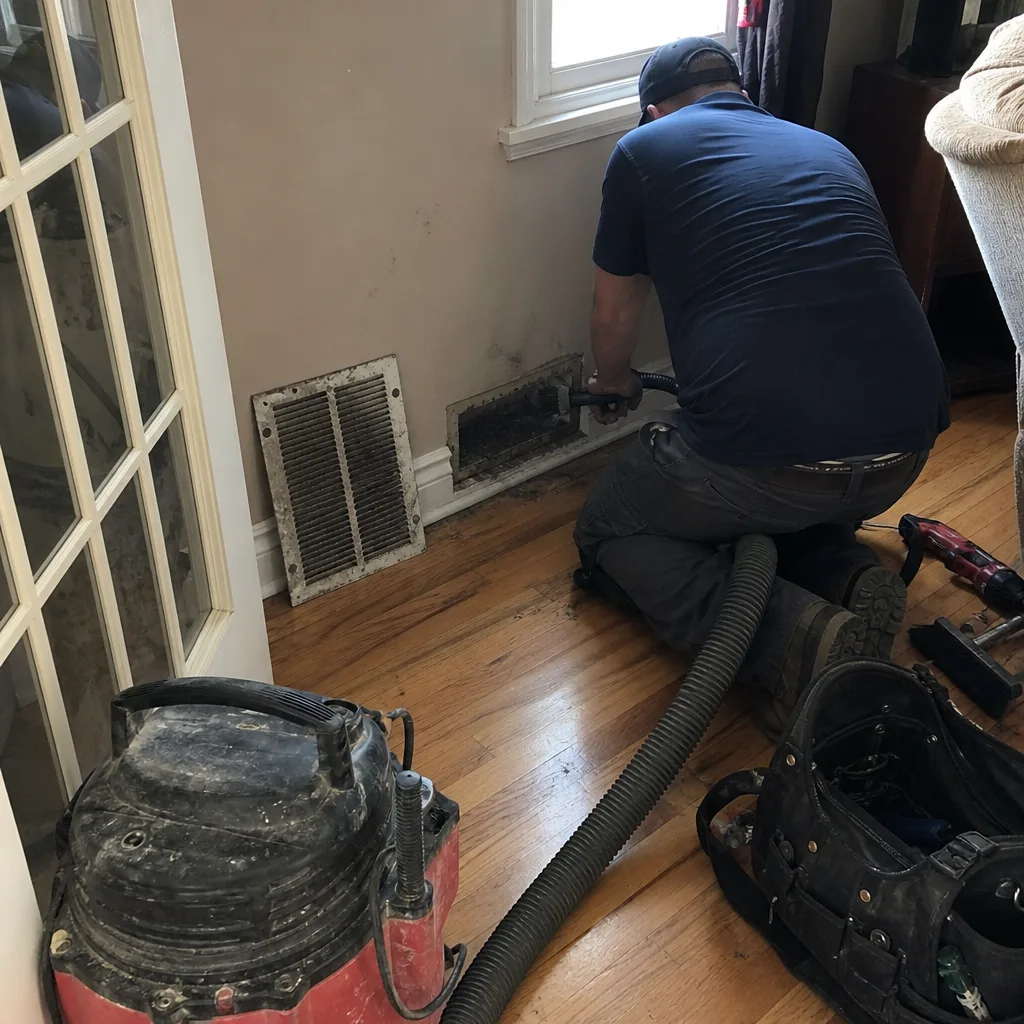
- Before-and-after documentation so you can see what was found and what was done
That full sequence is what separates a seasonal service from a spot clean. If your service provider is only doing step three, you’re cleaning a system and leaving the reason it got dirty untouched. We clean the system, then fix what made it dirty. Those are two different jobs on the same visit.
What You Can Check Yourself (and What You Shouldn’t Touch)
Some seasonal checks are homeowner tasks. Others are not. Knowing the line is what keeps a seasonal care routine safe.
What you can do yourself
- Replace the filter on schedule and confirm it’s the right size for the slot.
- Open and close each adjustable register to verify dampers move.
- Look at register faces for dust streaking or dark film.
- Note any musty smell and which room it’s strongest in.
- Watch for visible moisture or staining around the air handler, particularly the condensate line and plenum area.
- Keep the basement or crawlspace dry and ventilated as best you can.
What you should not do yourself
Do not open the air handler cabinet, disconnect ductwork, or enter a system that has any electrical, gas, or combustion component behind it. Combustion appliances and heat exchangers are not homeowner service points. Any work that touches gas lines, electrical connections at the air handler, or the combustion side of the system needs a trained professional, full stop. If you suspect a gas smell or see soot or scorching, stop and call for service rather than investigating further. We’d rather you call us and have the system inspected than handle something that shouldn’t be handled. That’s not a sales position; it’s the honest one.
If your seasonal check uncovers a concern you can’t safely investigate, that’s the point to have it inspected. Call Air Duct Cleaning Stapleton for a free estimate and we’ll walk through what we find.
Common Mistakes to Avoid
- Cleaning only in summer. Summer is the highest microbial-risk window, but cleaning mid-summer means opening the system while humidity is at its worst. Late spring gives you the same benefit at a lower risk point.
- Skipping the fall damper and condensate checks. Small condensate wicking into duct insulation during the cooling season becomes a much larger problem once the heating season runs against damp material.
- Assuming new-looking ducts are clean ducts. Stapleton homes with newer flex runs can look clean at the register while the liner underneath has been holding moisture for two seasons. Surface appearance is not a reliable indicator.
- Treating musty smells with air fresheners instead of finding the source. Fragrance near a return just moves a problem around. If a smell is coming from a register, the source is inside the system.
- Ignoring small leaks until they cause a bigger issue. A minor unsealed joint in summer pulls house air. In winter, under furnace-driven negative pressure, the same joint pulls attic or wall cavity air into the system. Same leak, different consequence.
- Cleaning without sealing. A clean system with the same leaks just re-dirties faster. If the reason the ducts got dirty in the first place is still there, the next cleaning comes sooner.
- Using a shop vacuum on accessible duct sections. Consumer vacuums don’t capture fine contamination and can redistribute it. They also can’t reach past the first bend, which is where most of the problem sits.
See the difference
 Before
 After
 Before
 After
 Before
 After
When to Call a Professional
Call a professional if you’ve found visible mold or suspected microbial growth anywhere in the duct system, if a musty odor is coming from one or more registers and not improving, if you’ve had water damage or a moisture event near the air handler, if you’ve just finished a major renovation in the home, if a register is producing noticeably more dust than the rest, or if you’re not sure how long it’s been since the system was cleaned. Also call if your seasonal check has turned up a combustion, gas, or electrical concern. Those belong with a trained professional, not a homeowner with a flashlight. Air Duct Cleaning Stapleton offers free estimates in Stapleton. Call (877) 536-7311. We answer 24/7. Fast dispatch from 7am to 7pm, Sunday through Friday.
Frequently Asked Questions
For most Stapleton homes, one full professional cleaning followed by seasonal inspection and a cleaning every few years is a reasonable baseline. Homes with pets, allergy sufferers, recent renovations, or a history of moisture issues may need more frequent attention. The seasonality matters more than the interval: a single well-timed cleaning in late spring, with a small fall check, does more than an annual cleaning done at the wrong time of year. Call (877) 536-7311 for an exact quote – estimates are free.
Summer is the highest-risk window because cooling-coil air meets humid duct surfaces, condensation forms inside flex liner, and warm, moist conditions persist for months. Mold needs moisture, a porous surface, and a temperature range, and a Stapleton summer supplies all three. If you’ve had a musty smell during cooling season, that’s the season to have it inspected.
At the end of heating season, look for combustion byproduct residue near heat exchanger interfaces, humidifier scale in the supply plenum, a dirty filter housing, and visible dust at supply registers. Those four checks catch most of what the heating season leaves behind. A technician can confirm whether any of it is normal surface dust or something that warrants cleaning.
Ask for before-and-after photos of your own system, not generic ones. We photograph the inside of accessible duct runs before and after cleaning so you can see what was found and what was removed. If a service provider can’t show you photos of your actual ducts, that’s a reasonable signal something is being skipped. Call (877) 536-7311 for a free estimate.
Cheap quotes usually reflect a smaller scope: a surface pass, no containment, no sealing, no filtration assessment. That’s not a scam necessarily, but it isn’t the same job. A proper full-system cleaning with containment equipment, a sealing assessment, and filtration review is a different service, and it’s priced accordingly. The question isn’t which quote is cheaper; it’s what’s included in each. Call (877) 536-7311 for a written estimate with the full scope spelled out.
A sealed system reduces the air pulled from attics, wall cavities, and other unconditioned spaces, so the heating and cooling equipment is conditioning less of what it shouldn’t be. That’s a direct effect, not a vague efficiency claim. Over a heating season in Stapleton, small leaks under furnace-driven negative pressure have a measurable impact on how hard the system works, and sealing changes that.
Dryer vents are a separate system with their own risk profile, and lint accumulation is a fire hazard rather than an air quality issue. We treat dryer vent cleaning as its own seasonal check, typically once a year for most households and more often in busy homes. Combine it with your duct cleaning visit if you want, but it’s worth scheduling independently if it’s been a while.
The Bottom Line
Duct care in Stapleton follows the season, not a fixed calendar. Spring is the observation and fix window. Summer is the highest microbial risk. Fall is the pre-heating prep checkpoint. Winter exposes leaks that were always there but only show under negative pressure. If you do one thing for the year, do a professional cleaning in late spring with a sealing assessment attached. Then use your fall and winter checks to catch the rest before it turns into a bigger job. That sequence is what a year-round routine actually looks like. For specific scope and pricing on the Stapleton home, call (877) 536-7311. We answer 24/7. Fast dispatch from 7am to 7pm, Sunday through Friday.
Our technicians have up to 12 years of experience and use professional-grade Rotobrush and Nikro equipment, with containment and treatment options that meet the standard you’d expect from a system-level service. Call us for a free estimate and we’ll tell you honestly what we find.
Written by the team at Air Duct Cleaning Stapleton.