
Last updated November 24, 2026
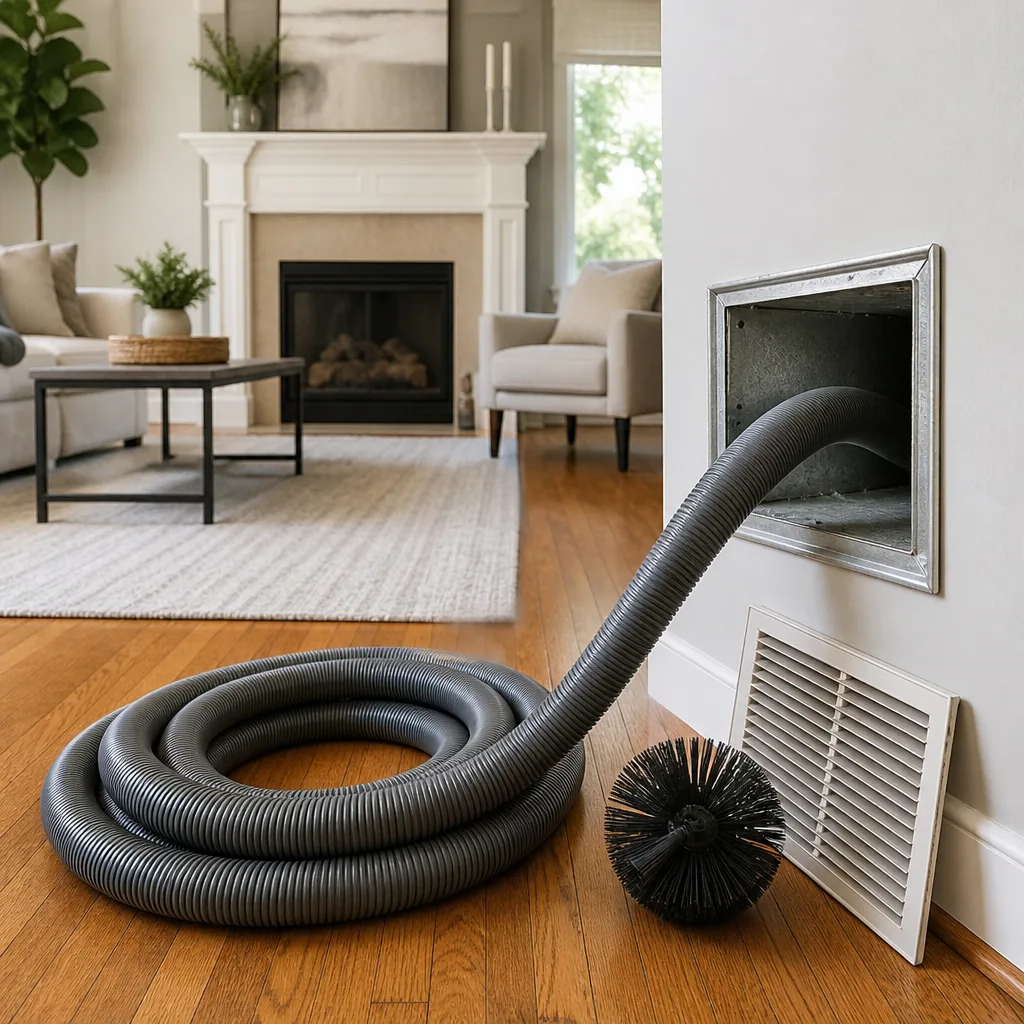 Whole-home duct cleaning
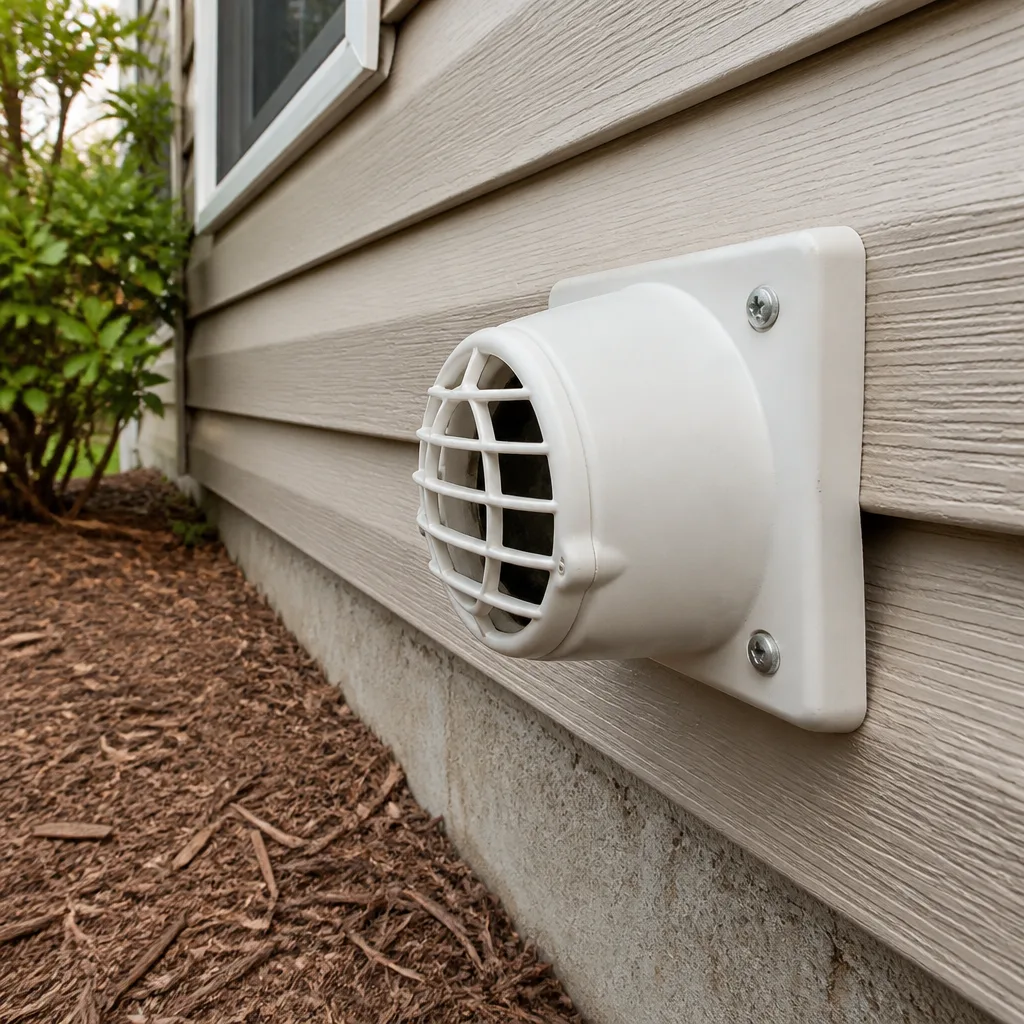 Dryer vent cleaning
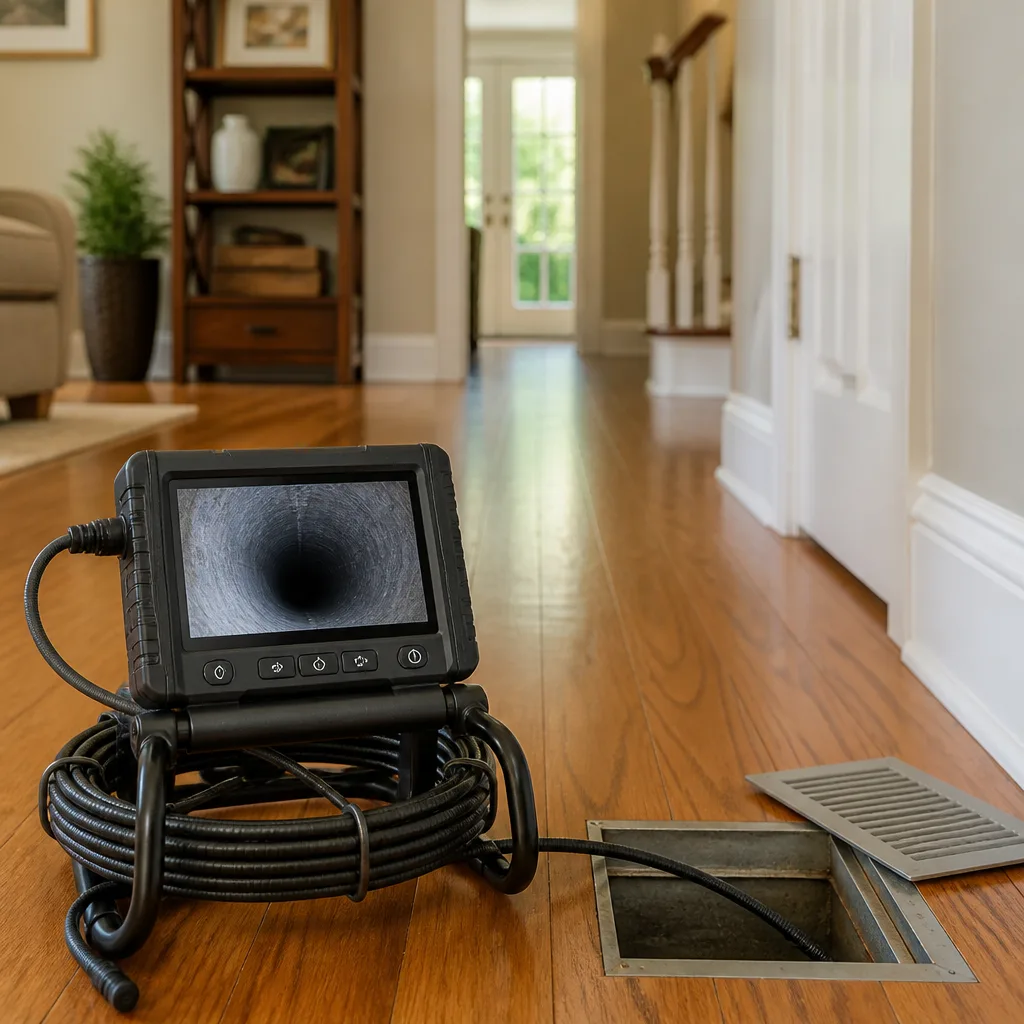 Camera inspection
 Sanitizing & deodorizing
Whole-system duct and dryer vent check with before-and-after photos - you see exactly what came out of your vents
That "$99 whole-house special" is a bait ad - the real number appears once they are in your hallway, or the "clean" is a shop-vac at the register. We photograph the inside of your ducts before and after instead.
Air Duct Cleaning Maintenance Checklist for Stapleton Homeowners
Changing your filter on schedule feels like maintenance. But if your return plenum has an unsealed gap, you’re just filtering the air that enters the right way, not the dusty attic air sneaking in around it. That gap is invisible from your hallway. It shows up as a fine gray film on the return grille, a faint musty smell when the blower kicks on, or a power bill that creeps up without explanation.
This guide is a maintenance checklist for the whole system, built around what actually goes wrong in Stapleton homes. You’ll get monthly, quarterly, and annual task breakdowns, specific inspection points that go past “check your filter,” a way to audit accessible register cavities with a flashlight and your phone, and the warning thresholds that should turn a checklist item into a service call.
Quick Answer
A working air duct maintenance checklist for Stapleton homeowners combines a monthly filter check (fit, bypass gaps, and MERV rating), a quarterly visual audit of accessible registers and the air handler cabinet, and an annual-format professional cleaning plus sealing assessment. Log what you find each time. The log itself is the checklist’s real value: it shows whether the system is stable or slowly degrading. If you see soot, standing moisture, pest droppings, or a pressure reading that moves, stop watching and book a diagnostic.
Styles & brands we work with
- Whole-home duct cleaning
- Dryer vent cleaning
- Camera inspection
- Sanitizing & deodorizing
Table of Contents
- Why a Maintenance Checklist Works Better Than a Cleaning Reminder
- Monthly Tasks: The Filter and the Fit Around It
- Quarterly Visual Audit: Flashlight and Phone Camera in the Register Cavities
- Annual Tasks: The System-Wide Check
- Stapleton-Specific Checklist Items: Storm Debris and Summer Humidity
- What to Log After a Professional Cleaning
- Warning Thresholds: When a Checklist Item Becomes a Service Call
Why a Maintenance Checklist Works Better Than a Cleaning Reminder
Air duct cleaning is a treatment, not a schedule. It removes what’s there on the day it happens. A checklist is what keeps you from needing it again too soon. The distinction matters because ducts don’t get dirty in isolation. They get dirty because something upstream is pushing stuff in, and something downstream can’t push it out.
Three things drive that cycle:
- Infiltration. Unsealed gaps in the return plenum and at trunk joints pull air from attics, crawlspaces, and unconditioned wall cavities.
- Filtration mismatch. A filter that’s too restrictive chokes airflow. A filter with a poor fit lets air bypass the media entirely. Both leave dust in the ducts.
- Moisture. Condensation on flex duct liner, a clogged drip pan, or a stuck float switch creates the damp environment where mold and mites settle in.
A checklist catches each of those early because it asks you to look and write down what you see. In our experience, the difference between a system that stays clean for several years and one that needs re-cleaning in a single season is almost always a gap, a bypass, or a moisture problem nobody logged.
Your checklist has three rhythms: monthly, quarterly, annual. Each one is short. None requires disassembly. If you want the full picture of what a professional cleaning does before you build the checklist around it, start with air duct cleaning.
Monthly Tasks: The Filter and the Fit Around It
The monthly task is not “change the filter.” It’s “confirm the filter is doing its job in the system it’s installed in.” Those are different jobs, and the second one is where most problems hide.
- Photograph the filter before you touch it. Note the color pattern and where the dust sits. A filter that’s darkest in one corner tells you air is being pulled preferentially through that edge.
- Pull the filter and look at the gasket or frame edges. Look for a dust shadow on the frame the filter doesn’t cover. That shadow is bypass. Air is going around the media, not through it.
- Check the fit in three directions. Width, height, and depth. A filter one size under is worse than no filter at all in a dusty attic envelope, because it looks installed.
- Note the MERV rating on the packaging and compare to what your blower is rated to move. Higher MERV means more restriction. Check the manufacturer’s rated static pressure tolerance for your air handler. If you’re not sure, write down the model number on the air handler cabinet and call it in.
- Slide the filter back and listen. A whistle or hiss at the return grille after reinstallation means a seal is failing. Note it on the log.
- Look at the return grille face. Fine gray film on the vanes means air is carrying visible particulate past the filter. That’s a datapoint, not a crisis.
Write three lines each month: filter condition, fit observations, and any change in noise or airflow. In a Stapleton house with pets or carpet, plan on monthly checks. With hard floors and no pets, every four to six weeks is realistic. The exact interval matters less than the consistency of the log.
Quarterly Visual Audit: Flashlight and Phone Camera in the Register Cavities
You can learn a lot about a duct system without opening a single joint. A bright flashlight and a phone camera with the flash on will do it. This is a “look and record” audit, not a disassembly job. No tools beyond that.
Here’s the sequence we suggest for Stapleton homes:
- Pull the register cover from one supply and one return in each zone of the house. Keep track of which is which.
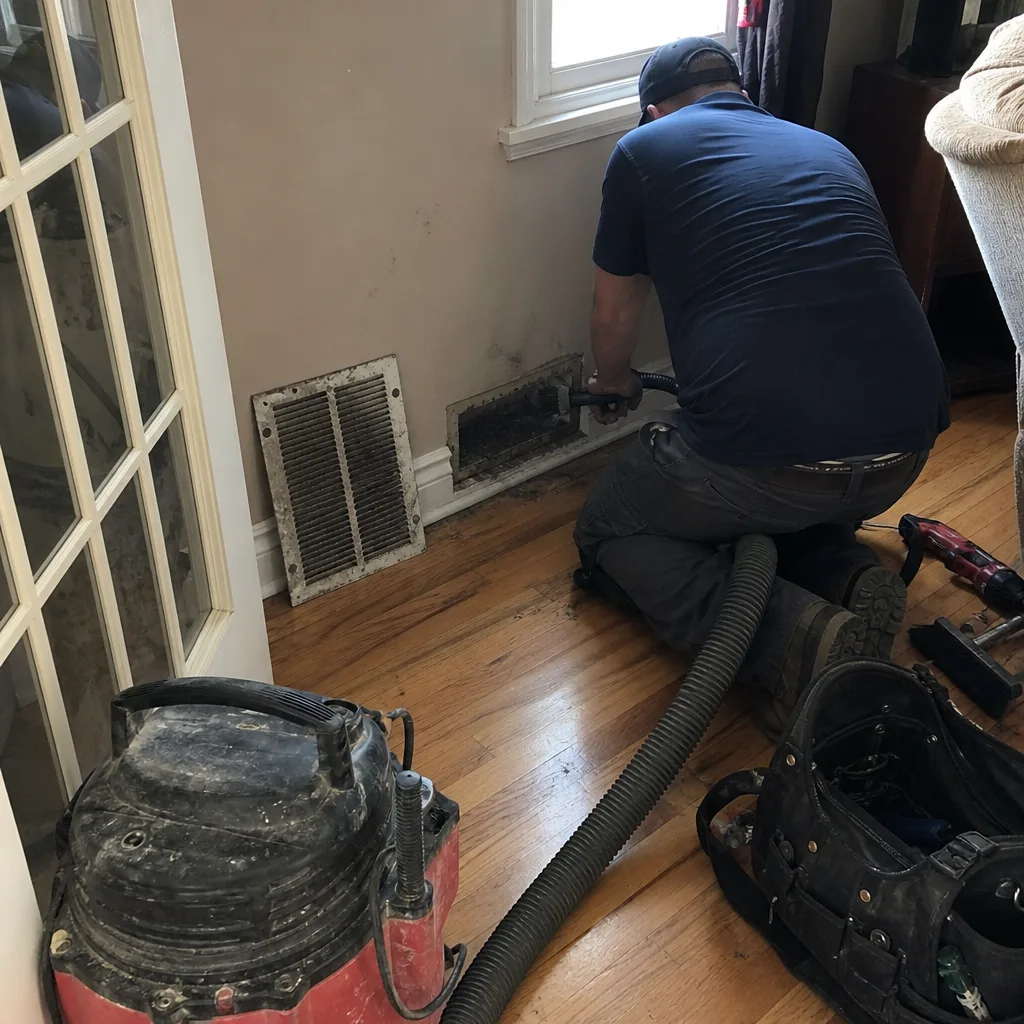
- Shine the light along the boot and the first few feet of duct. Look for dust accumulation on the bottom surface, and for a horizontal line where dust ends. That line often marks where the boot meets a poorly sealed trunk.
- Use the phone camera to shoot toward the duct interior. Flash on, wide lens if you have it. You’ll see further than your eye can.
- Look for moisture on the lining. Any shine, condensation, or dark stain on flex duct liner is a stop-and-call item.
- Check the return grille cavity for debris accumulation. Pet hair, carpet fibers, and construction dust collect at the transition from grille to plenum.
- Photograph everything and file it by room and date. These images become the baseline the next technician compares against.
Two things we see in Stapleton audits more than most homeowners expect: debris at the very start of a supply run where the boot meets the trunk, and torn flex liner at bends. Neither is visible from the room. Both show up clearly on a phone photo.
When you log the audit, note where the photo was taken and what you saw. Four photos a quarter builds a useful record in a year. For an HVAC-side review of the air handler, filter box, and coil area, see HVAC cleaning.
Annual Tasks: The System-Wide Check
The annual check is where the quarterly observations get synthesized. You’re looking at the system as a whole and deciding whether conditions have shifted.
- Walk the attic or crawlspace where accessible. Look at duct runs for sagging flex, disconnected collars, and any spot where a hangar has failed. A sagging run collects dust.
- Inspect the roof penetrations from the attic side. Look around any pipe boot, vent stack, or exhaust collar for daylight or water staining. Debris and moisture come in together.
- Check the air handler cabinet seams and the return plenum gaps. Silicone or mastic missing at any seam is a bypass candidate.
- Review your filter log for the year. If filter life is getting shorter, something in the system is loading it faster than it used to.
- Confirm the drip pan drains and the float switch trips. Test by hand if accessible. Standing water in a drain pan is a mold risk, not just a puddle.
- Book a professional assessment if the checklist flagged anything. Cleaning, sanitizing, and sealing work together here. Air Duct Cleaning Stapleton offers free estimates for a whole-system review, which is a good point to reset your baseline.
A properly run annual check takes an hour of homeowner time. The value isn’t the hour, it’s the reference point. Without a baseline, you can’t tell whether the system is stable or slowly needing re-clean sooner than it should.
Stapleton-Specific Checklist Items: Storm Debris and Summer Humidity
Some checklist items are specific to how Stapleton homes sit on the land. Two patterns come up repeatedly, and both are easy to add to your log.
Post-storm debris entry through roof penetrations
After any major storm, walk the attic side of roof penetrations and photograph what you find. Wind-driven rain and fine debris work into gaps at pipe boots, vent collars, and any flashing that’s separated. Small organic material that gets into a return-side duct run becomes food for mold over a humid stretch. The checklist action is simple: after a storm, add a single line to your log, note whether anything looked disturbed, and snap a photo if it did.
Summer humidity spikes and flex duct liner
Stapleton summers bring stretches where interior humidity rises in attics and unconditioned spaces, and flex duct liner is where that shows up first. The liner is a porous surface, and condensation on the inside of a humid attic run feeds growth quickly. Check for:
- Musty odor at supply registers when the system starts.
- Visible moisture on flex liner at the lowest point in a run.
- Damp air at specific registers in one zone while others feel normal.
- Discoloration on the filter edge nearest the humid zone.
Any single mark is worth a check. Two together is a call. Homeowners in Stapleton with below-grade rooms or high-water-table crawlspaces should check this monthly through the humid months.
What to Log After a Professional Cleaning
This is the item most homeowners skip, and it’s the one that makes the next cleaning faster and less expensive. After professional cleaning, you should have a record you can hand to the next technician. Here’s what to capture:
- Baseline photos, before and after. Photographs of the same register cavities, the air handler, the return plenum, and one representative supply trunk. Files should be dated and labeled by location.
- Static pressure readings. Ask the technician to record the supply and return static pressure at the air handler. These numbers can be compared later. If they drift, either the filter media or a duct condition changed.
- Sanitizer application record. If a sanitizer was applied, note the product, the areas treated, and the date. Treatment options backed by Guardsman are among what we use for surface protection and sanitizing; the exact record is what matters.
- Sealing work noted separately from cleaning. Cleaning removes dust. Sealing stops it from coming back. Both should appear in the log with the location of the work.
- Filter recommendation with MERV and fit. Just the size and the rating, plus the reason if the recommendation differs from what was in place.
- Anything flagged but not done. Torn liner, a sagging run, an unsealed boot. The next visit should start from this list.
We use Rotobrush and Nikro equipment for the cleaning itself, and both produce consistent results that get easier to verify with good photos. The photos are the point: they show what’s inside before and after. A written log plus dated photos is what makes the next technician’s job shorter. Without it, everyone starts from zero.
Warning Thresholds: When a Checklist Item Becomes a Service Call
A checklist is only useful if it moves something to a service call. “Watch and wait” is fine for a small dust buildup. It’s not fine for a system that’s spreading contamination every time it runs. Here are the thresholds we use.
Call now, don’t wait:
- Soot, ash, or fine black film on the return grille or filter. This points to combustion byproducts reaching the duct path.
- Visible standing water in the drain pan or on flex liner.
- Pest droppings or insect casings inside any duct cavity.
- Mold growth visible on the interior of the air handler cabinet or the flex liner surfaces.
- A musty or moldy odor in the supply air that doesn’t clear when the filter is new.
- Torn or collapsed flex duct liner, even without visible dust.
- Static pressure reading drift of any notable amount from your baseline log.
Watch and recheck in two weeks:
- A single darker spot on the filter edge or corner.
- Dust on register vanes you’ve never seen before.
- A faint whistle at a return grille.
- Filter life shortening by more than you’d expect from your home’s habits.
If a “watch” item reappears on your next log entry, treat it as a “call.” A recurring mark is a signal, not a coincidence. Air movement through a gap repeats the same pattern every month.
The reason we treat these as thresholds rather than a general recommendation is that duct problems are cumulative. A dust entry that runs for a season contaminates the system beyond what a cleaning removes. A sealing assessment is often what makes the cleaning stick. If you’ve been following the checklist and hit a threshold, air duct cleaning in Stapleton starts with what you found, not with what a brochure says.
Common Mistakes to Avoid
- Installing a high-MERV filter without checking blower tolerance. A restrictive filter is safer for the air quality of the room but harder on the blower. In an old Stapleton attic duct run with undersized returns, the filter can be the straw that stops airflow.
- Replacing the filter without snapping photos first. The dust pattern and bypass shadows are the datapoints, and once the filter is in the trash they’re gone. Photograph the old filter from the air-handler side, not the room side.
- Skipping the return-side audit. Homeowners inspect supply registers because they’re visible in every room. The return is where most accumulation happens, and it’s the easiest to skip.
- Treating duct cleaning as a one-time event. Without sealing and a filter fit, a cleaned system gets dirty again on a shorter timeline than most people expect. Cleaning alone treats a symptom.
- Watching a moisture problem. A small damp spot on flex duct liner in summer Stapleton humidity is the beginning of mold, not a maintenance curiosity. Standing water and dampness go straight to a call.
- Ignoring the log once it’s started. An updated log tells you whether the system is stable. A log kept for one month and dropped tells you nothing.
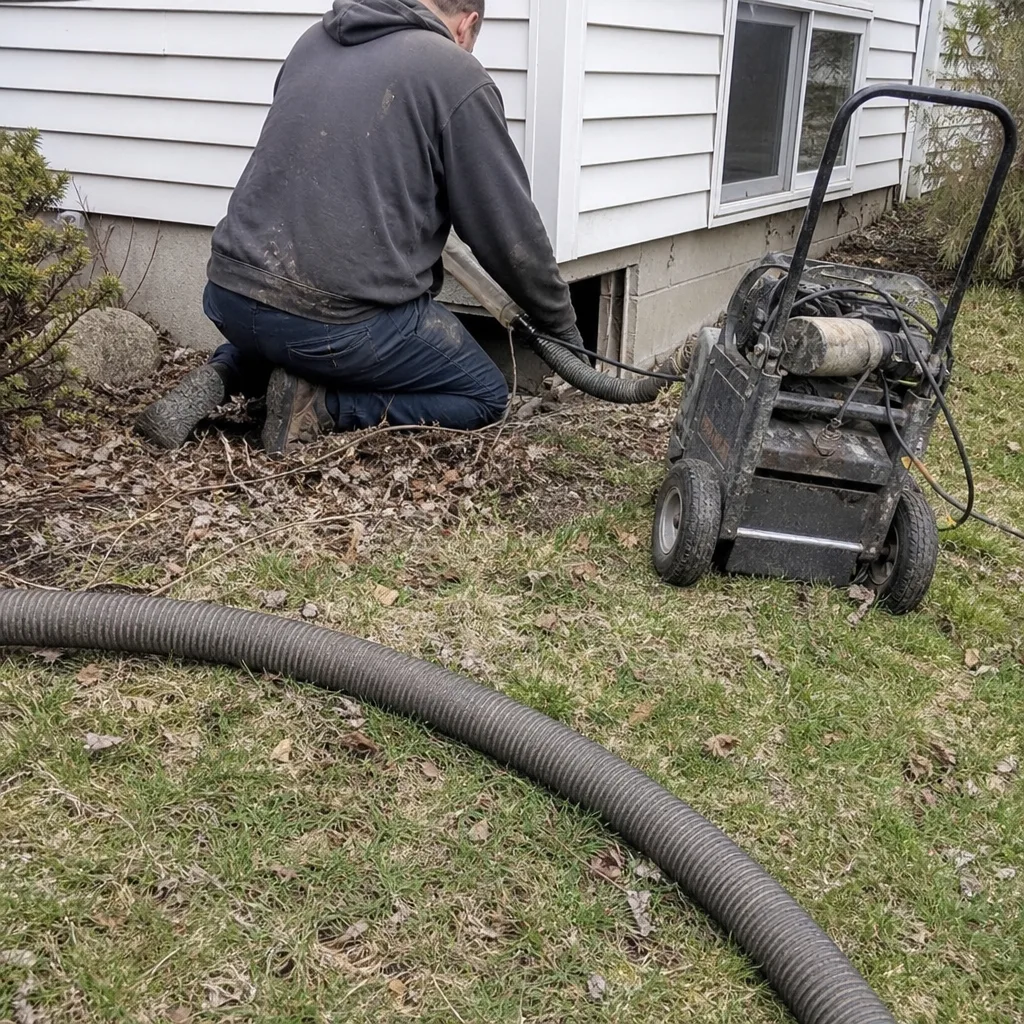
- Believing a shop vac and a hose is duct cleaning. Consumer vacuums can’t move enough air or create the negative pressure that pulls debris out of a trunk line. The equipment matters.
See the difference
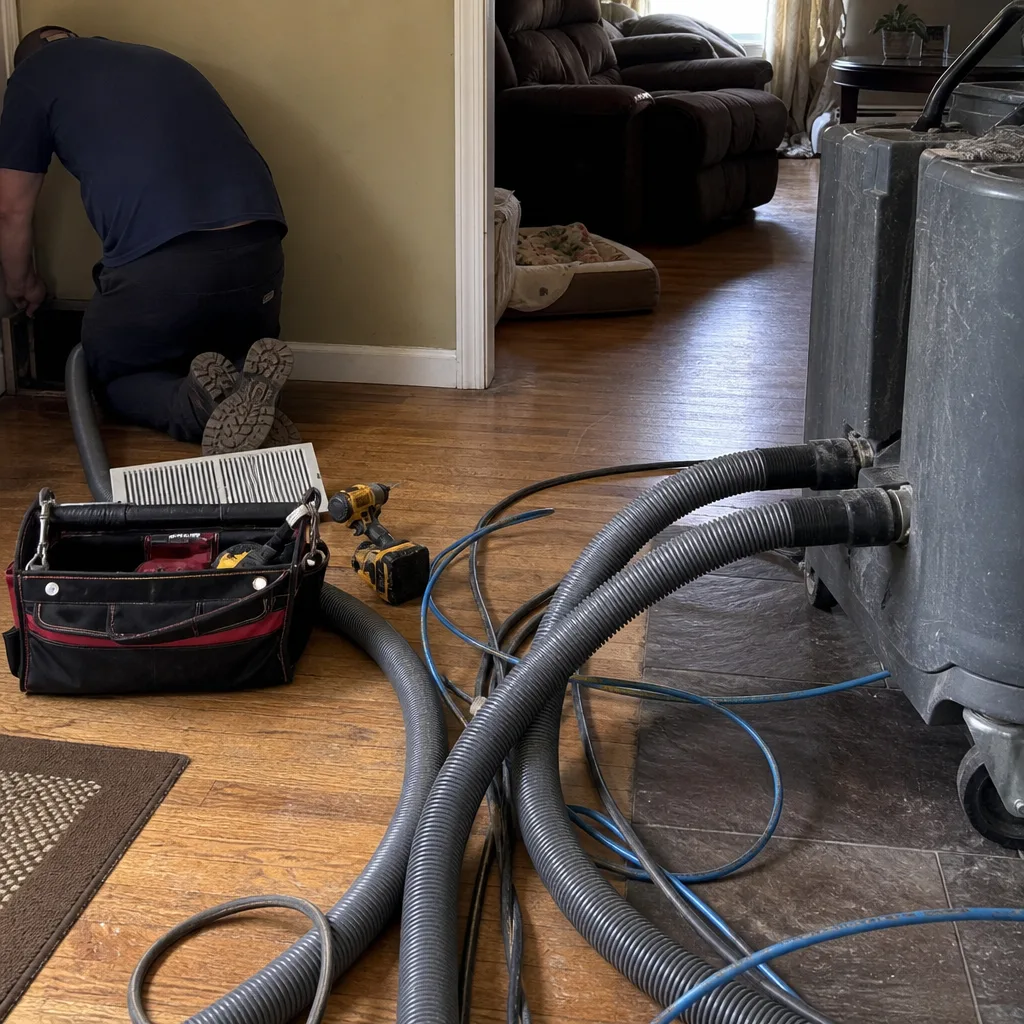 Before
 After
 Before
 After
 Before
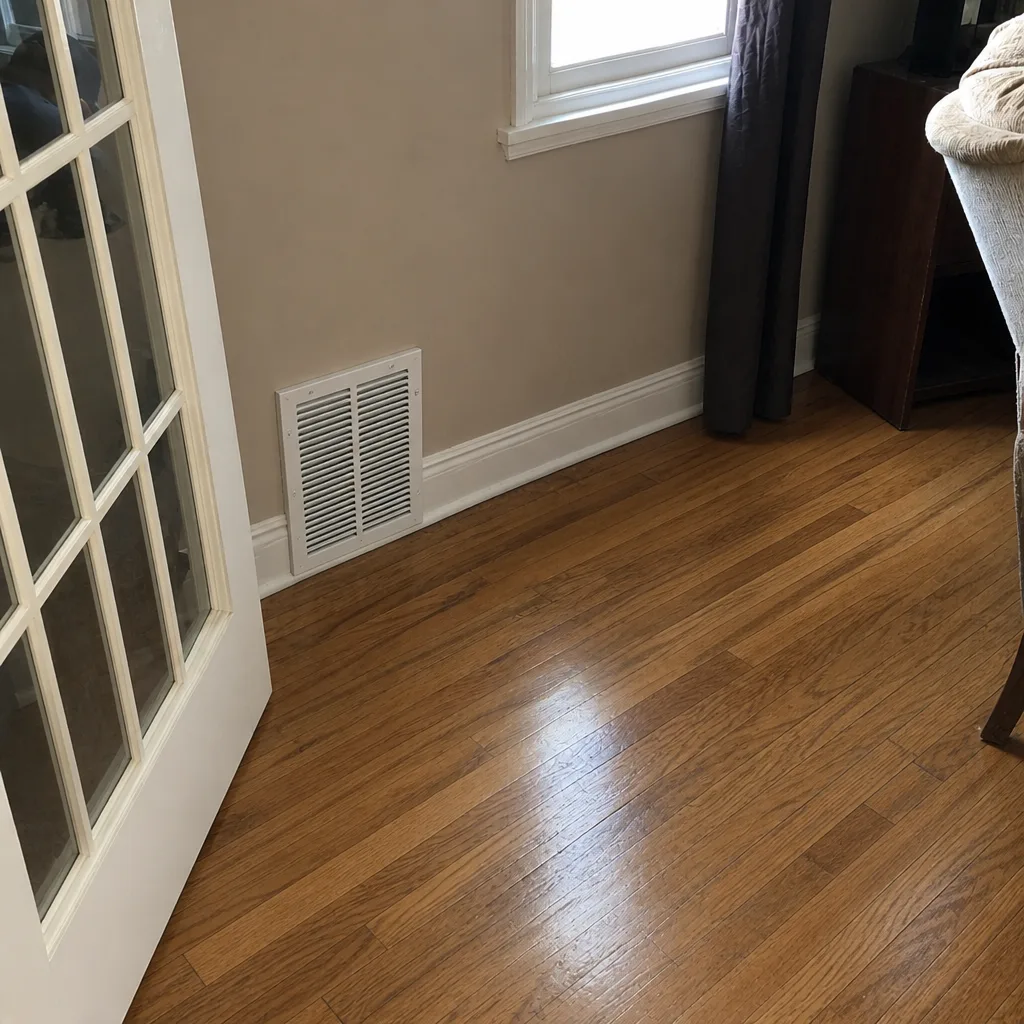 After
When to Call a Professional
A checklist is the right tool for tracking conditions. It’s the wrong tool for the moment any threshold crosses from “watch” to “call.” So call if you see moisture, mold, pest evidence, soot, a torn liner, or a musty smell that doesn’t clear. Same if your static pressure readings drift after a cleaning. And call if your sealing check shows anything you’re not comfortable assessing. Air Duct Cleaning Stapleton uses Rotobrush and Nikro equipment, installs and services Honeywell filtration, and handles cleaning, sanitizing, repair and sealing as a single visit. We answer 24/7. Fast dispatch from 7am to 7pm, Sunday through Friday. Air Duct Cleaning Stapleton offers free estimates in Stapleton, so call (877) 536-7311 and start with what you’ve logged.
Frequently Asked Questions
Most Stapleton homes do well with a cleaning every three to five years if the filter fit is good and the seals are intact, and sooner if the checklist has flagged moisture, pest evidence, or bypass. Homes with pets, recent renovation dust, or a history of short filter life often need it more frequently. Your log is the deciding evidence; the calendar is only a starting point. Call (877) 536-7311 for a free estimate and we’ll talk through your log.
Match the MERV rating to your blower’s rated static pressure tolerance, not to the highest available at the store. Many residential units handle mid-range MERV fine, while very high MERV filters choke airflow on long or undersized return runs common in Stapleton attic systems. Check the air handler manufacturer’s spec for the model, and if you’re unsure write the model number down and ask a technician. Doing the fit check is worth as much as the rating choice. Call (877) 536-7311 for a free estimate on a filtration review.
Leaking ducts and dirty ducts look different when you know what to check. Bypass gaps at the filter frame, dust shadows on the return plenum, and whistling return grilles all point to leaks. Uniform dust accumulation without those marks usually points to cleaning needs. Static pressure readings before and after a professional visit are the clearest single test. If you’re not sure, book a professional assessment rather than guessing. Call (877) 536-7311 for a free estimate.
Stapleton’s humid summers and the seasonal storm pattern both raise the priority of keeping ducts clean and sealed. Humidity promotes mold growth on flex duct liner, and post-storm debris finds its way into roof penetrations and return-side runs. Cleaning and sealing together is more effective in this climate than cleaning alone. Book an inspection if you’ve seen musty odors or dampness on any liner. Call (877) 536-7311 for a free estimate.
Yes. A flashlight and a phone camera with the flash on are enough to inspect accessible register cavities and the first few feet of duct at the boot. The audit is specifically a “look and record” step, not a DIY repair. If you see anything on the warning threshold list, stop and call. Tape up the register covers and leave the system off until a technician confirms. Call (877) 536-7311 for a free estimate on a full inspection.
Keep dated photos of registers, the air handler, and the filter (from the air-handler side), plus any static pressure readings, sanitizer records, and sealing notes from a professional visit. Include one line each month on filter condition and fit. The log is what makes the checklist work; the photos are what let the next technician compare against reality. If you’ve never started a log, book a professional cleaning to establish a baseline. Call (877) 536-7311 for a free estimate.
And one more, since we get this one often: dryer ducts count too. A lint-clogged dryer vent is a fire and efficiency problem, not just a housekeeping item. Add it to the annual list. For what that involves, see dryer vent cleaning.
The Bottom Line
A maintenance checklist for air ducts is a diagnostic rhythm, not a cleaning reminder. Check the filter’s fit and MERV rating against the blower’s tolerance monthly. Audit return and supply cavities with a flashlight and phone every quarter. Walk the attic and roof penetrations once a year. Log what you find, keep the photos dated, and treat warning thresholds as calls, not watches. In Stapleton, storm debris and summer humidity raise the stakes on two checklist items. A sealed, well-filtered system stays cleaner longer, and a clean system makes the next check simpler.
Call (877) 536-7311 for a free estimate. We answer 24/7. Fast dispatch from 7am to 7pm, Sunday through Friday. Our technicians have up to 12 years of experience and use professional-grade equipment, so the first visit gives you a baseline you can actually maintain against.
Written by the team at Air Duct Cleaning Stapleton.