
Last updated November 24, 2026
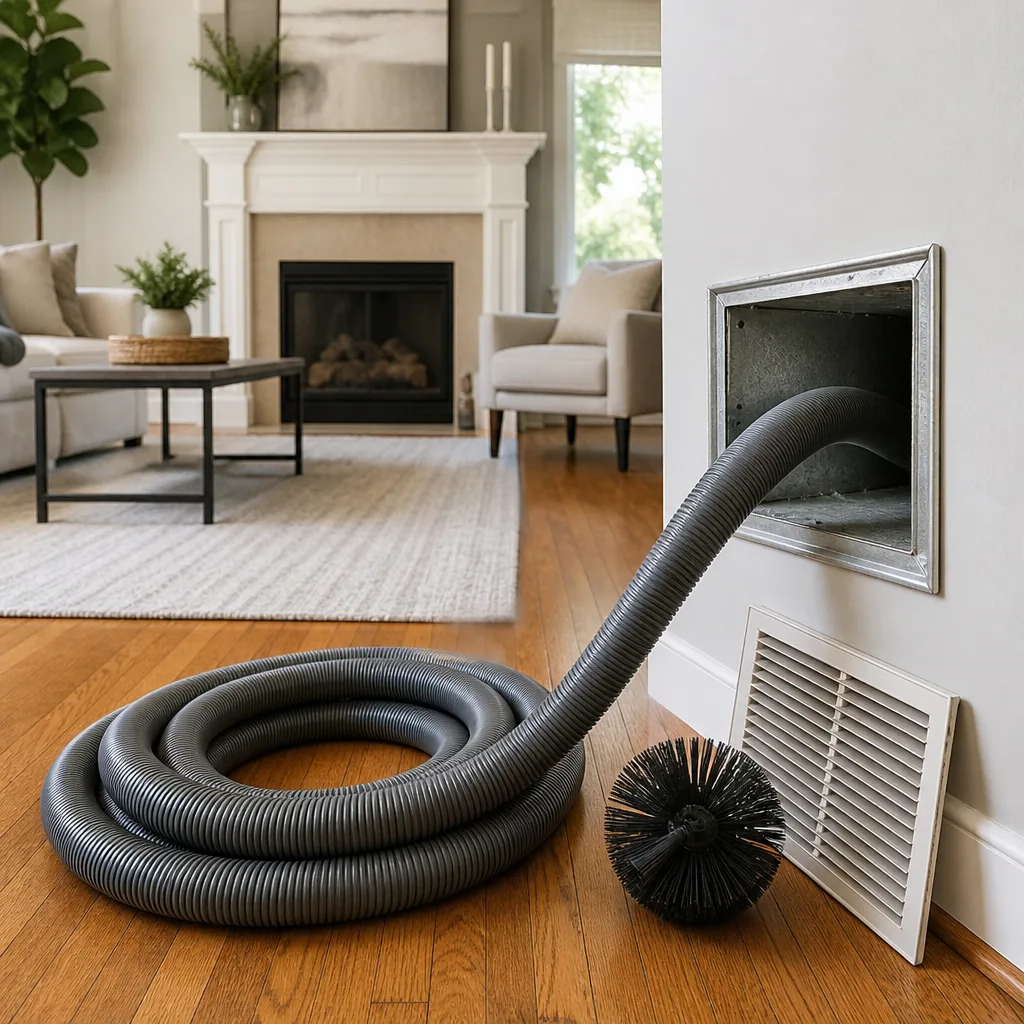 Whole-home duct cleaning
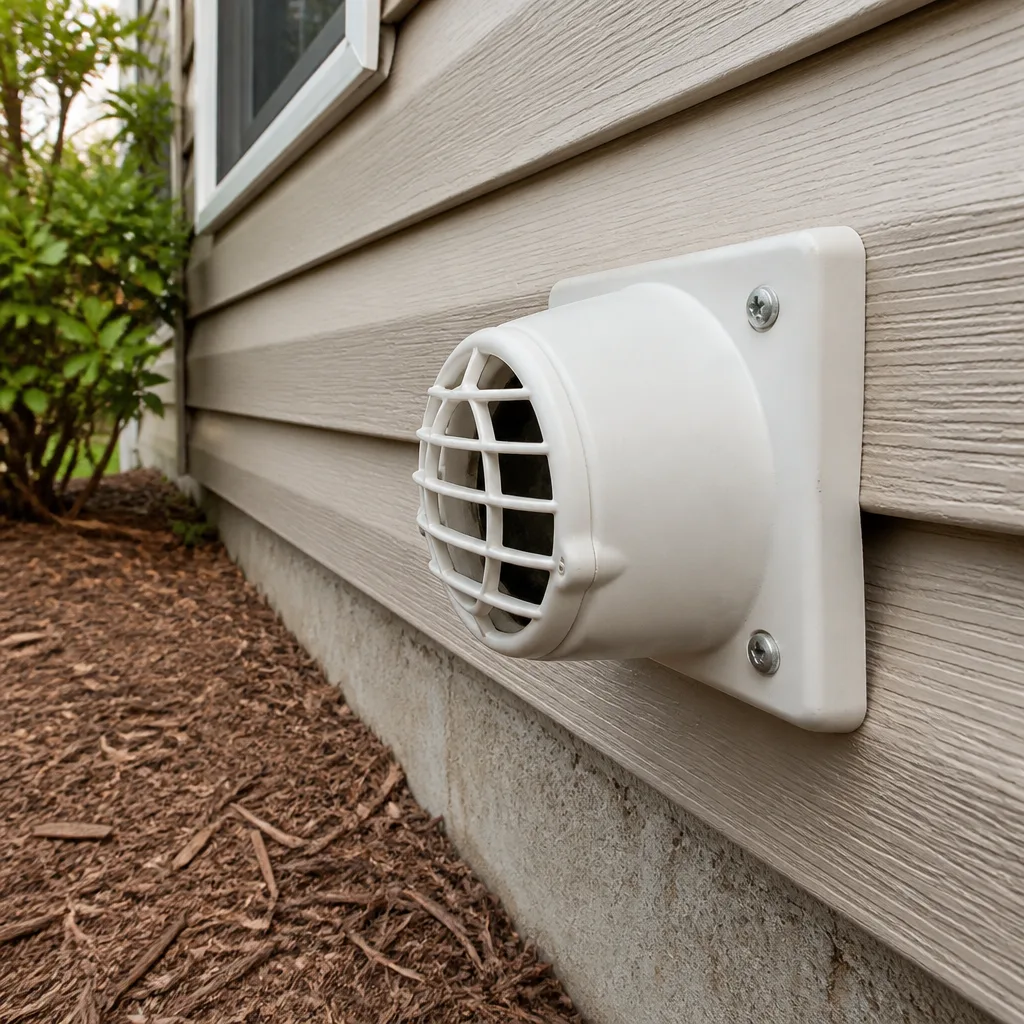 Dryer vent cleaning
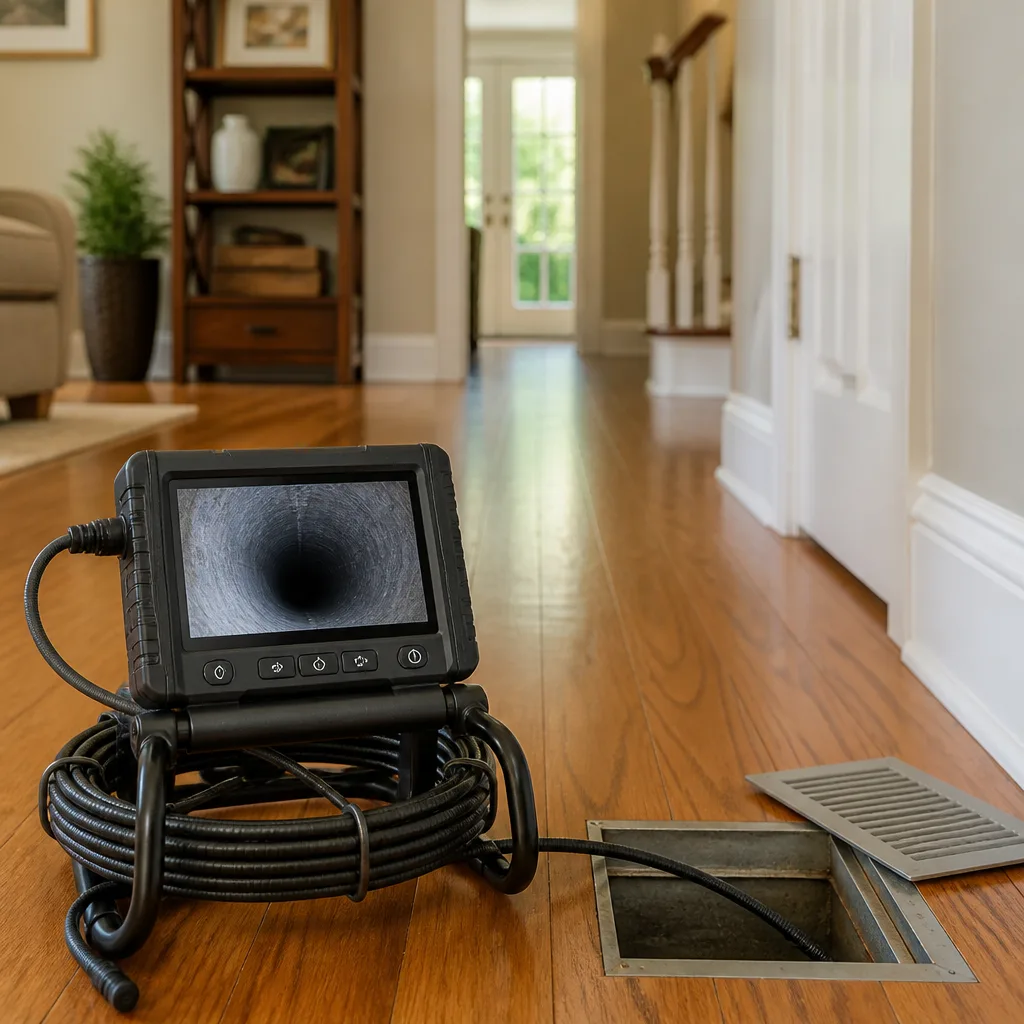 Camera inspection
 Sanitizing & deodorizing
Whole-system duct and dryer vent check with before-and-after photos - you see exactly what came out of your vents
That "$99 whole-house special" is a bait ad - the real number appears once they are in your hallway, or the "clean" is a shop-vac at the register. We photograph the inside of your ducts before and after instead.
Air Duct Cleaning Warning Signs: A Stapleton Homeowner’s Reference Guide
Visible dust on a register grille is a late-stage warning sign, not an early one. By the time it shows up on the louver face, the interior duct surfaces have usually been collecting debris long enough that airflow and filtration efficiency have already started to slide. The indicators that matter most show up somewhere else first: at the thermostat, on the utility bill, and in how long your blower runs to move the same amount of air. This guide walks through what to look for in a Stapleton home, how to tell a duct problem from an equipment problem, and how to document what you find before you call anyone.
Quick Answer
Air duct cleaning warning signs in Stapleton fall into three groups: performance signs (uneven temperatures, longer run cycles, climbing energy bills), sensory signs (a musty smell on the first heat of the season, rattling inside the walls), and event triggers (water intrusion, renovation dust, pest activity, or a new HVAC unit). If you notice two or more of these together, the system is worth inspecting rather than guessing at. Visible dust at the register is only the last of them to appear.
Styles & brands we work with
- Whole-home duct cleaning
- Dryer vent cleaning
- Camera inspection
- Sanitizing & deodorizing
Table of Contents
- Why Visible Dust at the Register Is a Late Warning Sign
- Performance Warning Signs: The Ones Your Thermostat Tells You
- Sensory Warning Signs and What Causes Them Inside the Duct
- Post-Event Triggers Common in Stapleton Homes
- How to Tell a Duct Problem from an Equipment Problem
- The Homeowner Inspection You Can Do Before Calling Anyone
- How to Document What You Find
- Common Mistakes to Avoid
Why Visible Dust at the Register Is a Late Warning Sign
A supply register is the last place air passes before it reaches your room, and the grille is a bottleneck. Debris collects in the wide, flat runs and in the plenum above the air handler long before enough material stacks on that narrow face to be seen from the floor. By the time the louver looks gray, the dust you’re seeing is the overflow from a system that has been depositing material on duct walls for a while.
There’s a second reason not to wait for visible dust. The dust you can see is the coarse fraction, the particles heavy enough to settle. The fine fraction, the material small enough to stay airborne and reach the return, is the part that loads a filter faster and coats a blower wheel. A homeowner in Stapleton looking at a clean register isn’t necessarily looking at clean ducts.
We use this as the starting point for any conversation about air duct cleaning because it reframes the question. Instead of “does it look dirty,” the useful question is “is the system still moving air the way it did when it was installed.” That question has measurable answers, and most of them are on your thermostat and your energy bill. The sections that follow take those indicators one at a time.
It’s also worth saying plainly: a dirty duct system usually isn’t the only thing wrong. Restricted airflow and a poorly sealed return are often found together, which is why professional duct repair and sealing belongs in the conversation from the start. Cleaning a system and leaving the leaks that let debris back in is a short-term fix.
Performance Warning Signs: The Ones Your Thermostat Tells You
Performance signs are the earliest and most reliable indicators, and they’re the ones homeowners most often blame on the equipment. When a duct run is partly blocked by debris or a collapsed liner, the blower has to work against a higher static pressure to deliver the same airflow. That extra effort shows up in three places.
- Uneven room temperatures. The rooms at the end of the longest runs get less air than the rooms near the plenum. A room that used to heat and cool evenly with the rest of the house, and now doesn’t, is telling you something changed in the path.
- Longer-than-normal run cycles. If the furnace or air handler runs noticeably longer to satisfy the same temperature setting, airflow restriction is a real candidate. A system that used to cycle in one pattern and now runs continuously is moving less air per minute.
- Rising energy bills without a rate change. A restricted system always costs more to operate because it cannot deliver heat or cooling efficiently. You’ll see it in the bill before you’ll see it at the register.
There’s a fourth performance indicator that’s easy to spot and often ignored: a filter that clogs faster than it used to. A filter has a limited holding capacity. If it’s filling up in a shorter interval, more debris is being carried to it from upstream. In Stapleton homes with pets or candles, that interval shortens again, so compare like with like across the seasons.
None of these signs is definitive on its own. Two or three together, though, are the reason we treat performance as the strongest early-warning category. They’re consistent, they’re cheap to watch, and they don’t require anyone to climb into an attic.
Sensory Warning Signs and What Causes Them Inside the Duct
The musty smell that appears on the first heat of the season has a specific explanation. Organic material, dust, pollen, pet dander, and lint, settles on duct surfaces and on the heat exchanger during the cooling season. When heat comes on for the first time in the fall, the heat exchanger and the supply plenum bake that settled layer, and the smell it releases gets pushed through every register in the house. The odor fades after a few cycles, which is exactly why it gets ignored. The material behind it doesn’t go anywhere.
Rattling has a second explanation that gets confused with the first. A rattle inside the wall can be loose debris tumbling through a run when the blower starts, or it can be a section of failed internal duct liner, the sound-deadening lining glued to the inside of older rigid duct. Liner comes loose at its edges first. Once it peels, it both rattles and, worse, blocks airflow in that run. It also releases its old adhesive surface into the airstream.
Other sensory signs worth writing down:
- A whistling or hissing at a single register. Usually a partially closed damper or a loose joint, not a system-wide problem, but worth a look.
- Air that smells stronger in one room than the rest. Points to a break or a gap near that run, pulling attic or crawlspace air into the supply.
- Persistent breathing irritation or allergy symptoms with no other explanation. A reason to have the air system checked, never a diagnosis in itself.
Musty smell on first heat is the one we hear about most often from Stapleton homeowners, and it’s the one that most benefits from action rather than patience. It’s telling you the upstream surfaces need attention.
Post-Event Triggers Common in Stapleton Homes
Some duct contamination has nothing to do with routine use. It’s triggered by an event, and the timing is specific. If any of these have happened in your home, the ducts are worth inspecting regardless of what the registers look like.
- Water intrusion. A roof leak, a flooded basement, a leaking condensate drain pan. Water that reaches ductwork, or that raises humidity inside a duct run long enough, creates conditions for mold growth on the lining and the insulation. This is a contamination issue, not a dust issue, and it’s handled with a different process.
- Renovation work. Drywall dust is fine, abrasive, and sticky. During a renovation, return ducts draw it in from the living space and deposit it inside the system. A renovation that finishes with an untouched air system often leaves a house that “just doesn’t feel clean” for months afterward.
- Pest activity. Rodents, insects, and, in some homes, birds finding their way into a duct run leave behind material that should never have been in the airstream. The contamination is localized but the remediation isn’t, because the disturbance spreads it downstream.
- HVAC equipment replacement. When a furnace or air handler is replaced, the contractor often needs to cut into and rejoin plenum and transition areas. That work alone introduces debris, and the new equipment’s airflow characteristics differ from the old unit’s, so a duct system that was marginal before is now under more or less load. Inspecting and cleaning during the transition is the practical moment for it.
We think of these as the four triggers that override routine indicators. Stapleton homes near the older, mature blocks see a reasonable share of renovation work and HVAC replacement, and the water intrusion cases tend to cluster around older roof and plumbing penetrations. If any of the four applies to your home, the inspection protocol later in this guide is worth doing sooner rather than later.
How to Tell a Duct Problem from an Equipment Problem
Not every airflow symptom comes from the ductwork. Some of the most common “dirty ducts” complaints turn out to be an equipment issue, and a good technician will check the equipment first. Knowing the difference saves you a lot of guessing before you pick up the phone.
Signs pointing to the equipment, not the ducts:
- Weak airflow at every register, uniformly, including the ones closest to the air handler. A uniformly weak system usually points to the blower wheel, the motor, or the coil, not to one blocked run.
- A musty or swampy smell that’s strongest in the return and near the air handler, with little to none at the supply registers. That smells like a clogged or pan-full condensate drain or a dirty evaporator coil, not a duct issue.
- Water stains or standing water in the pan beneath the indoor unit. That’s a drain problem before it’s ever a duct problem.
- Frost or ice on the refrigerant lines during cooling. That’s a charge or airflow-over-the-coil issue for an HVAC technician, not something cleaning will fix.
Signs pointing to the ducts:
- Airflow that varies room to room, and consistently weak at the ends of the longest runs.
- A rattle or flapping heard in the walls when the blower starts.
- Dust blowing out of a supply register at startup, or streaks of dust on the wall near a register face.
- Odor that appears across every room at heat-up, uniform in the supply but not near the unit.
We’re cautious about the coil and drain-pan piece because it’s a common misdiagnosis. A homeowner with a musty smell and a dirty-looking return assumes the ducts are the cause. Sometimes they are. Just as often the coil is dirty, the pan is holding water, or the drain line is blocked, and cleaning the ducts won’t change the smell. That’s the point of having a company that handles cleaning and HVAC cleaning together, so diagnosis happens before anyone commits to a service.
One more thing worth knowing: a genuinely failing heat exchanger is a safety issue that requires immediate attention from an HVAC technician, and it can present with a musty or combustion-adjacent smell. If you suspect that, stop and call a professional. That’s outside the scope of any cleaning service.
The Homeowner Inspection You Can Do Before Calling Anyone
You can collect a lot of useful information without opening anything up. The point of a home inspection here isn’t to diagnose the system. It’s to give a professional clear notes and photographs so the first visit is spent on the right questions. Here’s the sequence, in order:
- Walk every room and note airflow at each supply register. A tissue held against the register will do. Write down which rooms feel weak, which feel strong, and whether that matches what you remember from prior seasons.
- Check the return air grille and the filter behind it. Photograph the filter and note how long it’s been installed and how loaded it is. If it’s clogged, replace it before you judge airflow.
- Look at the accessible supply register faces. Photograph any that are dust-streaked or showing a dark edge. This is the late sign, but documenting it matters.
- Open the air handler closet, if safely accessible. Look at the condensate pan for standing water, and at the blower and coil area from a distance. Do not reach into the equipment. Photograph from a safe distance.
- Note any visible gaps or disconnected joints at registers and in the supply plenum where the duct meets the equipment. Photograph them.
- Record sounds and smells. Write down when you hear the rattle (startup only, or continuous) and where the smell is strongest (register-level, return-level, or equipment-level).
The rule for the equipment itself is simple: observe from a safe distance, and don’t disassemble anything. Electrical components, the blower, and the refrigerant coil are not homeowner territory. A photograph and a note are enough.
How to Document What You Find
The best documentation is a folder of photographs with a one-line note for each. Before-and-after photo sets are how a professional cleans and how a homeowner protects themselves. The same discipline applies in reverse: the more complete the “before” set a homeowner provides, the more specific the estimate becomes, and the easier it is later to check that the work described was actually done.
What to include:
- One photo per register face, straight on, with a light source held to the side so dust shows in relief.
- One photo of the filter, dated.
- A single photo of the air handler and pan from the closet doorway, not inside it.
- A handwritten or note-app list of rooms with weak airflow, ranked strongest to weakest.
- Any date-stamped notes about when a smell or rattle started.
We ask for this kind of file because it makes the first visit productive. A homeowner who has already documented the register and the filter can expect the technician to show their own before-and-after photographs of the interior, so the homeowner can compare what they photographed to what came out. That’s a reasonable expectation and a standard we hold ourselves to.
Common Mistakes to Avoid
- Waiting for visible dust at the register. That’s the last sign to appear, not the first. By the time it shows, the system has been depositing material for a while, and the airflow problems are already underway.
- Blaming the ducts for a dirty-coil or drain-pan smell. If the musty odor is strongest at the return and near the equipment, the coil or the condensate system is the likelier source. Cleaning the ducts alone won’t fix it, and a company that doesn’t check is guessing.
- Using a shop vacuum on accessible ductwork. A shop vac’s brush and hose disturb settled debris and push more of it into the return, and it can’t reach the flat runs and the plenum above the air handler where most of the material sits. Professional Rotobrush or Nikro equipment exists because that debris is where the work happens.
- Skipping the system seals after cleaning. A clean duct system with open gaps at the plenum and loose register boots will pull attic or crawlspace air back in and dirty itself again. In Stapleton, where attic and conditioned-space temperature differences are significant, a leaky return is a real dirt source.
- Calling whoever quotes the lowest number. A price too low to cover a full-system job usually means a short version of one, or a per-vent price that grows once work starts. Ask for a flat price for the whole system, agreed before work starts.
- Cleaning the ducts after a renovation but not before the dust has settled. Drywall dust and construction grit need the ducts cleaned after the work is finished, not before. Doing it in the wrong order just means doing it twice.
- Ignoring the first-heat smell because it goes away. The smell goes away because the material has been baked and the airflow has carried the odor out. The source behind it is still there.
- Assuming a water intrusion is only a roof problem. If water reached the ductwork or the insulation around it, the contamination needs to be addressed as part of the repair, not after. The link between the two is real and worth treating that way.
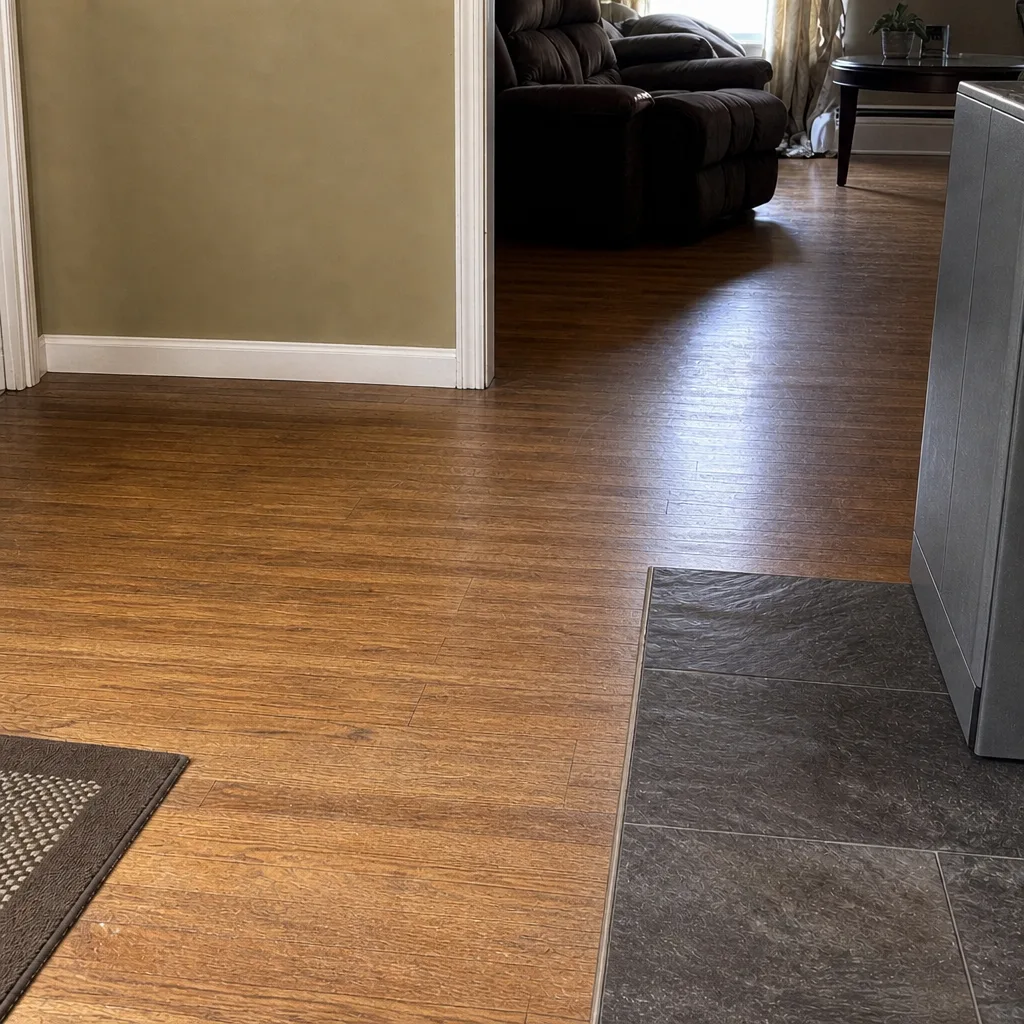
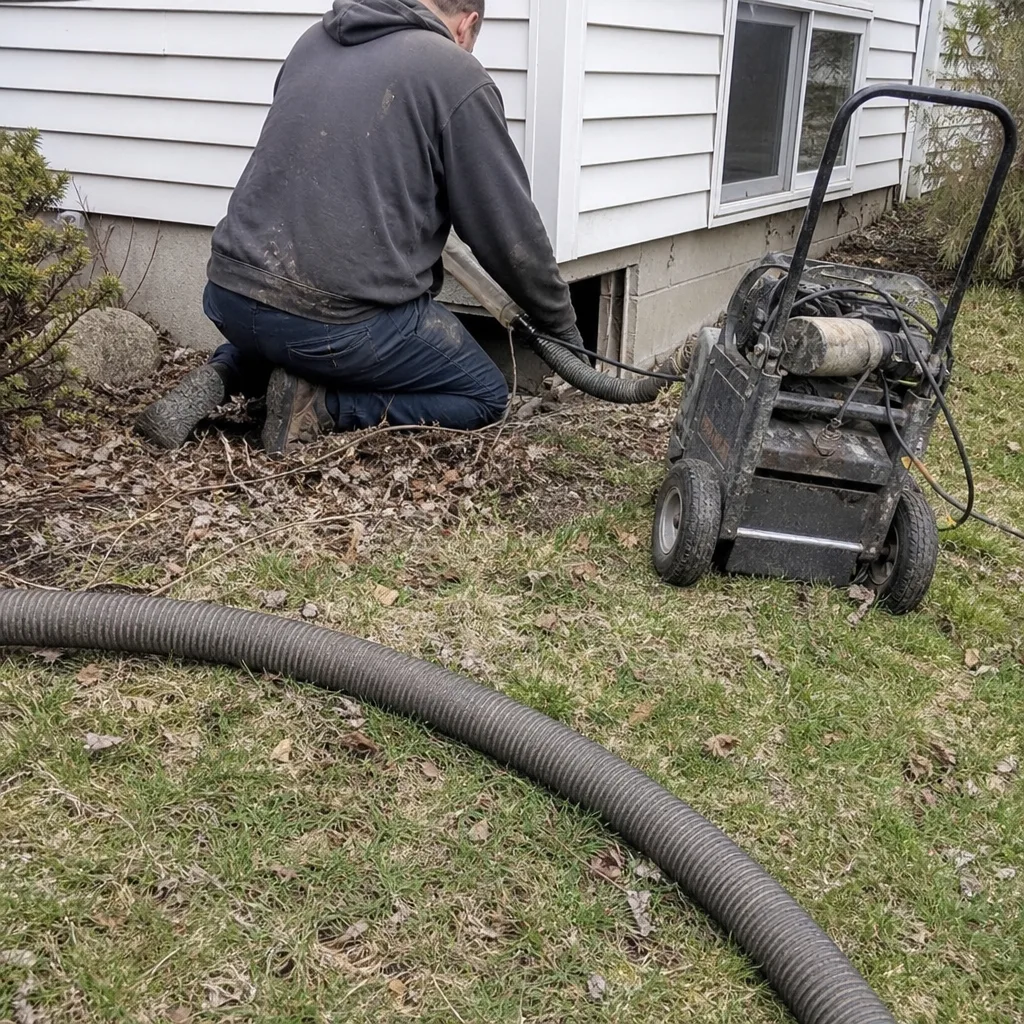
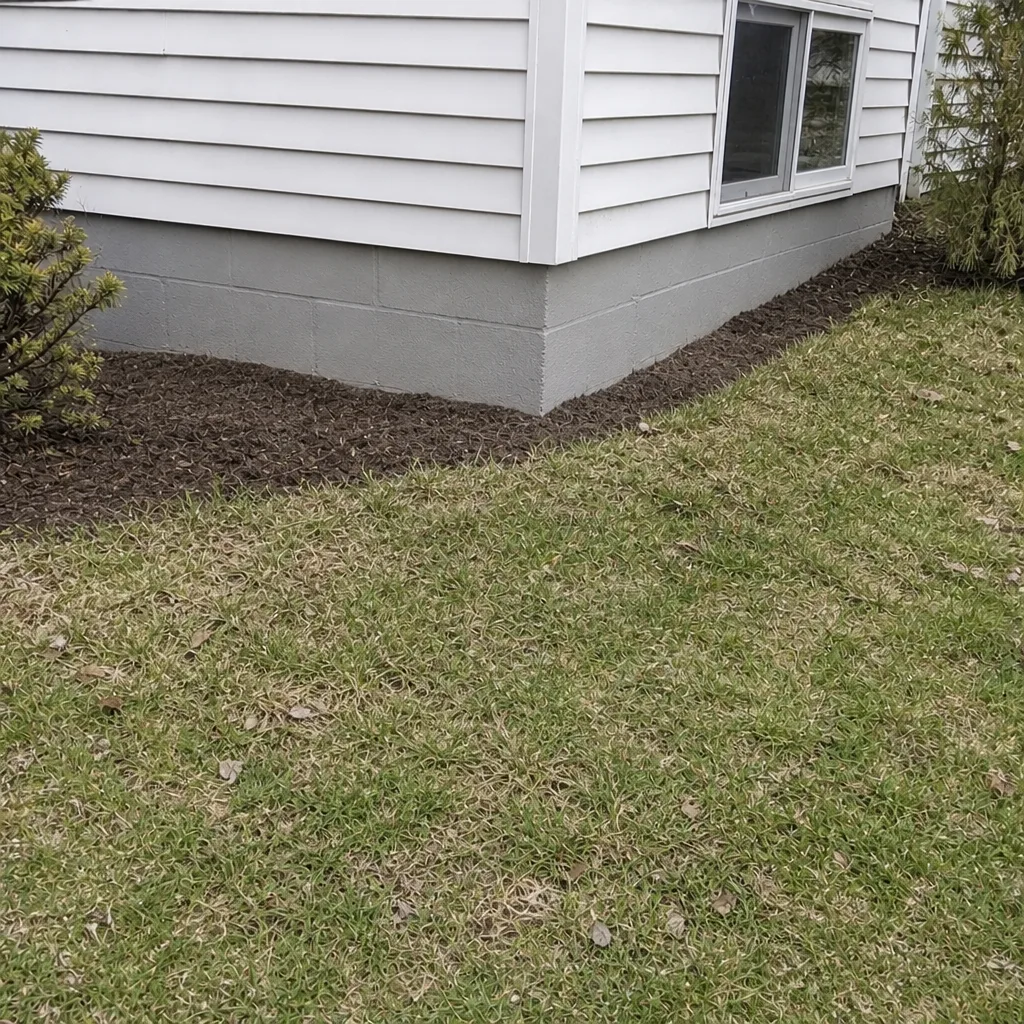
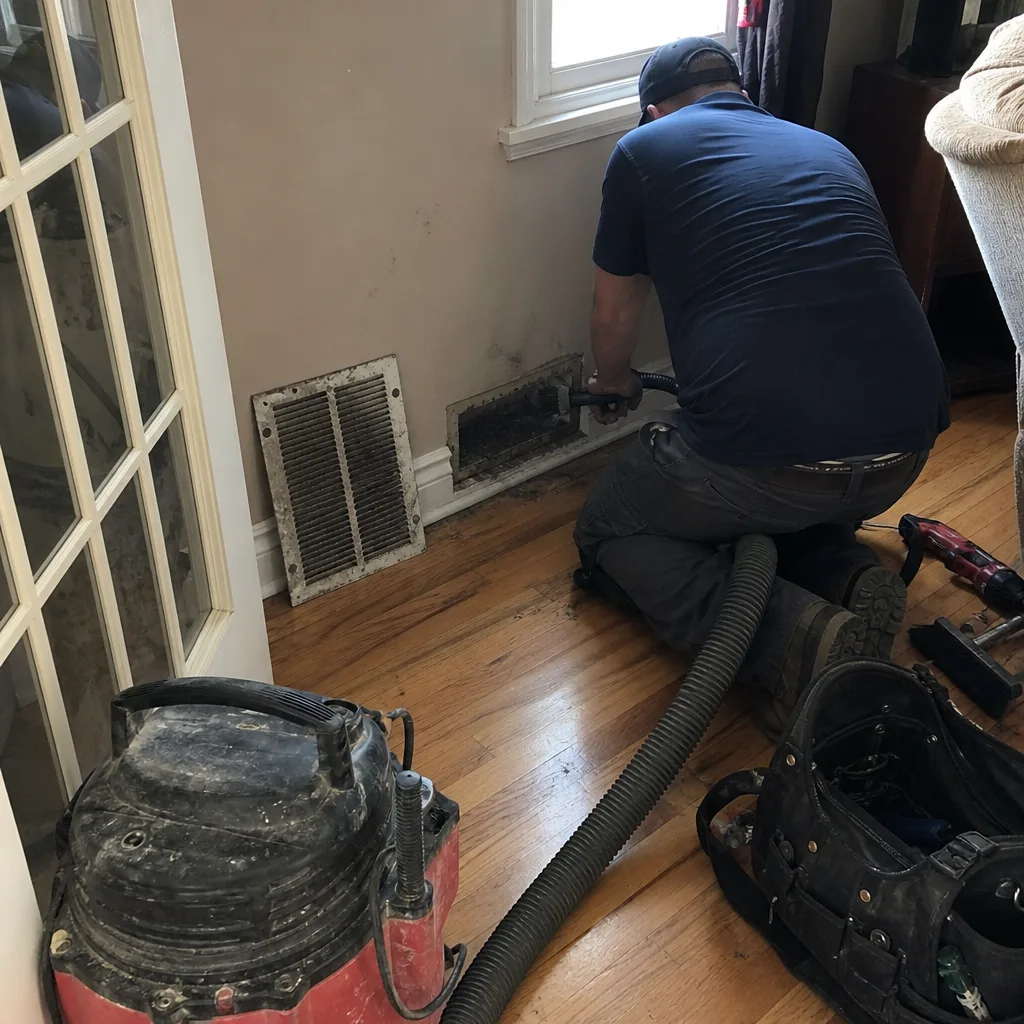
See the difference
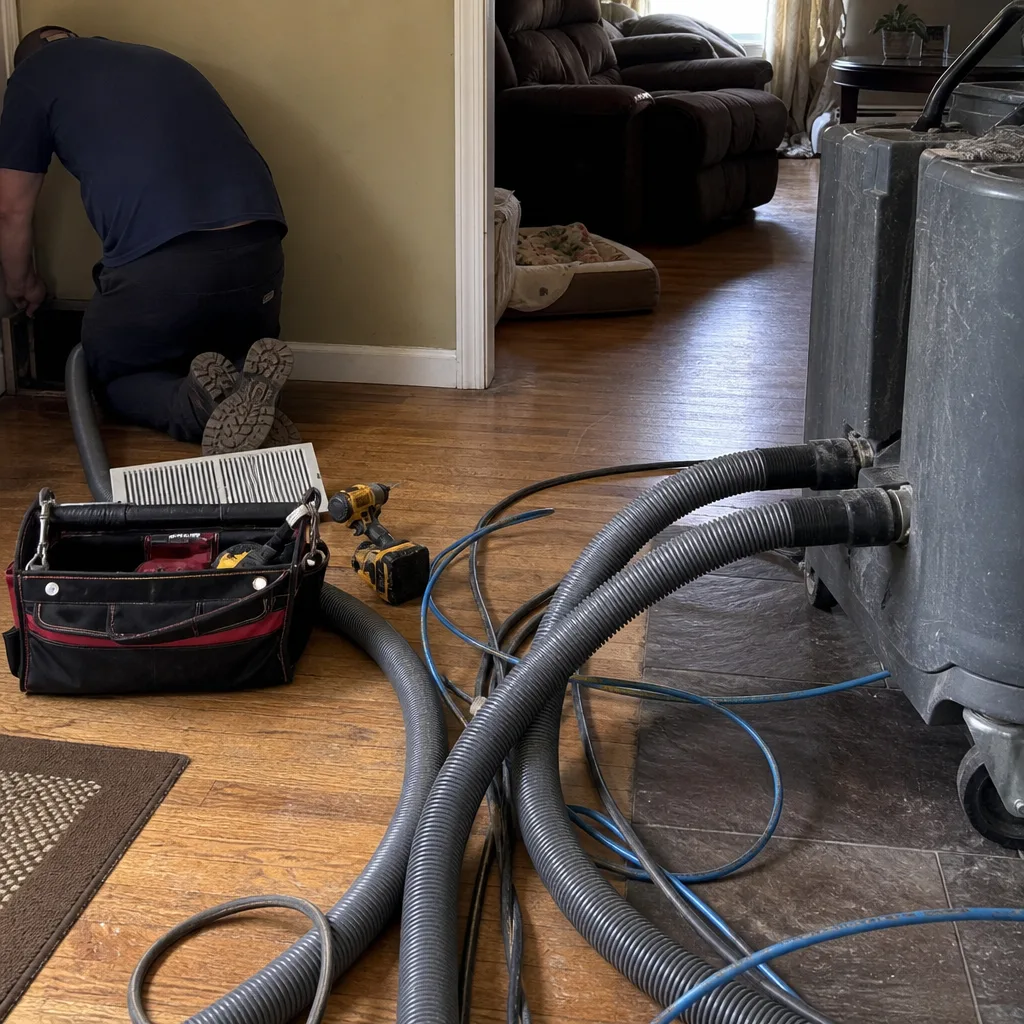 Before
 After
 Before
 After
 Before
 After
When to Call a Professional
Call when you’ve seen two or more performance signs together, when there’s a musty smell on first heat that returns every season, when a rattle is continuous at startup, or after any of the four post-event triggers: water intrusion, renovation, pest activity, or HVAC replacement. Call as well if anyone in the home is having breathing or allergy symptoms and you can’t find another explanation. That’s the point at which a trained look at the system is the practical next step rather than a wait-and-see.
Air Duct Cleaning Stapleton offers free estimates in Stapleton. Our technicians have up to 12 years of experience, use professional Rotobrush and Nikro equipment on every job, and work with Abatement Technologies for contamination control. We clean the system, then fix what made it dirty. Call (877) 536-7311. We answer 24/7. Fast dispatch from 7am to 7pm, Sunday through Friday.
Frequently Asked Questions
The earliest signs are almost always performance-related: rooms that don’t heat or cool evenly, a furnace or air handler that runs longer to reach the same temperature, and an energy bill that climbs without a rate change. A filter that clogs faster than usual is a fourth. Visible dust on a register is usually later, not the first sign. If you see two or more of these in your Stapleton home, it’s worth having the system inspected. Call (877) 536-7311 for a free estimate.
Heat exchanger surfaces bake settled organic debris, dust, pollen, and dander, and that material releases an odor when it’s heated for the first time of the season. The smell fades after a few cycles because the material has been driven off, but the source stays in the upstream ductwork. If the smell returns every fall, the ducts are due for cleaning. Call (877) 536-7311 for an estimate.
Weak airflow at every register, uniformly, usually points to the blower, motor, or coil, not the ducts. A musty smell strongest near the return and the air handler usually points to a dirty coil or a clogged drain pan. Airflow that varies room to room, a rattle in the wall at startup, and dust blowing out of registers points to the ducts. A technician who handles both cleaning and HVAC work can tell you which is which before anyone commits. Call (877) 536-7311 to schedule a look.
Not automatically, but it’s a strong trigger. A renovation pushes drywall dust and grit into the return, and an HVAC replacement introduces debris at the new plenum and transition joints. Cleaning after the work is finished, not before, is the right sequence. In Stapleton homes with older ductwork, the new unit’s airflow can also reveal a leak or loose liner that the old unit masked. Call (877) 536-7311 and we’ll set up a free estimate.
Professional equipment is a different category of tool. A shop vacuum disturbs settled debris and pushes some of it into the return, and it can’t reach the wide flat runs or the plenum above the air handler. Our work uses Rotobrush and Nikro systems built for whole-system cleaning and is supported by Abatement Technologies for contamination control. The result is a clean system rather than a clean-looking register. Call (877) 536-7311 to schedule.
No. Cleaning removes the accumulated material, but a leak between duct sections or at a register boot is a separate problem and needs to be sealed. That’s why we handle duct repair and sealing as a service alongside cleaning. On a Stapleton system, sealing the plenum and register boots is often the larger energy saving of the two. Call (877) 536-7311 for an estimate that covers both.
The Bottom Line
The indicators that matter most from air duct cleaning warning signs aren’t at the register. They’re at the thermostat, on the utility bill, and in the sound and smell of the system at startup. Watch for uneven temperatures, longer run cycles, and a filter that fills faster; watch for the first-heat smell and a rattle in the wall; and treat water intrusion, renovation, pest activity, and an HVAC replacement as triggers in their own right. If a dirty coil or a clogged drain pan is the real cause, a reputable company will tell you that before it touches the ducts. Air Duct Cleaning Stapleton offers free estimates; call (877) 536-7311. We answer 24/7. Fast dispatch from 7am to 7pm, Sunday through Friday.
Written by the team at Air Duct Cleaning Stapleton.