
Last updated November 24, 2026
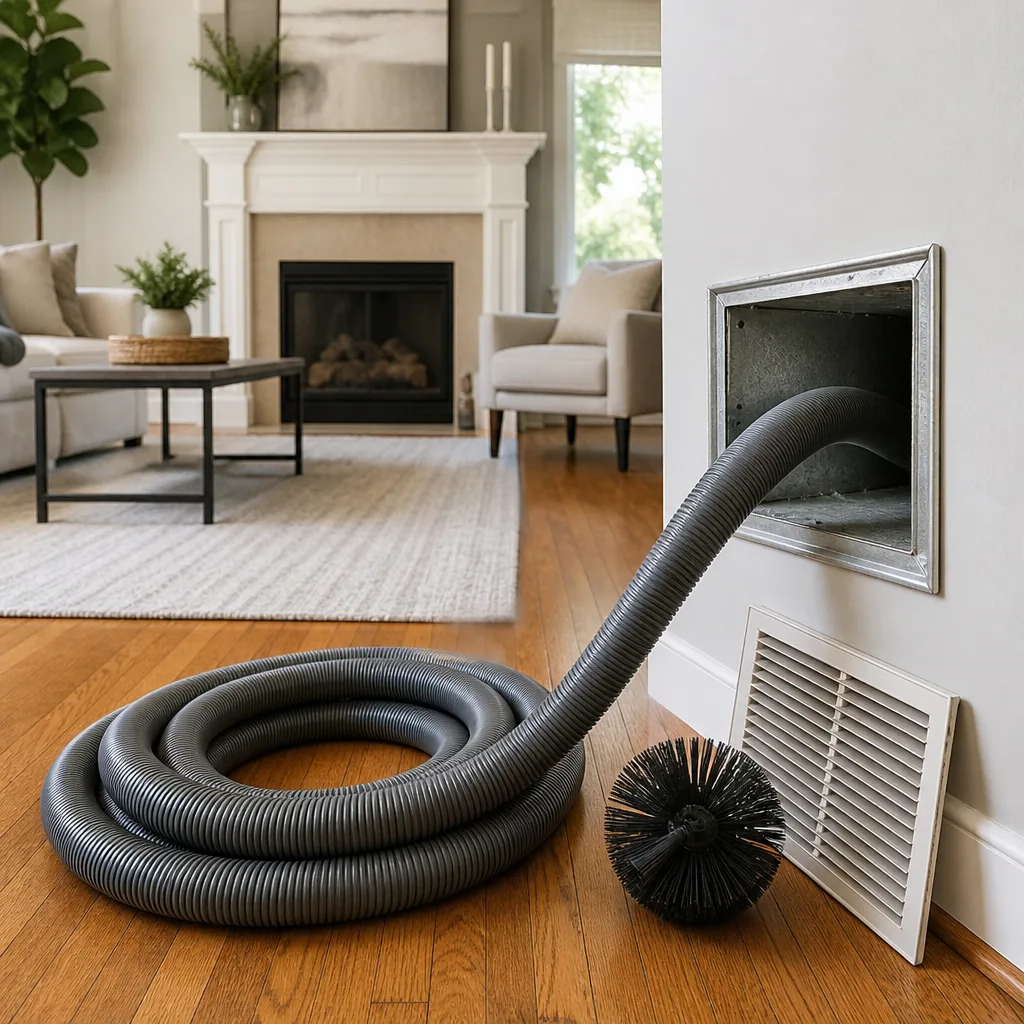 Whole-home duct cleaning
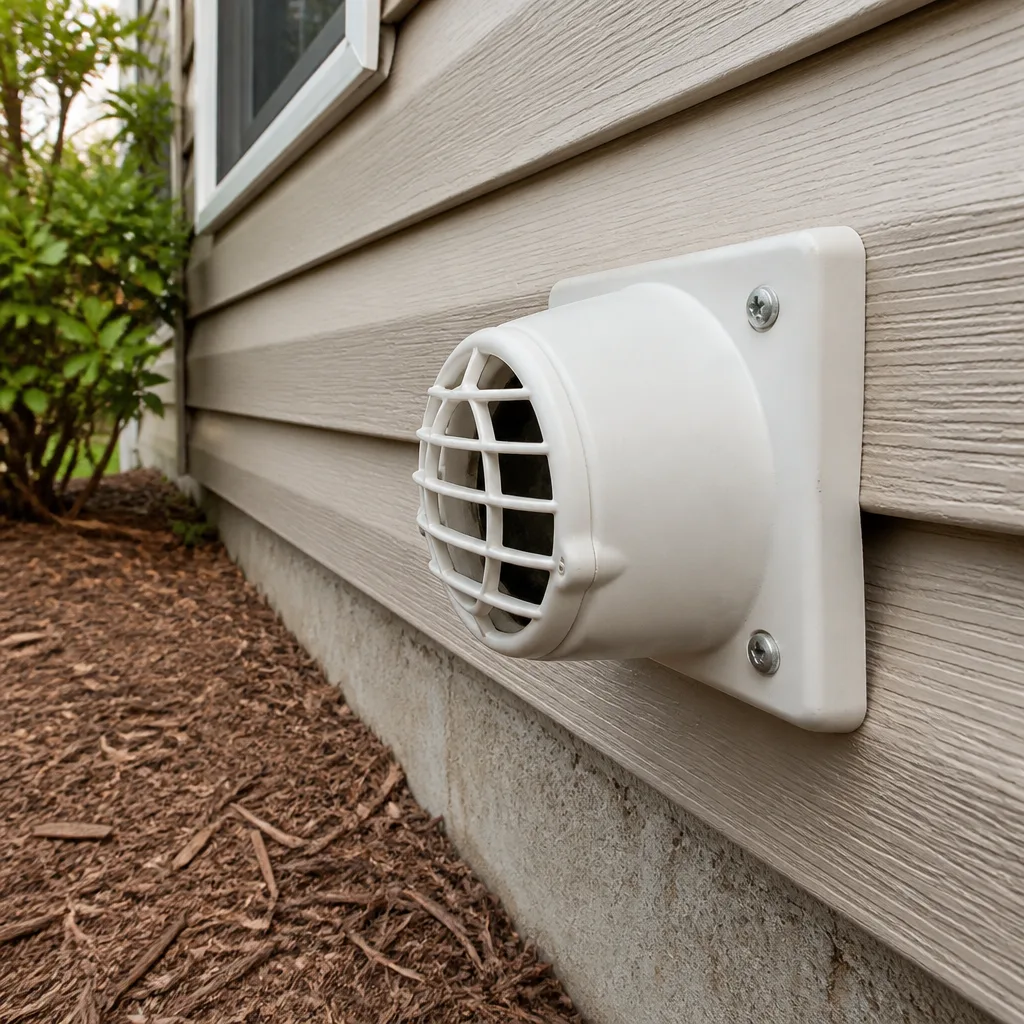 Dryer vent cleaning
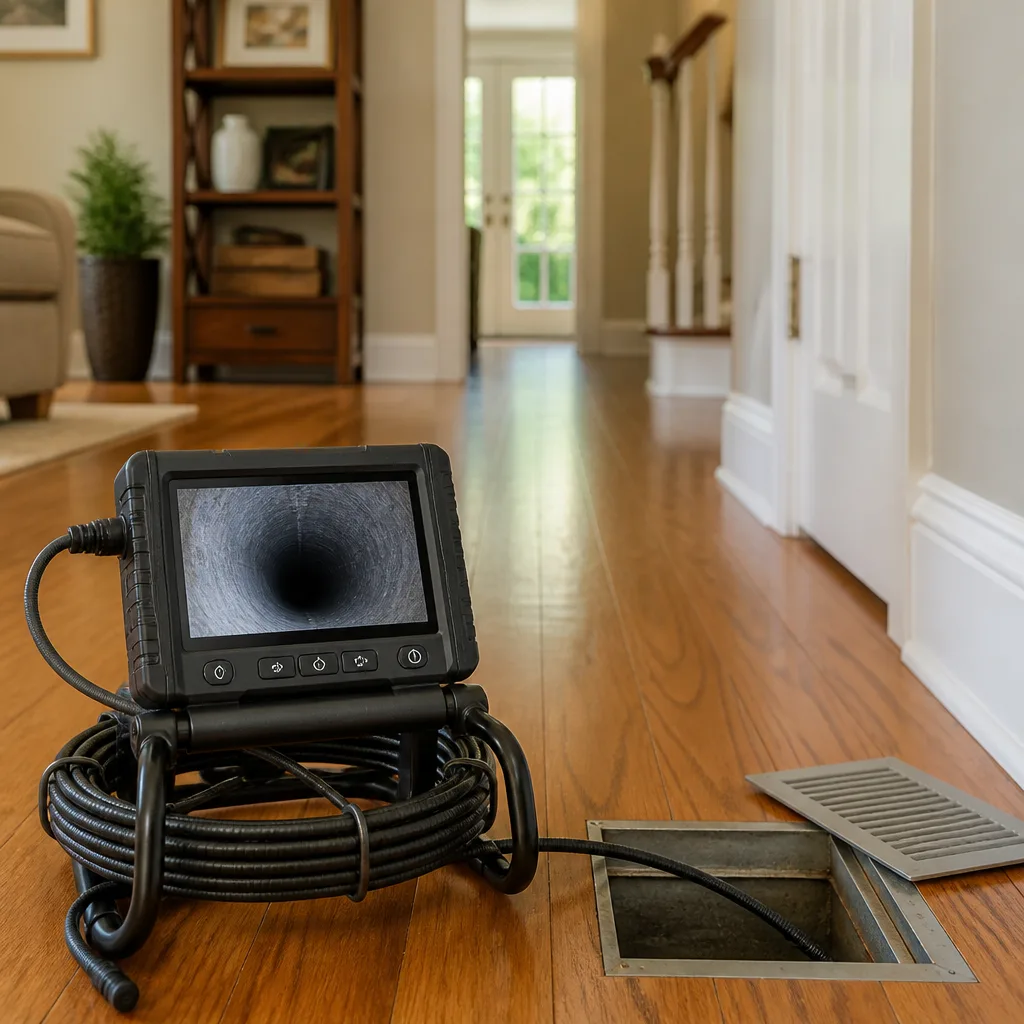 Camera inspection
 Sanitizing & deodorizing
Whole-system duct and dryer vent check with before-and-after photos - you see exactly what came out of your vents
That "$99 whole-house special" is a bait ad - the real number appears once they are in your hallway, or the "clean" is a shop-vac at the register. We photograph the inside of your ducts before and after instead.
The Complete Guide to Air Duct Cleaning in Stapleton
The EPA doesn’t recommend air duct cleaning on a fixed schedule. That single fact frustrates a lot of homeowners, and it also reveals more about how your system actually works than most duct cleaning company websites ever will. There’s no calendar rule because ducts don’t fail on a calendar. They fail on conditions: what’s in the airstream, how the system was built, and what’s driving contamination in the first place. Treating the whole duct system as one object to be scrubbed misses that entirely. The supply side, the return side, the air handler, and the registers each fail differently and each need a different fix. This guide walks through all of it for Stapleton homes.
Quick Answer
Air duct cleaning in Stapleton is a full-system process that removes accumulated debris from the supply ducts, return ducts, and air handler using professional negative-pressure equipment and source-removal methods, not surface wiping. Whether your home needs it depends on what an inspection finds, not on how many years have passed. A proper job includes documented before-and-after evidence, and on older Stapleton housing, it often includes sealing gaps that let contamination back in.
Styles & brands we work with
- Whole-home duct cleaning
- Dryer vent cleaning
- Camera inspection
- Sanitizing & deodorizing
Table of Contents
- Why There’s No Fixed Schedule (And What That Tells You)
- The Four Parts of Your System and How Each Fails
- Stapleton’s Debris Profile: What Older Housing and Humidity Do
- Source Removal vs. Surface Wipe Cleaning
- What a Real Full-System Inspection Should Document
- Negative Pressure and CFM: Why Equipment Size Decides the Job
- Why Cleaning Without Fixing the Root Cause Fails
- When to Call a Professional
Why There’s No Fixed Schedule (And What That Tells You)
If you search for how often to clean your ducts, you’ll find a dozen different answers and none of them are official. The reason is straightforward: duct contamination isn’t a function of time. It’s a function of what’s entering the system and how well the system contains it. A house with a torn filter slot and an unsealed return plenum can load up in a couple of years. A tight newer build with good filtration can stay reasonably clean for far longer.
That changes how you should think about the service. You’re not buying an appointment on a schedule. You’re buying an inspection that tells you whether intervention is warranted, and then a cleaning that actually removes what’s there. In our experience, a lot of Stapleton homeowners call because they’ve noticed something specific: dust settling faster than it used to, a musty smell when the system kicks on, or visible buildup around the registers. Those are real signals. A calendar reminder isn’t.
There’s a second layer here that most guides skip. Even when cleaning is clearly justified, cleaning alone is a temporary fix if the underlying cause is still in the system. Filter bypass, unsealed return joints, and oversized equipment all push contamination back into the ducts after the truck leaves. So the honest answer to “how often” is: clean when the inspection says so, and fix what made it dirty in the first place so the interval gets longer.
This is why we approach the work as a system diagnosis rather than a one-off cleaning. We clean the system, then we fix what made it dirty. That order matters.
The Four Parts of Your System and How Each Fails
A forced-air system isn’t one duct. It’s four connected zones, each doing a different job and each prone to a different kind of breakdown. Understanding the distinctions is the difference between a cleaning that sticks and one that doesn’t.
1. The supply ducts
These carry conditioned air from the air handler to the rooms. They run at positive pressure, which means they push air out. That’s also why supply-side failures are often invisible: small leaks vent into wall cavities or attics where nobody sees them. What you notice instead is uneven cooling, rooms that never quite reach temperature, or dust streaks around the register boots. Supply runs in older Stapleton homes are frequently the flexible type, and flex duct that’s been in place through many heating and cooling cycles can sag, kink, or develop tears at the connections.
2. The return ducts
Returns pull air back to the air handler, and they run at negative pressure. That’s the critical difference. A return leak doesn’t push air out, it sucks air in, pulling attic dust, crawlspace debris, and whatever else is nearby directly into the airstream. Return-side leakage is one of the most common reasons a system re-contaminates quickly after a cleaning. It’s also frequently overlooked because the symptom (dirtier air) looks exactly like “the ducts need cleaning again.”
3. The air handler
This is where the blower, the coil, and the filter live. It sees the dirtiest air in the system because everything flows through it, and it’s often the most neglected piece because it’s out of sight. A dirty evaporator coil doesn’t just reduce air quality, it reduces cooling capacity, which means the system runs longer and moves more contaminated air. Cleaning the ducts without cleaning the air handler leaves the source of the problem in place.
4. The registers and boots
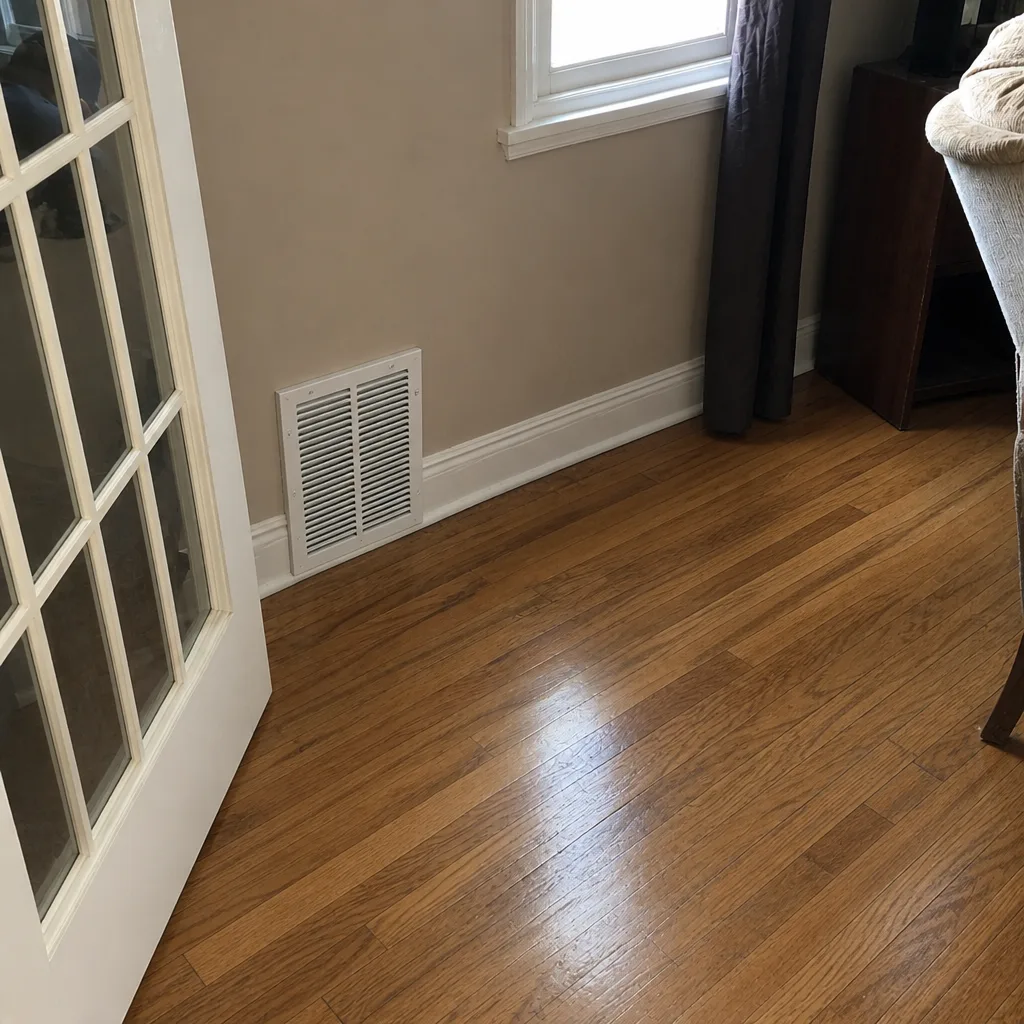
The visible endpoints. Registers collect dust on their way to becoming a visible signal, and the boots (the transition between duct and floor or wall) are a common leak point. This is also where homeowners notice evidence first, since it’s the one part of the system they can actually see. It’s worth knowing that what’s visible at a register is a fraction of what’s in the runs behind it.
Stapleton’s Debris Profile: What Older Housing and Humidity Do
Every region has its own debris signature, and Stapleton’s is shaped by two things: a housing stock that includes a lot of pre-1980 construction, and the humidity that comes with the area’s proximity to water. Neither one is unusual, but together they create a specific set of conditions worth understanding.
Humidity and its effects
Elevated humidity doesn’t just make the air feel heavy. It raises the moisture content inside the duct system, and moisture is what turns ordinary dust accumulation into something more troublesome. Dust is inert; dust plus sustained moisture is a growing medium. On the return side, where air is being pulled in from unconditioned spaces, that effect compounds. We use Abatement Technologies contamination-control methods specifically because humidity-driven buildup needs to be contained during removal, not just knocked loose into the room.
Vermiculite insulation
Some homes built in the mid-twentieth century used vermiculite insulation in attics. In Stapleton’s older neighborhoods, we encounter this in a portion of the housing stock. Vermiculite from certain sources is known to contain asbestos, which means disturbed insulation can become an airborne hazard. This is not a do-it-yourself situation, and it’s not something a standard cleaning should proceed through without understanding what’s in the attic. Any return-side leakage near vermiculite is a reason to get a professional inspection before anyone touches the system. If you suspect vermiculite is present, say so when you call.
Aging flex duct
Flexible duct has a service life. Over decades of cycling, the inner liner can develop pinholes, the outer jacket can tear at connections, and the duct can sag or collapse. None of that shows up as a dramatic failure. It shows up as gradual efficiency loss and increased debris in the airstream. In pre-1980 Stapleton homes, aging flex runs are one of the most common findings during inspection, and they’re often the reason a cleaning alone doesn’t resolve the complaint.
Source Removal vs. Surface Wipe Cleaning
This is the single biggest distinction in the trade, and it’s the one homeowners most often get wrong because the invoices look almost identical.
Source removal is the NADCA-recognized method: agitate the debris throughout the duct run, put the system under continuous negative pressure so everything travels to a collection device, and remove the contamination from the surface it accumulated on. It requires purpose-built equipment, adequate vacuum capacity, and mechanical agitation tools sized to the duct. When it’s done right, the interior surface is measurably cleaner from the air handler to the register, not just cleaner where you can reach.
Surface wipe cleaning is what it sounds like. A technician reaches into accessible sections and wipes them down. It produces a clean-looking register and a clean-looking patch of duct, and it does nothing about the contamination deeper in the runs or on the air handler coil. It’s cheaper to perform, which is why some quotes are dramatically lower than others.
What you’re actually paying for in a proper job is equipment, time, and containment. A source-removal cleaning takes hours. Surface wiping takes minutes. If a quote is a fraction of the others, the method is usually the reason. Ask every contractor point-blank whether they perform source removal with negative pressure, and ask what equipment they use. The answer tells you what you’re buying. Professional-grade equipment, not improvised tools, is the standard we hold ourselves to: our technicians work with Rotobrush and Nikro systems built for dust and debris extraction, not shop vacuums fitted with long hoses.
What a Real Full-System Inspection Should Document
An inspection that consists of a technician shining a flashlight into a register and saying “yep, those are dirty” isn’t an inspection. It’s a sales call. A genuine full-system assessment produces data you can look at and questions you can ask. Here’s what it should cover.
- Static pressure readings. Measured at the air handler and at representative points in the system, static pressure tells you whether the ductwork is adequately sized for the equipment attached to it. High static pressure means the blower is fighting resistance, which increases energy use and reduces airflow. It’s one of the most useful numbers in the entire assessment and one of the least commonly reported.
- Duct leakage estimates. Every duct system leaks. The question is how much and where. Leakage on the return side (negative pressure) pulls contamination in; leakage on the supply side (positive pressure) pushes conditioned air into spaces you’re not heating or cooling. A proper inspection estimates leakage and specifically identifies return-side gaps.
- Visual evidence of what’s in the ducts. Photos or video of the interior of the runs, the air handler, and the coil. Not a verbal description. Images you keep.
- A distinction between microbial growth and normal dust. This matters and it’s frequently blurred. Ordinary dust accumulation is expected and doesn’t require sanitizing. Visible microbial growth, standing moisture, or a persistent musty odor is a different finding with a different remedy. A credible inspector will tell you which one you have rather than treating everything as a contamination emergency.
- The condition of the flex duct and connections. Sagging, kinked, torn, or disconnected runs. This is the finding most likely to change the scope of the job.
- The state of the filter and filter housing. Including whether the filter is properly seated and whether the housing itself is leaking around the edges.
If the assessment doesn’t include static pressure and duct leakage, you’re getting a cleaning quote, not a diagnosis. We document all of it, and we show our customers what we found before we recommend anything.
Negative Pressure and CFM: Why Equipment Size Decides the Job
Here’s a detail that almost never appears on a duct cleaning website, and it determines whether the job you paid for was thorough or cosmetic. Negative pressure equipment is rated in CFM, cubic feet per minute of air it can move. The vacuum has to be powerful enough to overcome the resistance of the duct run and pull dislodged debris all the way to the collection device. If the vacuum is undersized for the system, debris gets agitated and then settles back down inside the duct. You’ve paid for movement, not removal.
Duct systems vary enormously in size and complexity. A short, simple run in a small Stapleton home needs less vacuum capacity than a large, branching system with long returns. A contractor running the same portable unit on every job is almost certainly undersized on the bigger systems. This is where professional-grade equipment shows. Rotobrush and Nikro systems are purpose-built for this work and are sized to match the system being cleaned, which is why we use them rather than improvised setups.
The practical takeaway: when you get quotes, ask what CFM the negative pressure equipment is rated at and how the contractor matches it to your system. A contractor who can answer that clearly understands the work. A contractor who can’t is likely going to agitate your ducts and leave the debris where it was.
Proper negative pressure also protects your home during the job. It keeps contamination moving toward the collection device instead of into the living space. That’s the difference between a cleaning you can be in the house for and one you can’t.
Why Cleaning Without Fixing the Root Cause Fails
Duct cleaning without root-cause repair is a recurring expense. We see it often: a system cleaned a few years back, visibly dirty again, and the homeowner reasonably concludes that duct cleaning doesn’t work. What actually happened is that the conditions that loaded the system the first time were never corrected. Three causes account for most of it.
Filter bypass
The filter is supposed to catch contamination before it reaches the air handler and the supply side. That only works if air actually goes through the filter. If the filter housing doesn’t seal, air takes the path of least resistance around the filter, carrying unfiltered dust straight into the system. A filter that looks fine while its housing leaks is doing almost nothing. Sealing the housing so the filter is the only path is a small fix with an outsized effect on how fast the system gets dirty again.
Unsealed returns
As covered above, returns run at negative pressure, so every gap pulls in air from wherever it is. A return joint in a dusty attic or near a crawlspace is a direct pipe for contamination into the airstream. Sealing return gaps is one of the highest-value fixes in the whole system, both for air quality and for efficiency. Duct repair and sealing is a service category in its own right, and it’s the one that determines whether the cleaning holds.
Oversized equipment
An HVAC system that’s oversized for the house short-cycles: it cools the space quickly and shuts off before it has run long enough to properly dehumidify. In a humid climate, that leaves more moisture in the air and in the ducts, which feeds the moisture-plus-dust problem described earlier. It also moves more air through the system than the ducts were designed for, raising static pressure. This is a bigger, more expensive correction, but it’s worth knowing when the rest of the system keeps loading up despite good maintenance.
This is why we handle diagnosis, cleaning, repair, sealing, and air quality improvement under one roof. When the person who finds the filter bypass is the same person who cleans the ducts and seals the returns, no one has to hand the problem to someone else. We can also address the system-level air quality side directly with Honeywell and Aprilaire filtration products, so the fix included better filtration rather than just a cleaning. From the ducts to the filter to the air you breathe, the whole system gets addressed.
Common Mistakes to Avoid
- Buying on price alone. A quote that’s dramatically lower than the rest usually means surface wiping rather than source removal, or an undersized vacuum. Ask what method and equipment they use before you compare numbers.
- Skipping the air handler. Cleaning the ducts but leaving the air handler coil and blower dirty leaves the dirtiest component in the system untouched. It’s also the most common place a quick job cuts corners.
- Not asking about return-side sealing. If nobody addresses unsealed returns and filter bypass, the system will re-contaminate faster than it should. A cleaning quote that doesn’t mention these is incomplete.
- Assuming a musty smell means sanitizing is needed. A musty smell can come from moisture in the ducts, but it can also come from the coil, a drain pan, or an unsealed return pulling in crawlspace air. Sanitizing a surface without finding the moisture source fixes nothing.
- Cleaning ducts in a home with vermiculite insulation without a plan. Older Stapleton homes can have vermiculite in the attic. Disturbing it without understanding its composition creates a bigger problem than dirty ducts. Flag it at the inspection.
- Not asking for before-and-after evidence. A cleaning without photos of the inside of the ducts is unverifiable. You’re paying for a result you can see; you should be able to see it.
- Treating cleaning as an annual line item. There’s no fixed schedule. Inspect when you notice a signal, clean when the inspection justifies it, and fix the cause so you need it less often.
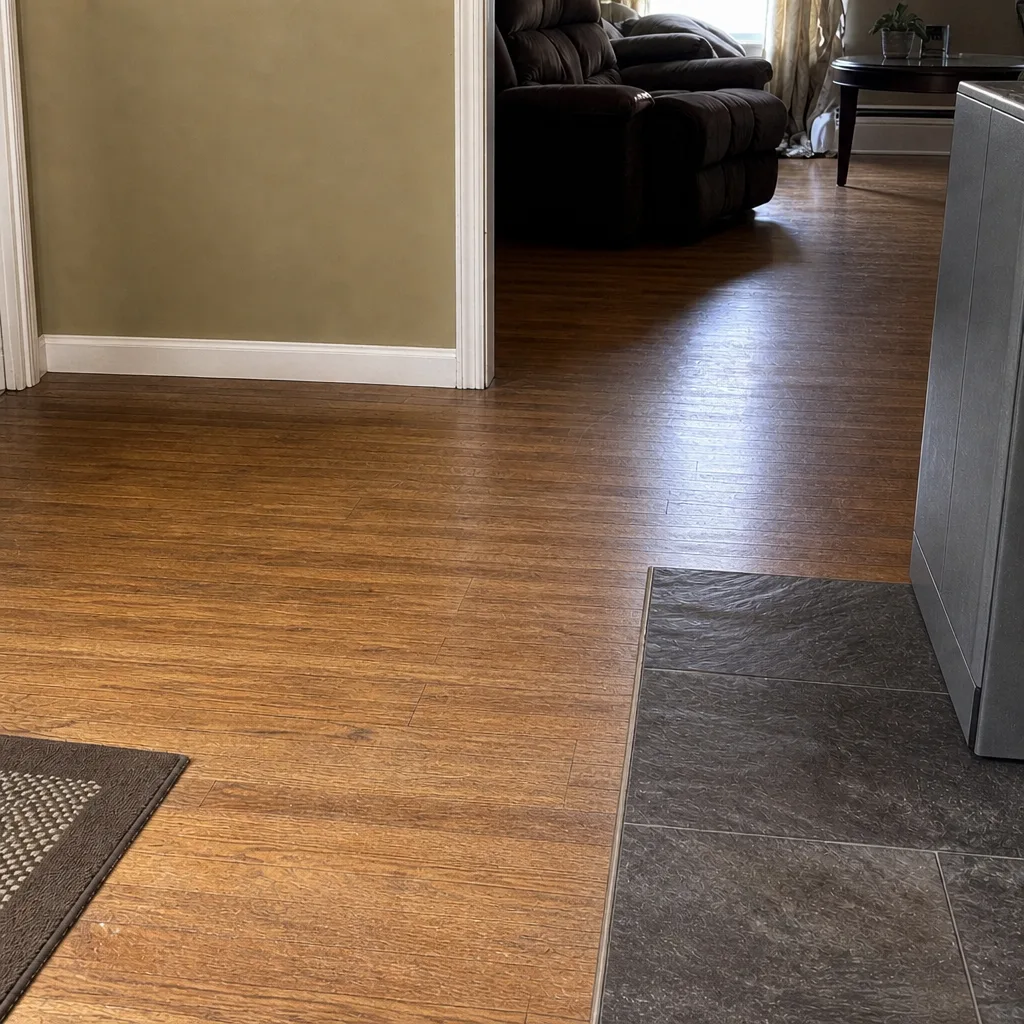
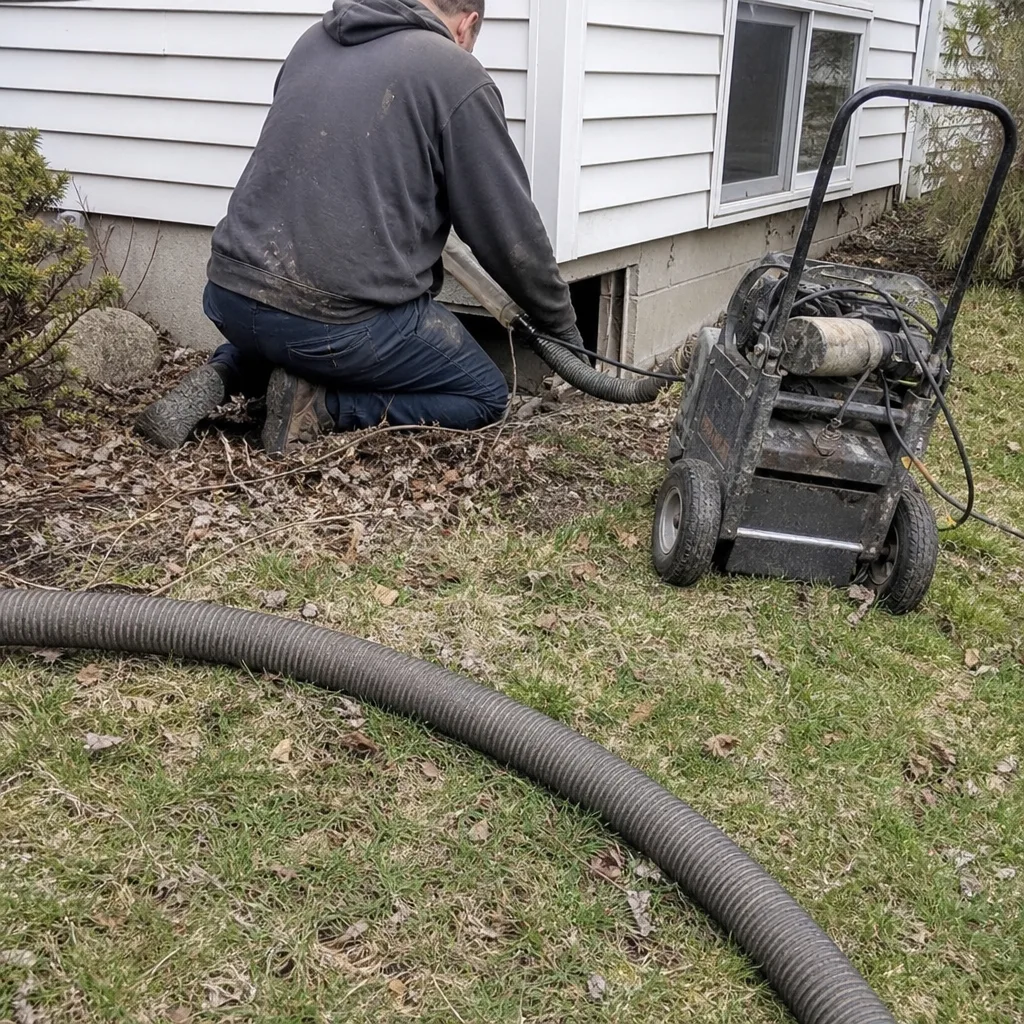
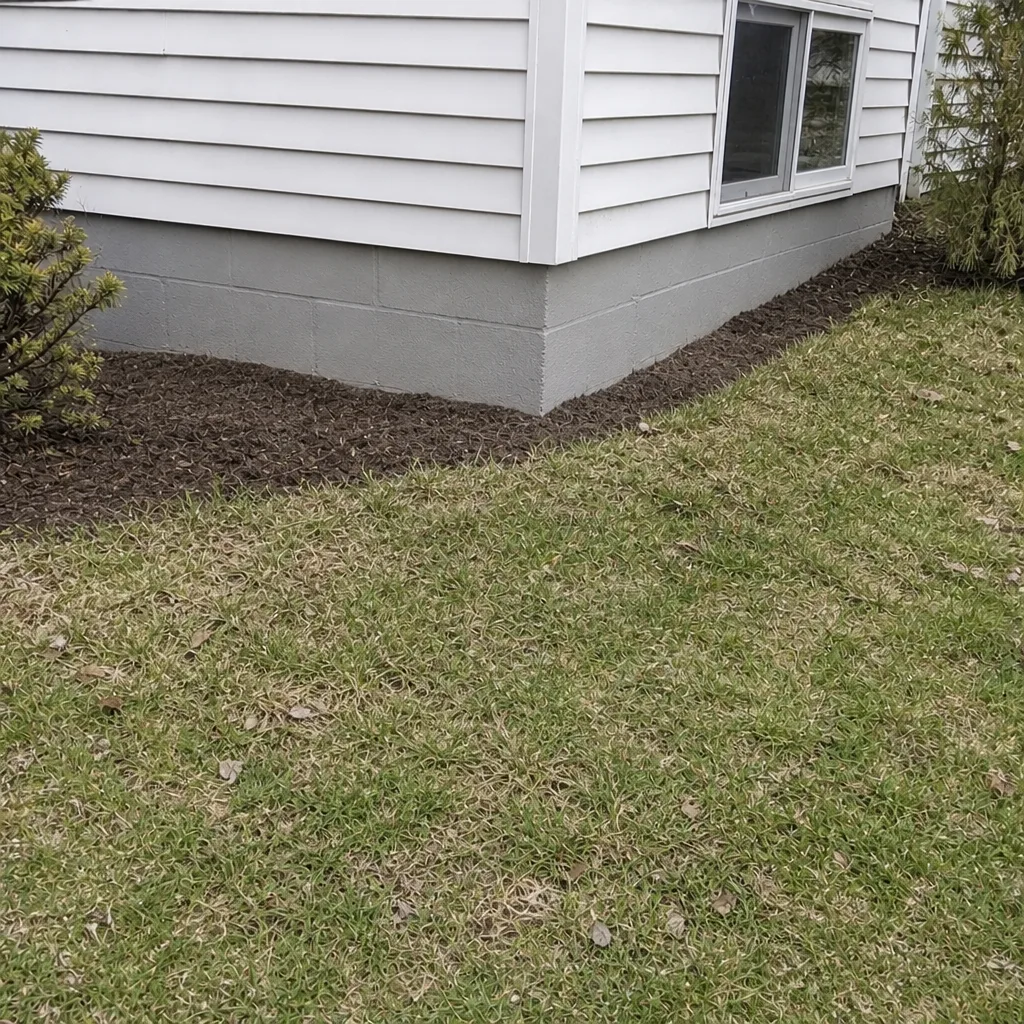
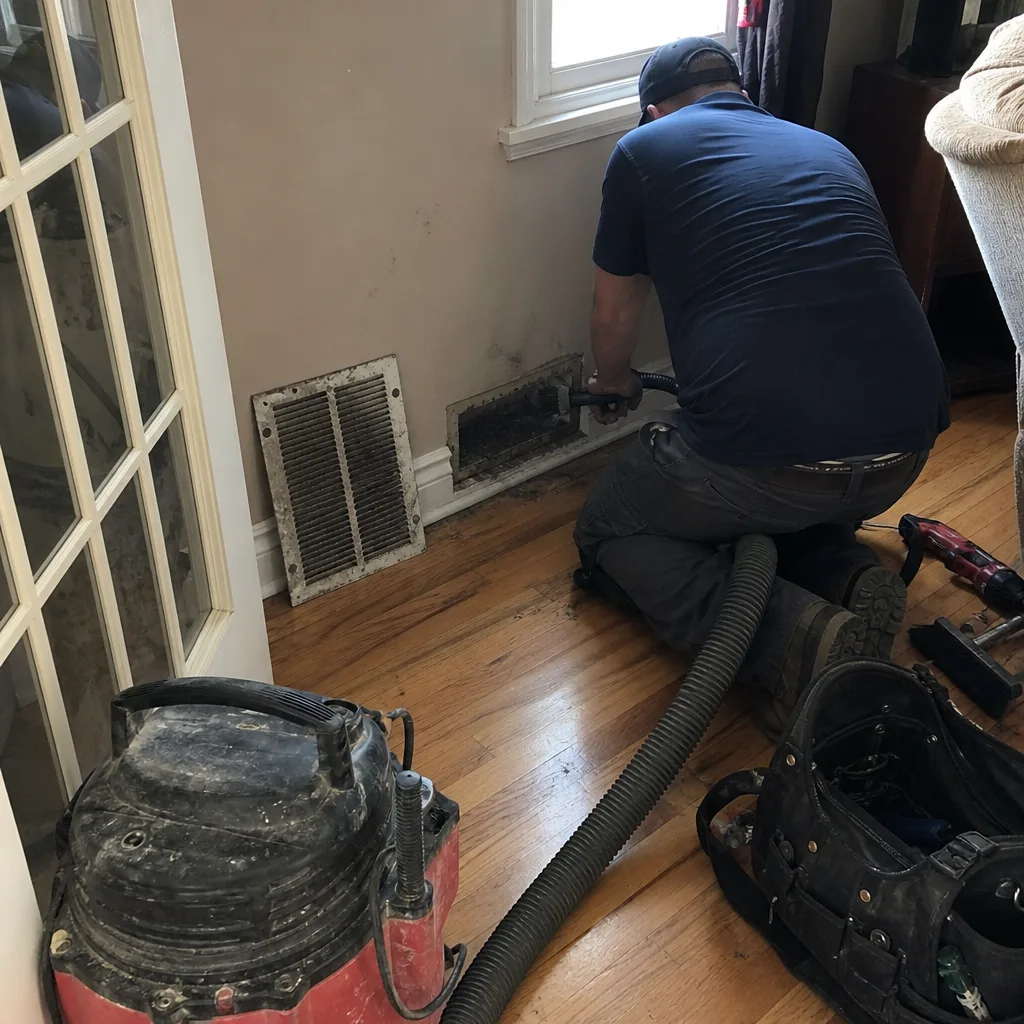
See the difference
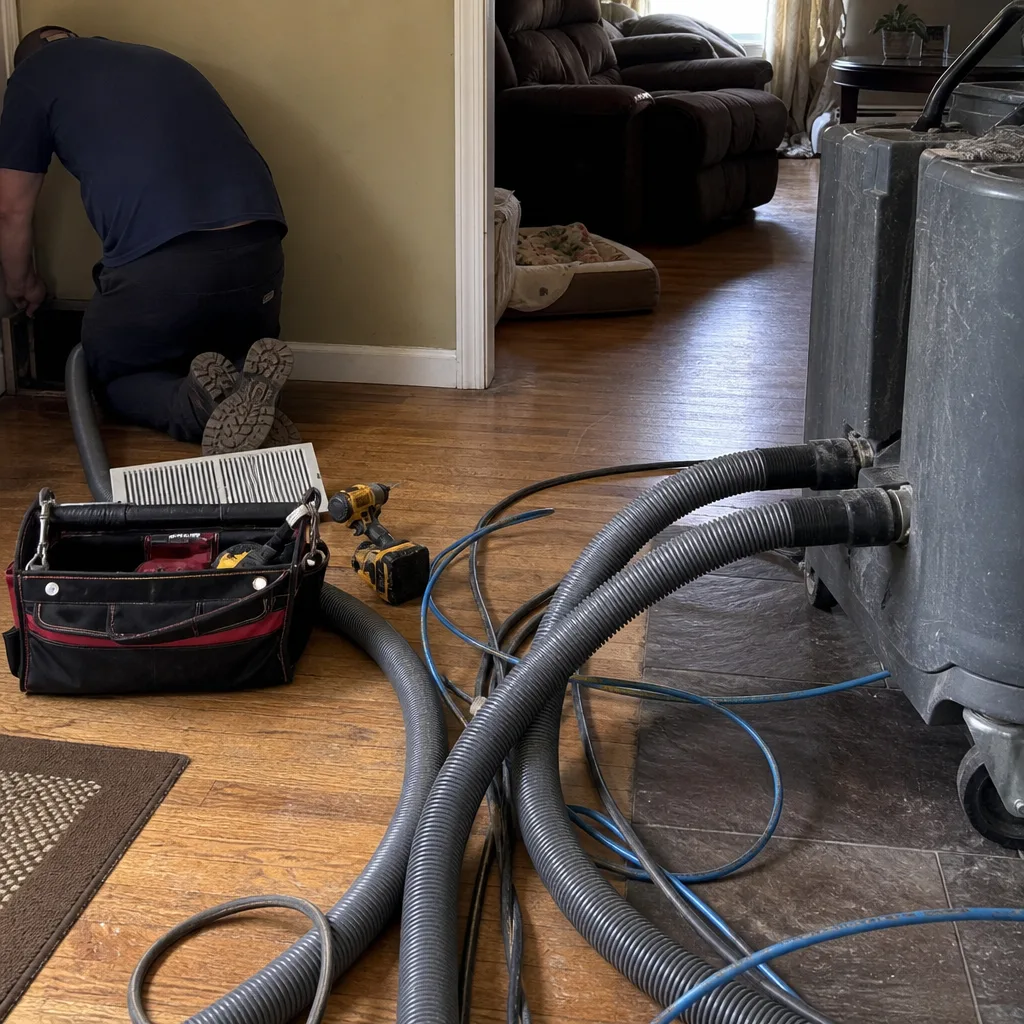 Before
 After
 Before
 After
 Before
 After
When to Call a Professional
Some situations clearly warrant a professional inspection rather than a wait-and-see approach. If anyone in the household has allergies or respiratory sensitivity and the symptoms track with time spent at home, that’s worth investigating. If you’ve noticed a musty smell when the system runs, visible dust buildup around several registers in a short period, or an unexplained jump in energy use, those are the practical signals. Visible microbial growth or standing moisture inside the duct system is a clear yes. Suspected vermiculite insulation is a clear yes. And any home where the system has been cleaned before but the same problem came back deserves a root-cause inspection rather than another cleaning.
Air Duct Cleaning Stapleton offers free estimates in Stapleton. Call (877) 536-7311 to schedule an inspection. We answer 24/7. Fast dispatch from 7am to 7pm, Sunday through Friday.
Frequently Asked Questions
Most residential jobs in Stapleton fall within a range that depends on the size of the system, the number of runs, and whether repair or sealing is needed. Whole-system pricing is quoted per job after an inspection, and you get a written estimate before any work begins. We don’t quote per-vent prices or teaser rates, because a per-vent figure hides the parts of the job that matter most, like the air handler and the returns. Call (877) 536-7311 for an exact quote. Estimates are free.
Cheaper quotes usually reflect a fundamentally different job: surface wiping of accessible ducts rather than full source removal under negative pressure, and a smaller, less capable vacuum. The equipment, the time, and the containment are where the cost lives, so a quote at a fraction of the others is coming from a different method. Ask every contractor what method they use, what CFM their negative pressure equipment is rated at, and whether the air handler is included. The answers will explain the price gap.
Ask for before-and-after photos of your own ducts, including the air handler and the coil. A source-removal cleaning leaves visual evidence, and a credible contractor will document it. If a company can’t provide images of your system, you have no way to verify the work, which is one of the main reasons this industry has the reputation it does. We show our work on every job.
There’s no fixed interval. The EPA doesn’t recommend a scheduled cleaning frequency, and the appropriate time is when an inspection shows contamination that warrants removing. For many homes, that’s not on any predictable cycle at all. What shortens the interval is an unresolved root cause: filter bypass, unsealed returns, aging flex duct, or oversized equipment. Fix those and the system stays cleaner longer. Call (877) 536-7311 if you’re unsure whether your home is due. Estimates are free.
Cleaning is usually enough. Sanitizing addresses a specific finding: visible microbial growth, standing moisture, or a persistent musty odor traced to the duct system. Ordinary dust accumulation doesn’t require it. A credible inspector will tell you which finding applies rather than treating every job as a sanitizing job. If sanitizing is warranted, we can apply Guardsman-backed treatment options for surface protection after the cleaning. Call for an inspection if you’ve noticed a musty smell and want it traced to a source. Estimates are free.
Often yes. Cleaning and sealing can be handled together when the inspection supports it, and combining them is usually the better outcome because sealing is what keeps the cleaning from being repeated too soon. Duct repair and sealing is a standard part of our service. A dryer vent cleaning can also be added if it’s due, since dryer vents are one of the most common fire-safety gaps in a home. Call (877) 536-7311 to schedule. We answer 24/7.
The Bottom Line
Air duct cleaning isn’t a calendar item, and it isn’t a single service applied to a single object. The supply ducts, the return ducts, the air handler, and the registers each fail differently, and a cleaning that addresses one and ignores the rest won’t hold. In Stapleton, the humidity and the older housing stock shape the kind of debris you’ll find, and pre-1980 flex duct and occasional vermiculite insulation are things a professional needs to account for. Source removal under adequate negative pressure is the standard; surface wiping isn’t. And the fixes that matter most are the ones that stop the system from loading back up: sealed returns, a properly seated filter, and equipment that fits the ducts. If you want to know what’s actually in your system, get it inspected.
If you’d like to see what’s inside your ducts before and after, Air Duct Cleaning Stapleton offers free estimates. Call (877) 536-7311. We answer 24/7. Fast dispatch from 7am to 7pm, Sunday through Friday. We clean the system, then we fix what made it dirty, and we show you the evidence. From the ducts to the filter to the air you breathe, it’s one provider handling diagnosis, cleaning, repair, sealing, and air quality improvement. You can reach us about air duct cleaning, dryer vent cleaning, or HVAC cleaning whenever you’re ready to schedule.
Written by the team at Air Duct Cleaning Stapleton.