
Last updated November 24, 2026
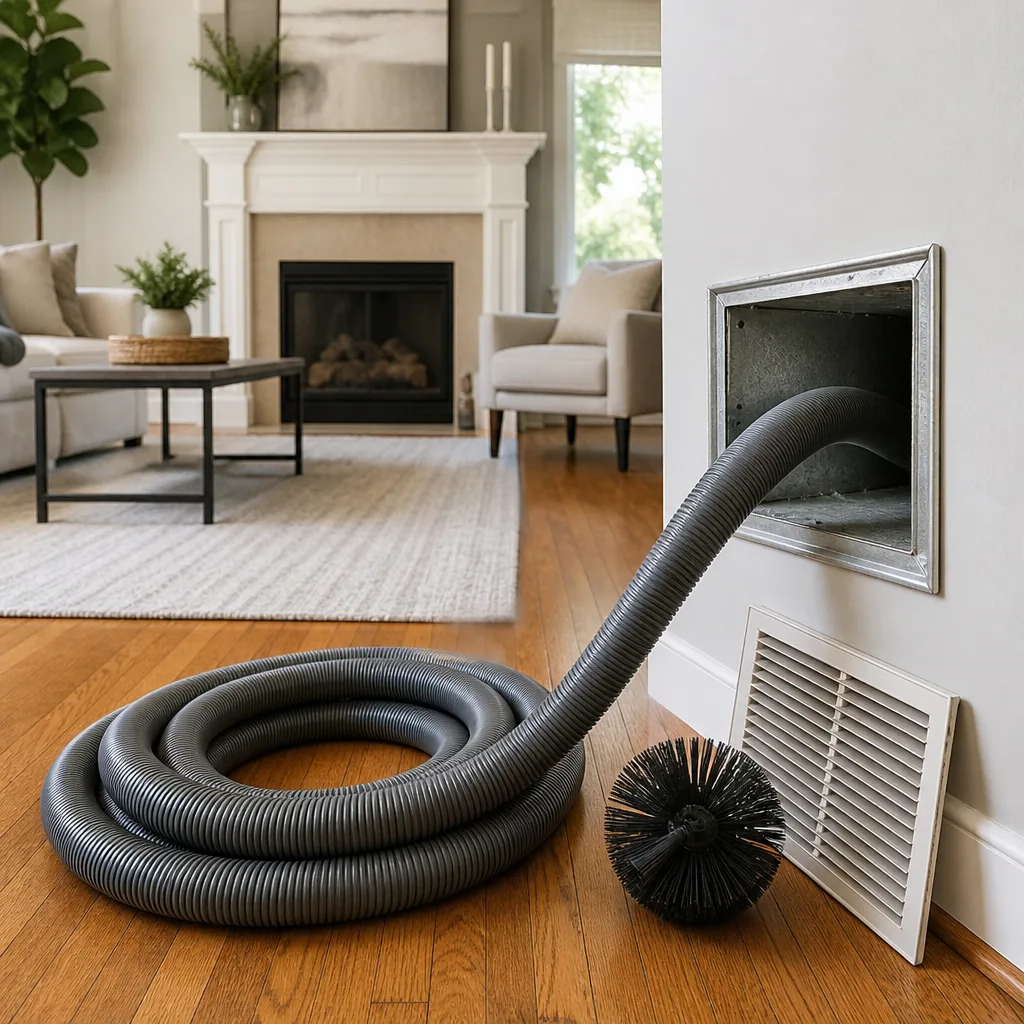 Whole-home duct cleaning
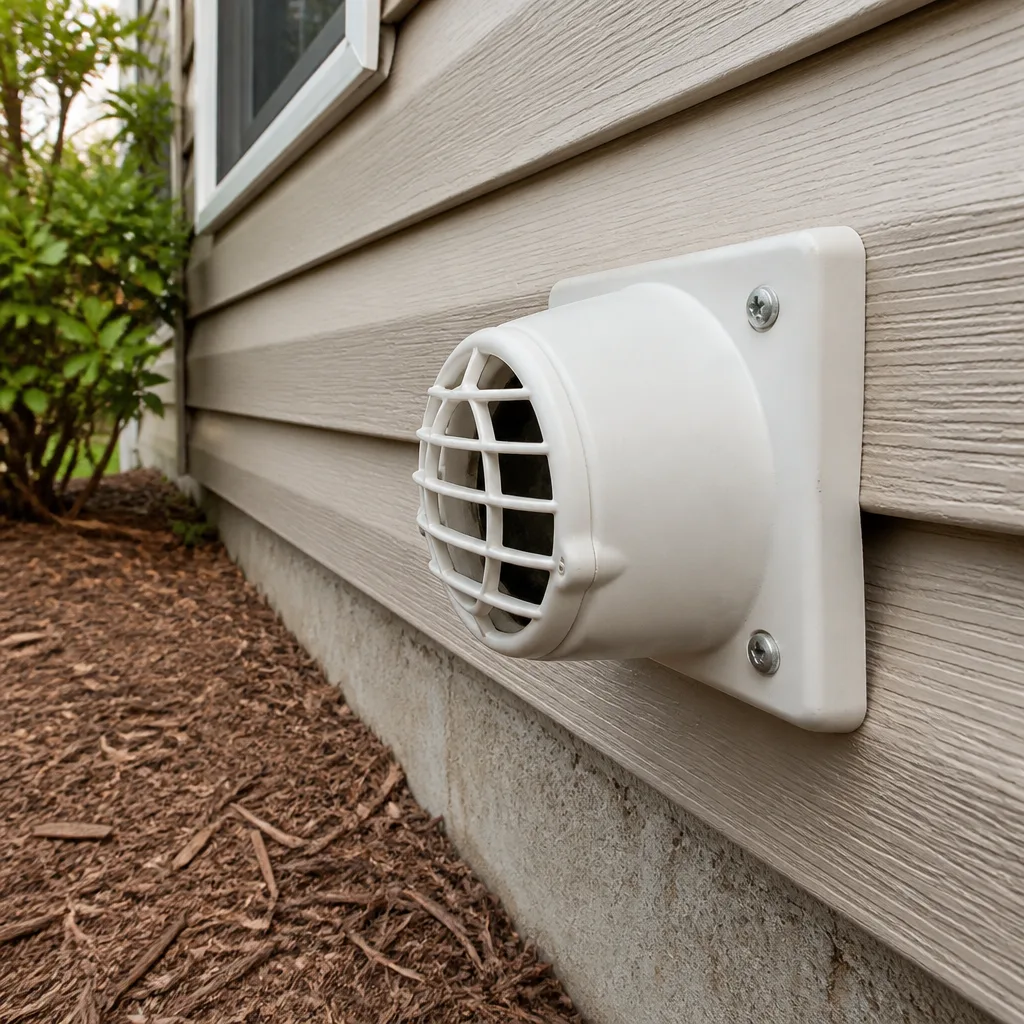 Dryer vent cleaning
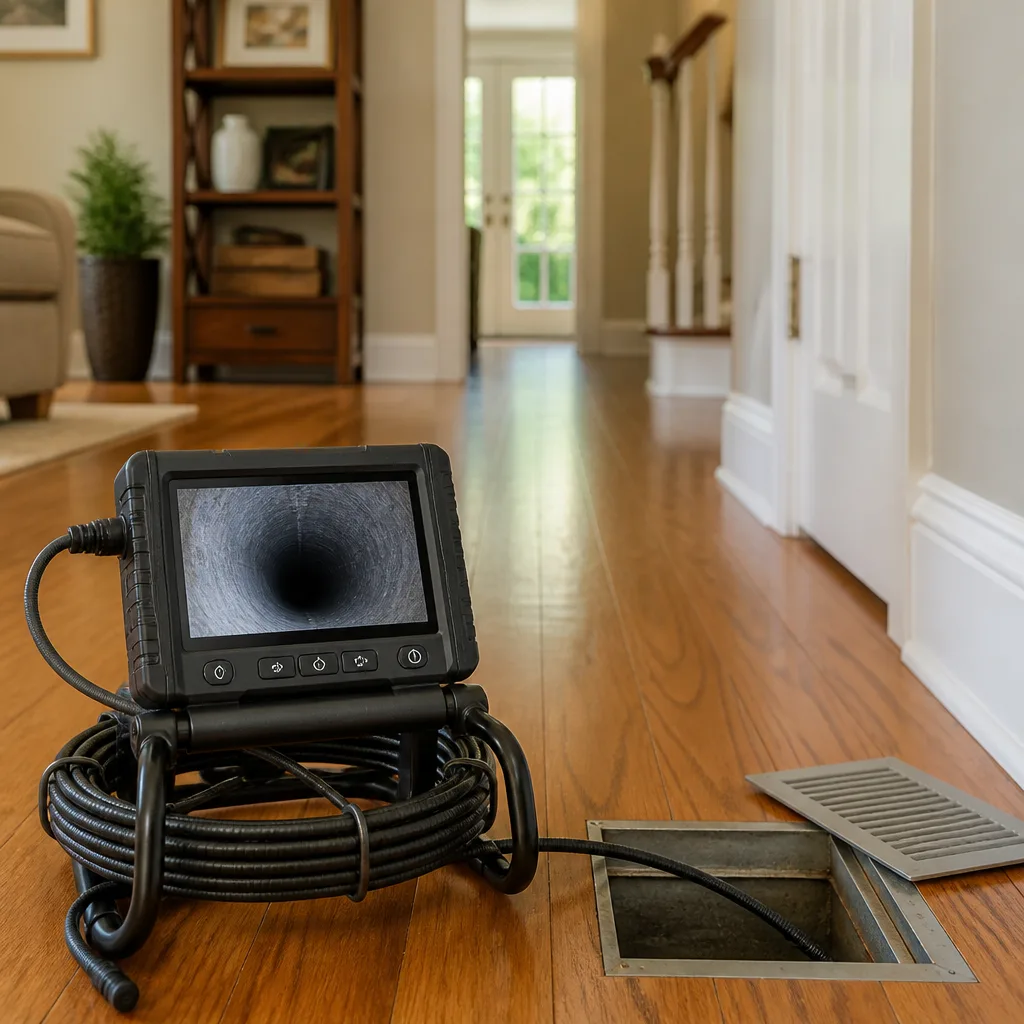 Camera inspection
 Sanitizing & deodorizing
Whole-system duct and dryer vent check with before-and-after photos - you see exactly what came out of your vents
That "$99 whole-house special" is a bait ad - the real number appears once they are in your hallway, or the "clean" is a shop-vac at the register. We photograph the inside of your ducts before and after instead.
Air Duct Cleaning Emergency Preparedness Guide for Stapleton Homes
Most homeowners think of duct cleaning as a maintenance item, something scheduled when the seasons change or when the dust on the furniture gets hard to ignore. Here’s the counterintuitive part: the day a duct system actually needs urgent attention, cleaning is rarely the first thing on anyone’s mind. It’s usually the last. After a basement flood or a roof intrusion in a Stapleton home, the ducts that run through the affected zone quietly become a secondary contamination pathway, and the window to act on it closes faster than most people realize. This guide covers the emergency triggers that call for immediate duct inspection, how the first 48 hours change everything, how to document damage for an insurance claim, and how to build a preparedness file so you’re never scrambling in the middle of one.
Quick Answer
If water, smoke, pests, or construction debris reaches a duct system in a Stapleton home, shut the system down and get an inspection rather than running it to dry things out. The first 24 to 48 hours determine whether standard cleaning is enough or whether full remediation is required, and how you document that window shapes what an insurer will cover. Build a baseline file of photos, a duct map, and service records before you ever need it.
Styles & brands we work with
- Whole-home duct cleaning
- Dryer vent cleaning
- Camera inspection
- Sanitizing & deodorizing
Table of Contents
- What counts as a duct emergency in Stapleton?
- The 48-hour decision window after water gets in
- What to do before a technician arrives
- Documenting duct condition for an insurance claim
- Building an HVAC emergency preparedness file
- What a professional emergency duct response actually involves
- After the event: preventing a repeat
What counts as a duct emergency in Stapleton?
A duct emergency is any event that introduces a contaminant into the air path of your HVAC system faster than routine maintenance can respond to it. In Stapleton, where older housing stock and storm-driven water intrusion are common realities, four triggers come up again and again. Each one has a different clock running on it.
Water intrusion within six feet of a return air duct
Return ducts pull air back into the system, which means anything in that space gets carried through the air handler and redistributed to living areas. If floodwater, roof leakage, or a burst pipe reaches within roughly six feet of a return opening, that ducting is now part of the moisture problem whether it looks wet or not. Standing water you can see is only part of it. Wicking and humid air do their own damage inside insulated flex runs and duct board.
Smoke, fire, or soot events
Even a small kitchen fire or a chimney backup leaves soot residue on interior duct surfaces. Soot is acidic and it’s fine enough to travel with airflow, so it settles where cleaning equipment has to reach deliberately. This isn’t an emergency in the sense of “drop everything,” but it is a same-week call, not a next-season one.
Pest infestations inside duct runs
Rodents, squirrels, and insects use duct chases and flexible runs as highways through a house. The problem is not just droppings and debris in the airstream. Chewing damages insulation and creates gaps that pull in unconditioned attic or crawlspace air. When you discover an infestation inside ductwork, get the ducts inspected and sealed as part of the response, because the entry point is still open until you do.
Post-renovation debris contamination
Demolition dust, drywall particles, sawdust, and fiberglass fibers all get pulled into returns during a remodel. If the system runs during construction without filtration protection, that load deposits through the whole run. We’ve seen this most in Stapleton homes that come out of a kitchen or basement renovation with a sudden uptick in dust and a filter that clogs in weeks.
The 48-hour decision window after water gets in
In our experience, the timeline below is what separates a cleaning job from a remediation job in Stapleton homes. It is not a universal rule, but it reflects how quickly moisture turns into something that needs more than a vacuum.
Hour 1 to hour 12
Ducting and insulation that came into contact with water are still just wet. This is the ideal window. If the water source is stopped, the affected zone is isolated, and the system is shut down, a professional can often clean, dry, and confirm condition without full replacement of duct runs. The material hasn’t had time to harbor microbial growth.
Hour 12 to hour 24
Humidity inside the system has had time to work into porous surfaces: duct board, flex insulation, and the seams between sections. Cleaning is still viable, but the inspection now needs to check interior surfaces closely. A qualified technician should be checking for staining, musty odor, and visible growth at the joints, not just pulling visible debris.
Hour 24 to hour 48
If the system was allowed to sit closed and damp, this is where remediation decisions typically enter. Some duct runs may be salvageable with cleaning and antimicrobial treatment; others may need to come out. The determining factor is usually whether the interior material has been compromised structurally, not just superficially wet.
After 48 hours
If a wet system has been running, circulating spores and moisture through a home for two days or more, the scope of work grows. At that point you’re often looking at a combination of duct remediation, HVAC cleaning, and a plan for filtration and source control. This is exactly why the fastest thing any homeowner can do is stop the system, not run it.
What to do before a technician arrives
The single most important thing you can do in the first hour after a water event near your ducts is to turn the air handler off. Running the system to “dry it out” is the most common mistake we see. It doesn’t dry anything. It pushes moisture and contaminants into every room in the house.
Emergency steps, in order
- Stop the water. Shut off the supply or call a plumber if the source is active. No duct work matters until the water is stopped.
- Turn off the HVAC system. Set the thermostat to off and switch the air handler breaker to off. Do not run the fan. Do not run “fan only.”
- Seal accessible registers and returns in the affected zone. Plastic sheeting and painter’s tape work well enough. The goal is to prevent airflow from a wet zone traveling to dry rooms.
- Photograph everything before cleaning anything. We’ll cover the specifics in the insurance section below.
- Move wet belongings out of the affected zone and start drying the room itself with fans and dehumidifiers. This is room drying, not duct drying.
- Call for an inspection. Get a professional assessment before you decide whether to schedule cleaning or a full remediation.
What not to do
- Don’t run the system to try to dry the ducts. It doesn’t work, and it spreads what you’re trying to contain.
- Don’t spray household cleaners or disinfectants into registers. The chemistry can be corrosive to heat exchangers and blower components.
- Don’t assume it’s dry because the visible surface feels dry. Interior insulation and duct board hold moisture long after the surface dries.
- Don’t wait for signs of visible mold before acting. By the time you see it, the timeline has already shifted.
Documenting duct condition for an insurance claim
Most homeowners’ policies will cover duct damage from a covered water event, but only if the documentation supports what actually happened. The homeowner who photographs registers, identifies the water depth, and keeps written service records is in a much stronger position than the one who calls the insurer after the duct cleaning is already done.
Photo protocol
Take these photos before any cleanup begins, and take them again after any remediation work is complete:
- Wide shots of each affected room showing water lines, depth against a ruler, and the general condition.
- Close-ups of the water source and any visible damage to walls, flooring, or insulation.
- Every register and return in the affected zone, open grille and internals visible if safe to remove.
- Interior photos of accessible duct runs, if the ducts are exposed (basement or garage returns are often visible).
- The air handler, filter, and thermostat settings, to show the system was shut off.
- Any boxes, documents, or equipment that were in the affected zone and were moved or damaged.
What to request from the cleaning contractor in writing
Ask for a written report that includes the date and time of inspection, the affected zones and duct runs identified, a description of contaminants observed (moisture, growth, debris, pest evidence), before-and-after photographs of the interior of the ducts, and a signed summary of the method used. If remediation is recommended, ask for the specific scope: what’s being cleaned, what’s being treated, what’s being replaced. Insurers respond to documentation, not to invoices. A contractor willing to put the condition and the work description in writing is the one you want handling a claim-adjacent job.
How remediation scope affects coverage
Policies differ, and it’s worth asking your insurer directly whether duct cleaning after a covered event is included as part of the water mitigation, or whether it’s treated as a separate line item. Some policies require you to use a contractor from their network; others let you choose. The written inspection report is the document that answers that question for the adjuster. Have it in hand before you file.
Building an HVAC emergency preparedness file
An emergency response is only as good as the information available when it starts. A homeowner who can hand a technician a folder with baseline photos, a duct map, and service records gets a faster, more accurate response than one who’s explaining the layout from memory in a dark basement with water on the floor. Building the file takes an hour on a normal day.
What goes in the file
- Baseline photographs. Every register, every return, the air handler, the outdoor unit, the thermostat. Photos of the interior of accessible ducts if you can get them. Date every image.
- A simple duct map. Sketch the layout of the home and mark where each trunk and branch run. Note which rooms share a zone. This doesn’t need to be architectural; a hand drawing with room labels is enough.
- Service records. Keep a folder (physical or digital) of every duct cleaning, HVAC service, filter change with date and filter type, and any repair work. This sets a baseline that supports insurance claims and helps a technician understand condition before an event.
- Equipment specifications. The air handler and outdoor unit model numbers, the filter size and MERV rating you use, and any IAQ equipment installed. If your system has a whole-home filter or a media cabinet from a brand like Honeywell or Aprilaire, note the model. This matters for both replacement and for understanding how filtration responds to an emergency.
- Contact information for your service providers. Whoever handles your HVAC, your plumbing, and your duct cleaning.
- A short written summary of your home’s known weak points. Basement return location, the room that floods first, the register that gets condensation in humid weather. One paragraph is enough. This is the information a technician needs most in a hurry.
What a professional emergency duct response actually involves
An emergency response for a duct system isn’t a bigger version of routine cleaning. It’s a diagnosis, a containment plan, and a cleaning protocol targeted to what was found. The tools matter here because a shop vacuum can’t move the volume of material a professional system does, and it can’t reach the interior surfaces of most duct runs.
The diagnostic phase
A trained technician inspects the affected zone first, determines whether the moisture has reached the duct interior, and identifies which runs need cleaning versus which need replacement. In homes where a sealed system with a strong filter was in place, the answer is often lighter than expected. In homes with unsealed flex in a wet basement, it’s often heavier.
The cleaning phase
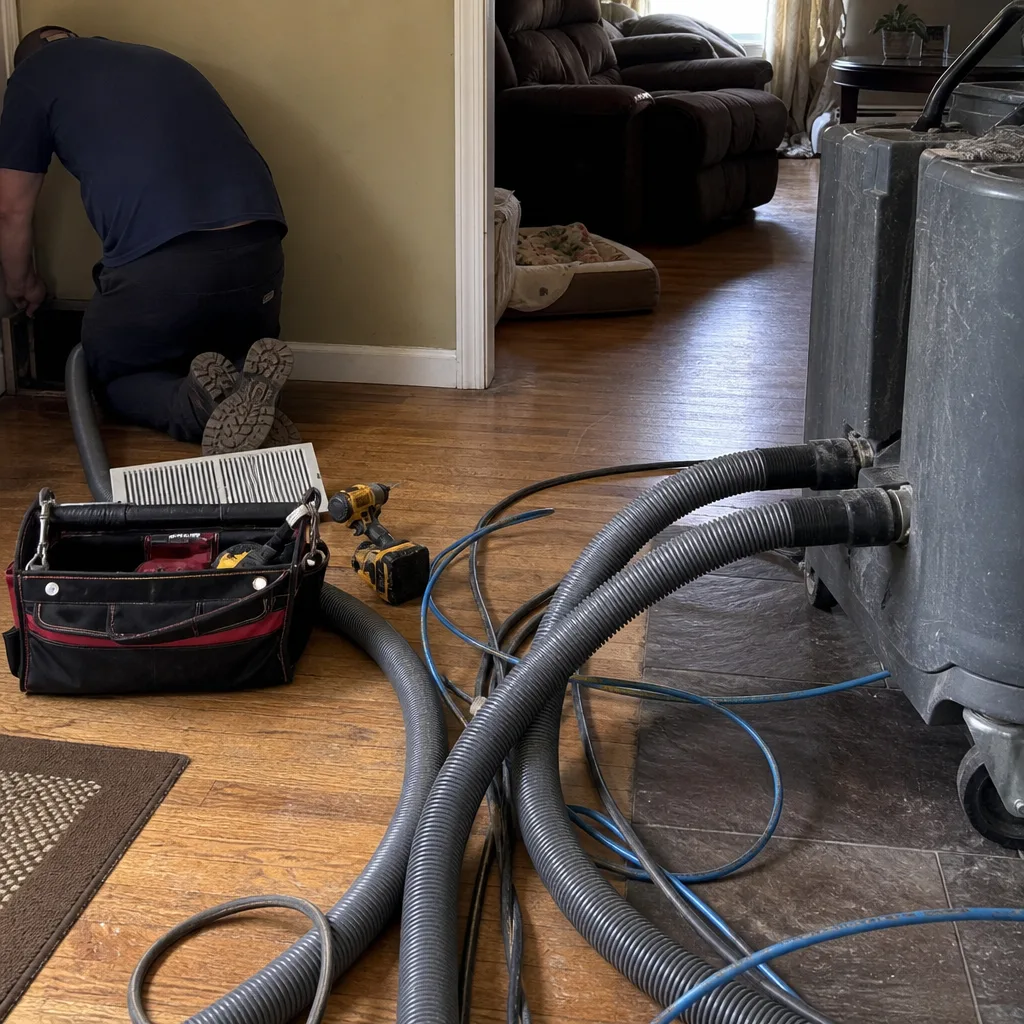
Professional-grade equipment is the difference here. Rotobrush and Nikro systems are purpose-built for residential ductwork, with agitation tools that reach interior surfaces and HEPA vacuum collection that keeps what’s loosened out of the living space. When the situation calls for contaminant control beyond cleaning, an Abatement Technologies-capable setup handles the containment side of the job properly. This is where “cleaning” and “remediation” split as categories.
The treatment and verification phase
After cleaning, surfaces in the affected zone are often treated with an antimicrobial or sanitizing product, and the system is verified with before-and-after photos of the interior of the ducts. Guardsman-backed treatment options are available for surface protection. The photos aren’t decoration – they’re the record you hand to an insurer if a claim is open.
The repair phase
Cleaning a system doesn’t fix what made it vulnerable in the first place. Duct repair and sealing close the gaps that pulled in the water or the contaminants. If the emergency was pest-related, sealing the entry points is the durability step. If the emergency was a wet return, sealing the joints and improving the insulation in that zone prevents a repeat. Filter upgrades – a whole-home media filter from Honeywell or Aprilaire, for example – address ongoing filtration, which matters more after a moisture event than before it.
After the event: preventing a repeat
Once the immediate response is done and the ducts are clean, dry, and documented, the next step is making sure the same failure doesn’t hit the same way twice. That means addressing the root cause, not just the symptom. Most of what we flag after an emergency in Stapleton homes is fixable before the next storm season.
Close the entry points
If water reached a return duct, the path it took is still there. Sealing duct joints, improving insulation in the vulnerable zone, and repairing any gaps where the run passes through an exterior wall are the durability steps. Duct repair and sealing exists for exactly this reason, and it’s usually the difference between a one-time emergency and a recurring one.
Improve filtration at the system level
A system that pulled contaminants in through a thin filter is a system that will do it again. Upgrading to a media filter cabinet matched to your air handler doesn’t just improve air quality day-to-day; it changes what happens in the first hours after a future event. Ask specifically about compatibility, because not every system can handle every filter without pressure drop issues.
Set an inspection schedule
Once you’ve had an emergency event, schedule a professional inspection of the full system, not just the affected zone. Contaminants travel farther than the visible damage suggests. If you have a pet, a family member with allergies, or a home that runs cool in summer and dry in winter, a regular inspection cadence supports cleaner air the rest of the year and gives you baseline documentation for the next event.
Common Mistakes to Avoid
- Running the HVAC system to “dry things out.” It’s the first thing people do and the worst thing they can do. It pushes moisture and contaminants into every room in the house instead of keeping the problem contained.
- Waiting for visible mold before calling. By the time you can see it, the two-day window for simple cleaning has often already closed. Smell is a faster signal than sight.
- Skipping photo documentation until after the cleanup is done. Insurers and adjusters work from before-and-after evidence. Photos taken after the duct cleaning are worth much less than photos taken before the problem was touched.
- Hiring on price alone after a flood event. The cheapest response in Stapleton after a water event is often one that cleans visible debris and calls it done, leaving the moisture in the insulation that stays behind. Ask what equipment is used on the job, and ask to see before-and-after photos of the interior of the ducts.
- Not sealing the entry point after the cleaning. Cleaning a duct that pulled in floodwater without repairing the gap that let it in sets up a repeat event. Repair and sealing is the durability step, not an upsell.
- Assuming pest damage is only about the visible debris. Rodents and squirrels chew through flexible ductwork and insulation, which changes airflow and lets in unconditioned air. Inspection has to check for gaps, not just debris.
- Not having a preparedness file before the emergency. Half the difficulty of an emergency response is reconstructing information the homeowner could have gathered on a calm afternoon. Build the file while the weather is quiet.
See the difference
 Before
 After
 Before
 After
 Before
 After
When to Call a Professional
Call for professional help when water reaches within six feet of a return duct, when a fire or smoke event has touched the HVAC system, when a pest infestation is discovered inside a duct run, or when debris from a renovation has been pulled into the system. In each of these cases, the inspection is the decision point, and doing it early keeps a cleaning-appropriate problem from becoming a remediation-required one. If the affected zone was already exposed for two days or more, call before assuming you know the answer. Air Duct Cleaning Stapleton offers free estimates in Stapleton. Call (877) 536-7311. We answer 24/7. Fast dispatch from 7am to 7pm, Sunday through Friday. The written estimate sets the price, and every estimate is free.
Frequently Asked Questions
Within 24 hours is the target, and within 48 hours at the outside. In the first 12 hours, a professional can often clean, dry, and confirm condition without replacing duct runs. Between 24 and 48 hours, the inspection shifts from cleaning to containment, and after that the scope usually grows. Call (877) 536-7311 to book an inspection. We answer 24/7, with fast dispatch from 7am to 7pm, Sunday through Friday.
It often does, but coverage depends on the policy and on whether the water event itself was a covered peril. The written inspection report with dated photos and a scope description is what supports a claim. Ask your insurer what documentation they need before you authorize the work, and ask the contractor for a report that meets that requirement.
Duct cleaning addresses the musty smell if the source is in the ducts, which it often is after a wet return event. If the source is residual moisture in the basement itself, cleaning helps air quality but doesn’t fix the room-level problem. A professional response looks at both, and treats wet duct surfaces with an antimicrobial as part of the cleaning.
Cleaning removes debris and surface contamination from intact ductwork. Remediation adds containment, antimicrobial treatment, and in some cases replacement of duct runs that were structurally compromised by moisture. Which category an event falls into depends on the timeline and on what the inspection finds. In our experience, the earlier the inspection, the more likely cleaning is enough.
No. Running the air handler after a water event pushes moisture and contamination into every room in the house and lengthens the drying time. Turn the system off, seal accessible registers in the affected zone, and get an inspection. Call (877) 536-7311 for an exact quote. Estimates are free.
Ask for before-and-after photographs of the interior of the ducts, a written report of what was found and what was cleaned, and a list of any repairs or sealing that was done. Professional-grade equipment lets a technician document interior condition clearly. If a contractor can’t provide photos and a written summary, that’s a reason to look elsewhere.
The Bottom Line
Emergency duct work in Stapleton homes is not about a bigger service call. It’s about the first 48 hours. Shut the system down, seal what you can reach, photograph everything before cleaning starts, and get a professional inspection. Water, smoke, pests, and post-renovation debris each have a different urgency, but the response pattern is the same: contain, document, inspect, then clean and repair in that order. A preparedness file with baseline photos, a duct map, service records, and equipment specs turns a chaotic event into a manageable one. And when the system needs repair or sealing on the other side of the event, that work exists to keep the emergency from happening twice. We handle the full system, from cleaning through repair through filtration, with professional-grade equipment on every job. Call (877) 536-7311 for a free estimate. We answer 24/7. Fast dispatch from 7am to 7pm, Sunday through Friday.
If you’d like a broader picture of how duct care fits into a healthy Stapleton home, start with Air Duct Cleaning Stapleton, then explore air duct cleaning. For the dryer side of the system, see dryer vent cleaning. And when the HVAC components themselves need attention, HVAC cleaning covers that side of the system. Our technicians have up to 12 years of experience, and every estimate is free and written per job.
Written by the team at Air Duct Cleaning Stapleton.